On 13th December 1948 the Mosquito took off from Leeming airfield for the crew to undertake a high altitude cross-country navigation exercise as part of their training at No.228 Operational Conversion Unit. On the return leg and while flying in from the South-West the crew encountered thick low cloud over the Pennines, they flew off course slightly and flew into Great Whernside close to where Halifax DT578 had crashed some five years previously. The Mosquito broke up on impact and part of the wreckage caught fire, wreckage was scattered over a wide area and sadly both airmen were killed.
Pilot - P/O (or P4) Anthony Guy Bulley RAFVR (3031532), aged 23. Of Bishops Stortford, Hertfordshire (late of North Kensington, London). Cremated St.Marylebone, East Finchley, London.
Navigator - F/Lt Brian Orlando Bridgman RAFVR (165418), aged 24. Of Birkenhead, Cheshire (late of Flint, North Wales). Buried Leeming Churchyard, Yorkshire.
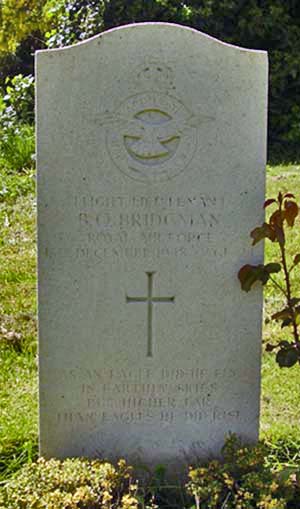
Brian Bridgman's gravestone at Leeming Churchyard. He was born on 24th March 1924 in the Wirral area. Brian received a commission in the RAFVR to the rank of P/O on probation on 2nd June 1944 and rose to F/O on December 1944 and to F/Lt (war subs) on 2nd June 1946. Following the post-Second World War shake up with regard personnel and their former war substantitive commissions he was was appointed to a commission in the RAF as F/O on 12th December 1946 (but with seniority of 2nd June 1945). He was then promoted to F/Lt on 2nd December 1947. He was posted in to 228 O.C.U. on 31st May 1948 and was probably a navigational flying instructor there. Nothing more is known about him.
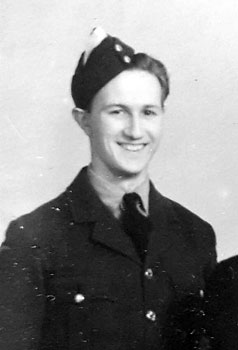
Anthony Bulley was born on 1st November 1925 in the Bishop Stortford area. His brother Alan served in the Merchant Navy and sister Barbara served as a Wren. I thank his nephew Mr Michael Bulley for kindly supplying this photograph shown here which originated from Anthony Bulley's sister who is still living in 2016.
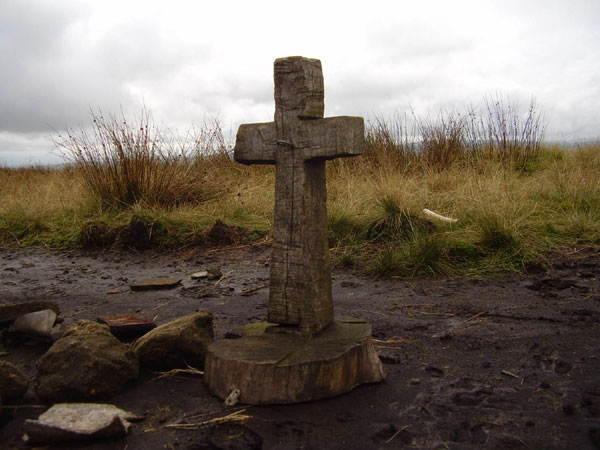
A small memorial at the crash site.
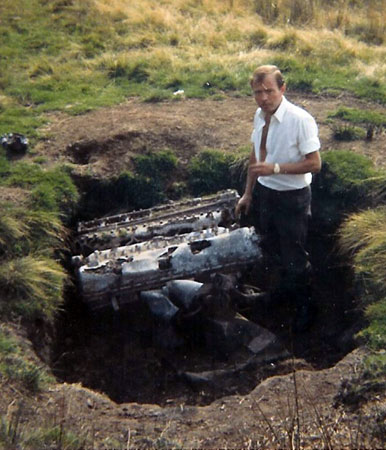

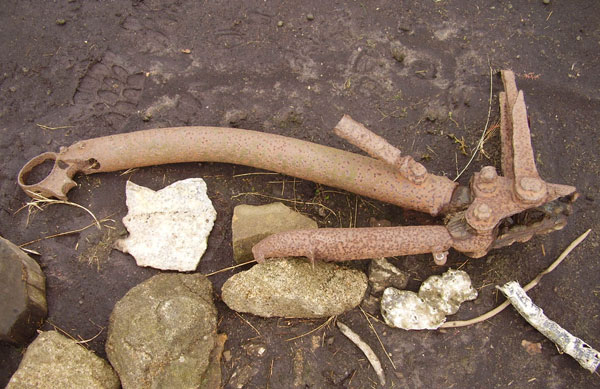
Some of the wreckage including one of the engines was buried at the site after the accident, it was uncovered in the 1970s when people began discovering and recovering relics from accident sites. The where-abouts of this engine today is not known (Photographs: Mr Graham Sharpe). The hole where this engine was buried was left open for some years but was later re-filled by 1980. A small bare area today marks the site of where hole once was and nothing has grown over the soil. The small wooden memorial cross was placed in this area around 2010. Some Halifax wreckage has since been placed in this area along with a Mosquito steel undercarriage or engine barer component.

The only Mosquito part number and De-Havilland "D.H.W." stamp found where the engine was buried during my last visit in 2010 and gone a year later. The steel item shown below is a common find at high ground Mosquito accident sites.
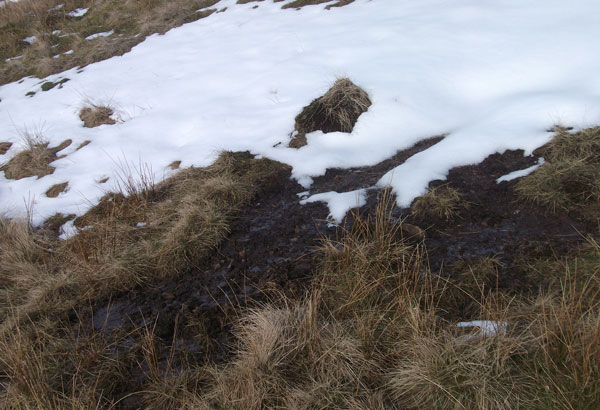
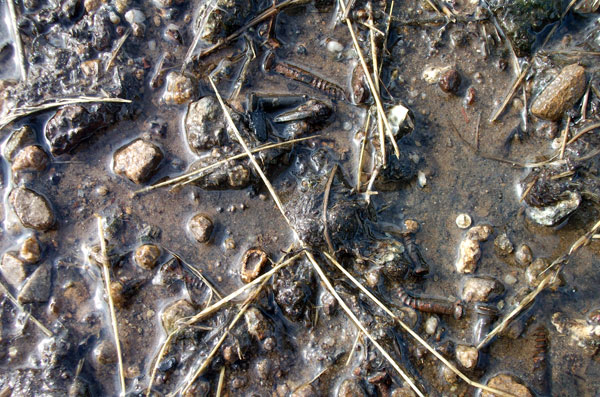
A few hundred metres from the area where the engine was buried is a small area containing tiny burnt remains of the Mosquito. This could be where part of the aircraft came to rest and either caught fire on the ground or was later burnt by the team who "cleared" the site immediately after the crash. The photograph below shows some of the dozens of brass screws and tiny bits of alluminium in the water.

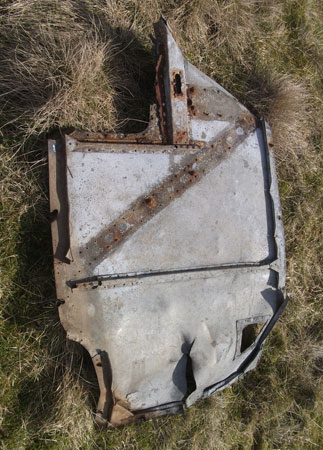
In 1973 Graham Sharpe found the engine cowling panel at the site, this was still at the site in 2016.
Mosquito RL197 was built to contract 1576 by De Havilland at Leavesden and was delivered to 27 MU on 14th August 1945. The aircraft then passed to 174 MU on 22nd October 1945 and 19 MU on 7th May 1947. It was finally taken on charge by a flying unit on 27th September 1947 when it arrived at 228 OCU. As a result of the accident on 13th December 1948 the aircraft received a damage assessment of Cat.E2/FA and the aircraft was struck off charge on the following day.