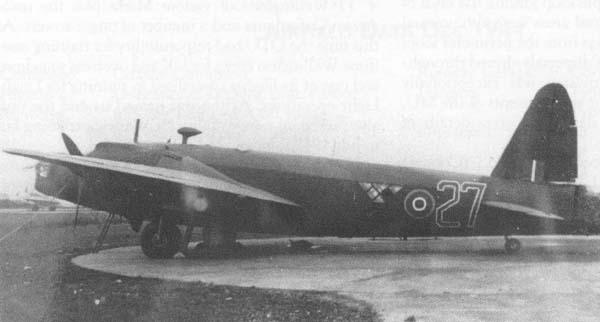
A 6 (C)OTU Wellington.
On 22nd September 1943 the crew of a 6 (C)O.T.U. Wellington undertook a training flight, while based at Silloth near Carlisle the flight took them over the Pennine hills. Poor weather over the Pennines saw the aircraft land safely at Skipton on Swale airfield. The Skipton on Swale station orb mentions a 6 (C)O.T.U. making a landing there because of the weather and also because it had a problem with the wireless equipment, this orb recorded the aircraft as being Wellington HE426 and the pilot as being Sgt Ciaston. The crew and aircraft remained overnight at Skipton on Swale.
The events surrounding this landing are slightly confusing. An AIB report detailing why Wellington HZ251 would crash on 23rd September 1943 states that HZ251 had also landed at Skipton on Swale on account of poor weather the previous day. The Skipton on Swale orb is very specific in identifying just one Wellington as being just HE426 (HZ251 is not mentioned). The AIB report states that during the morning of 23rd September 1943 the crew who would fly Wellington HZ251 back to Silloth checked on the weather and with this being acceptable for flying took off from Skipton on Swale in Wellington HZ251 to fly back to Silloth. The Skipton on Swale orb states exactly the same but gives the personnel as being the crew of Wellington HE426. Maybe an explanation is that the AIB report is not totally correct, purely a guess on my part but could the wireless problem with HE426 not be fixed easily so part of the crew of HE426 taken a lift in HZ521 to get back to Silloth. HE426 carried Sgt Ciaston's crew there on 22nd September, remained there overnight and early on 23rd September HZ251 was flown from Silloth to Skipton on Swale with just a pilot and wireless operator on board to collect the five crew of HE426 who were stranded there. There is no evidence for this in the records I have obtained though although it would be one logical explanation of what might have happened and would account for there being two pilots and two wireless operators on board HZ251 when it set out from Skipton on Swale at lunch time. Skipton on Swale's orb states that HE426 took off successfully but had the orb scribe incorrectly listed the wrong aircraft taking off? More information is required but this will probably be in the aircrew's casualty file and this is a few years from being released by the National Archives. Wellington HE426 had a troubled life with 6 (C)O.T.U. sustaining repairable damage on 3rd July 1943 and also 27th October 1943, it's AM Form 78 card makes no mention of it being damaged on 22nd September 1943 so perhaps there was a technical problem that forced it to land in Yorkshire.
What ever had happened prior to Wellington HZ251 taking off is open to conjecture. The pilot of Wellington HE426, Sgt Ciaston, was definitely on board as well as six other aircrew. After taking off from Skipton on Swale at 12.43hrs the flight took them over the Yorkshire Dales and as far south as Skipton. The crew had perhaps routed themselves over the southern end of the Yorkshire Dales to avoid overflying the larger of the Pennine hills between Yorkshire and the west coast. while over the Skipton in Craven district and just before 13.00hrs the Wellington was seen to be flying very low to the south of the town and possibly following the canal. A wing was seen to break away and the aircraft crashed soon after near "Winifred's Cafe", striking the canal banking close to the modern A629 road and exploded killing all seven airmen on board. Where the wing fell has yet to be discovered but it is thought to have been nearby and referred to as being "near the river" by witnesses. 60 MU were responsible for clearing the site which probably accounts for five of the crew being buried at Fulford, York. The cause of the crash was due to the main spar failing and following the crash all Wellingtons at Silloth are reported to have been grounded for major checks of the main spars.
Wellington HZ251 was built to contract 92439/40 by Vickers Armstrong at Blackpool. It was received by 18 M.U. on 22nd February 1943 and was taken on charge by 6 (C)O.T.U. as new on 19th March 1943. Cat.E2/FA damage on 23rd September 1943 near Skipton saw the aircraft written off.
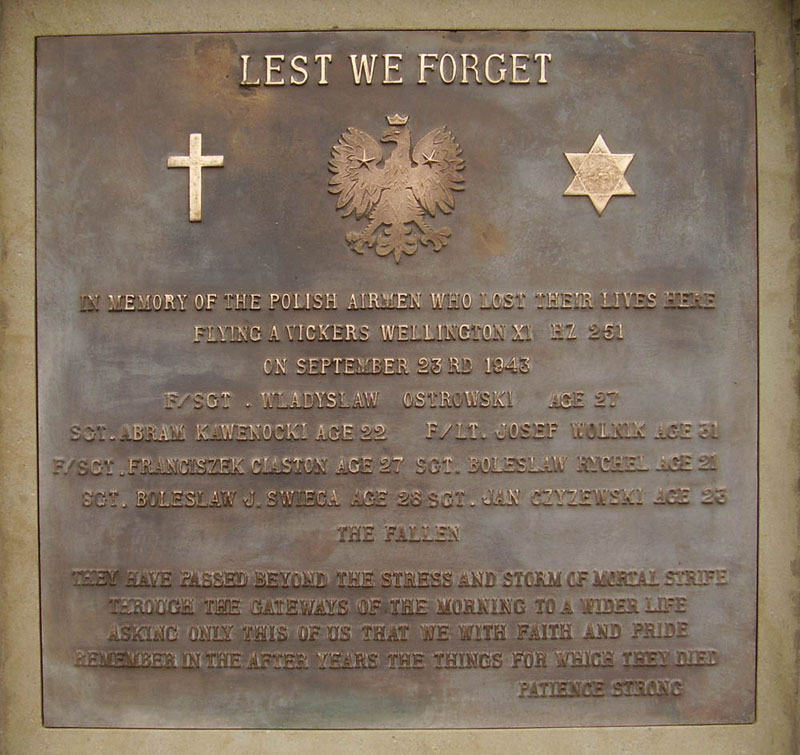
Through the efforts of two local men, Mr Peter Whitaker and (now late) Mr Jim Hartley, a memorial was erected close to the crash site in April 2007 and many of the families of the airmen involved were traced. I thank them for sharing the research with me.
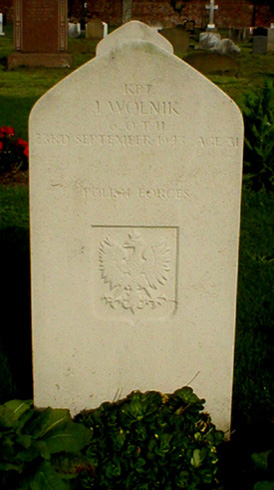
Navigator - F/Lt Jozef Wolnik PAF (P/1145), aged 31. Buried Leyton Road Cemetery, Blackpool (Grave BB493).
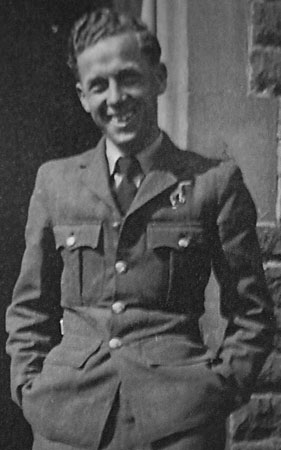
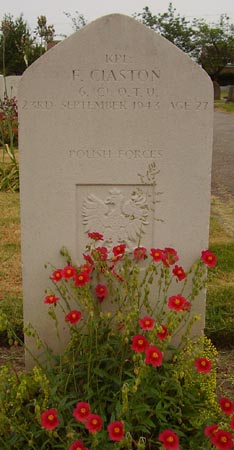
Pilot - Kpl Franciszek Ciaston PAF (P/792374), aged 27. Buried Fulford Cemetery, York.
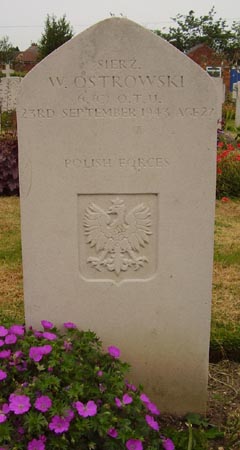
Pilot - Sierz Wladyslaw Ostrowski PAF (P/792053), aged 27. Buried Fulford Cemetery, York.
Wireless Operator / Air Gunner - Kpl Boleslaw Josef Swieca PAF (P/703105), aged 28. Buried Fulford Cemetery, York.
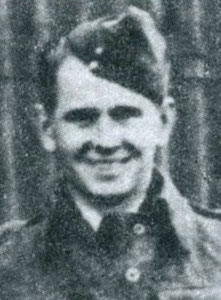
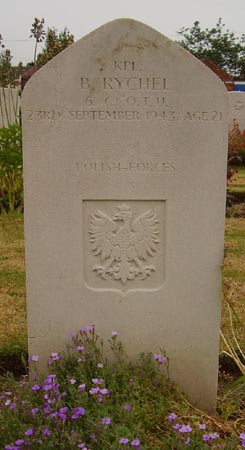
Wireless Operator / Air Gunner - Kpl Boleslaw Rychel PAF (P/784756), aged 21. Buried Fulford Cemetery, York.
Air Gunner - Kpl Jan Czyzewski PAF (P/780669), aged 23. Buried Fulford Cemetery, York.
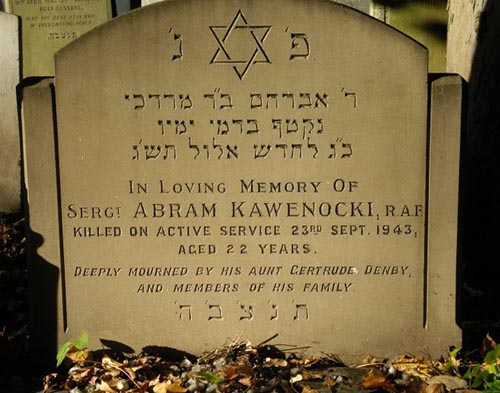
Wireless Operator / Air Gunner - Sierz Abram Kawenocki PAF (P/794155), aged 22. Buried Long Lane Jewish Cemetery, Liverpool.
Josef Wolnik was born on 4th March 1912 at Maszkienice, in the Brzesko`s region of Poland. He joined the Polish Airforce as a Cadet in 1932 and went on to train and serve as an observer in
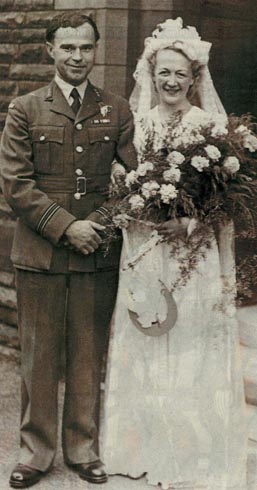
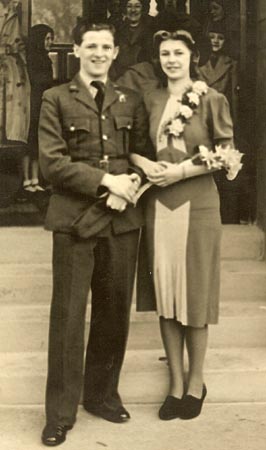
light bombers in August 1934. Still serving in Poland he escaped to Romania in September 1939 and via France he arrived in the UK some months later. He served with 309 Squadron as an Observer flying Lysanders in an Army Co-Operation unit near Perth in 1940 and 1941. In September 1941 he trained at 18 OTU and in April 1942 he was posted to 304 Squadron as a navigator on Wellington bombers. He completed a Tour with 304 Squadron and was posted to 6 OTU, to effectively rest from operational flying but probably as an instructor. He was awarded the Polish Silver Cross Militari on unknown date. He had married an English girl only three weeks before his death, his wife lived on Cavendish Road in Blackpool. His widow later remarried and Mrs Josephine Stebbing MBE was traced by Peter Whitaker; she kindly attended the memorial dedication and unveiled the memorial.
Abram Kawenocki was born on 9th March 1922 in Wasilkow, in the Bialysto`s region of Poland. Whilst nothing is yet known of his life in Poland it is thought most of his family were killed in the Holocaust. He arrived in the UK on an unknown date and was eventually posted in 6 OTU for training. Though efforts from Messers Whitaker and Hartley some of his family have been traced in the UK, the photograph of his headstone above comes from them.
Boleslaw Rychel and his gravestone (photo of the airman credit: `Encyklopedia of Polish Air Force N.C.Os Training School` compiled by the late Mietek M.Hasinski-Adam.
Kpl Franciszek Ciaston had served with the regular Polish forces in Poland from November 1938, following the fall of Poland he made his way to France and served there for a number of months in late 1939 and early 1940. Upon the fall of France he then made his way to the UK and after a short spell in the regular RAF he joined the PAF and completed training. He served with 304 Squadron in 1943 and completed seven operational flights before being posted to 6(c)OTU.
Jan Czyzewski his wife Patricia at their wedding in February 1943, they had a son who was born only four weeks prior to his death at Skipton. Jan Czyzewski had served in France in 1940 before arriving in the UK where he served with the RAF briefly before transferring to the PAF and following training he served as ground crew with 304 Squadron at Lindholme and Tiree. He later retrained as aircrew and was mid way through this training at the time of his death. My thanks to Jan Czyzewski's son who kindly provided this photograph to Peter Whitaker.
The remaining two members of the crew who were also buried at Fulford Cemetery, York.
The impressive memorial close to the crash site.
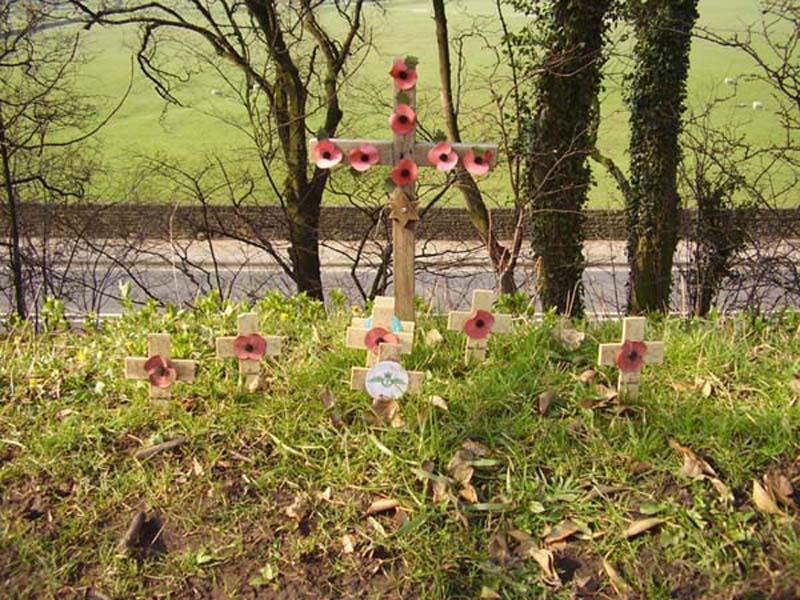
The original memorial at the crash site. This simple memorial has now also been replaced with a small stone memorial.