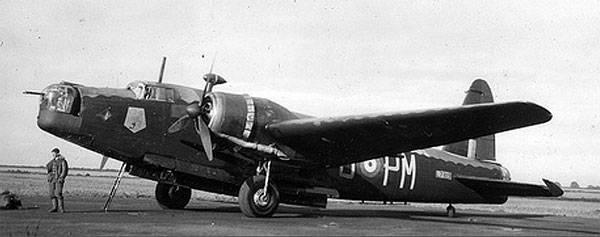
At 14.20hrs on 28th May 1945 this 17 O.T.U. aircraft took off from base at either Turweston or Silverstone (sources vary) for a training flight. Flying north they missed their turning point due to thick cloud and having flown on became lost. They reduced their height to try and locate their position but in doing so struck the ground on Bycliffe Moor, near Gill House about two miles east of Conistone in Upper Wharfedale. Sadly the crew were all killed instantly in the crash which occurred at 15.50hrs. The severely damaged state of the wreckage would suggest that the aircraft was loosing height repaidly when it crashed.
Pilot - W/O Edward Cyril Cole RAFVR (1445279), aged 23, of Kingswood, Surrey. Buried Harrogate Stonefall Cemetery, Yorkshire.
Navigator - Sgt James Mann RAFVR (1810780), aged 21. Buried Bells Hill Burial Ground, Hertfordshire.
Bomb Aimer - F/Sgt Arthur John Griffiths RAF(AAF) (859551), aged 32, of Cadoxton, Glamorgan, Wales. Buried Kimbolton Churchyard, Herefordshire.
Wireless Operator - Sgt John Duncan RAFVR (1826025), aged 21, of Edinburgh. Buried Piershill Cemetery, Edinburgh.
Air Gunner - Sgt Herbert Henry Rawnsley RAF(AAF) (809198), aged 25, of Whitecote, Leeds, Yorkshire. Buried Burmantofts Cemetery (Beckett Street), Leeds, Yorkshire (3/16429).
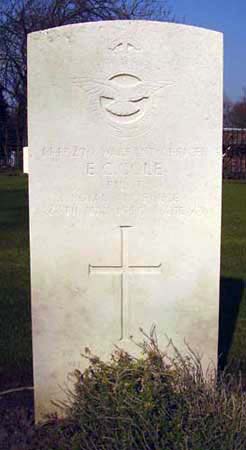
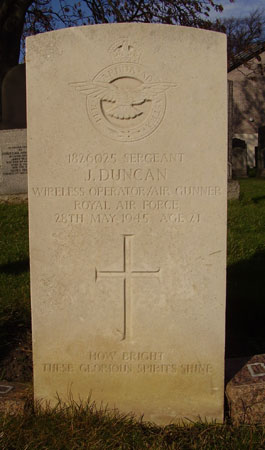
Two of the crew's gravestones; one in Harrogate, the other in Edinburgh. It is of note that the pilot of the B17 that crashed less than a mile away and only eleven days prior to this incident was also called Cole. Edward Cole was born on 13th September 1921. John Duncan was possibly someone of the same name born in Toronto, Ontario, Canada on 9th October 1915.
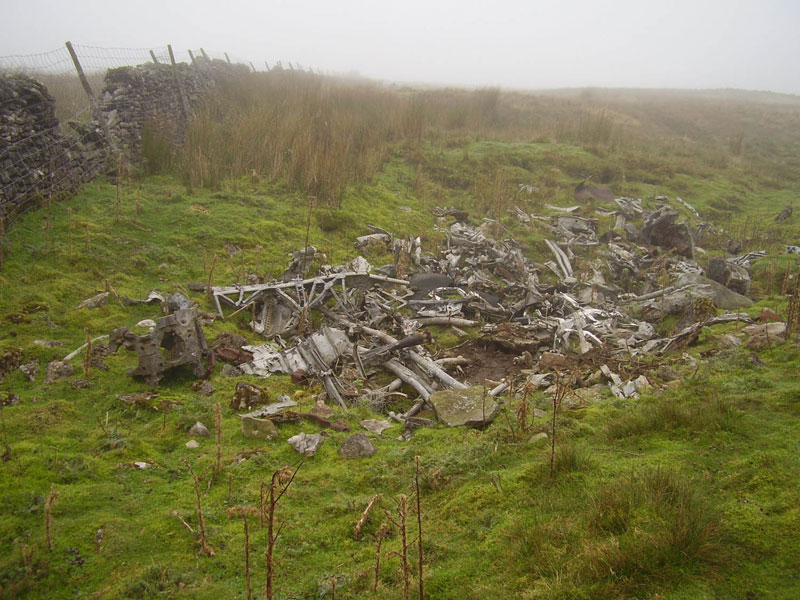
I first visited the crash site in April 2006 and I have been back a number of times to re-photograph a number of specific parts. A lot of the aircraft is still at (or near) the crash site although most is now in a poor condition.
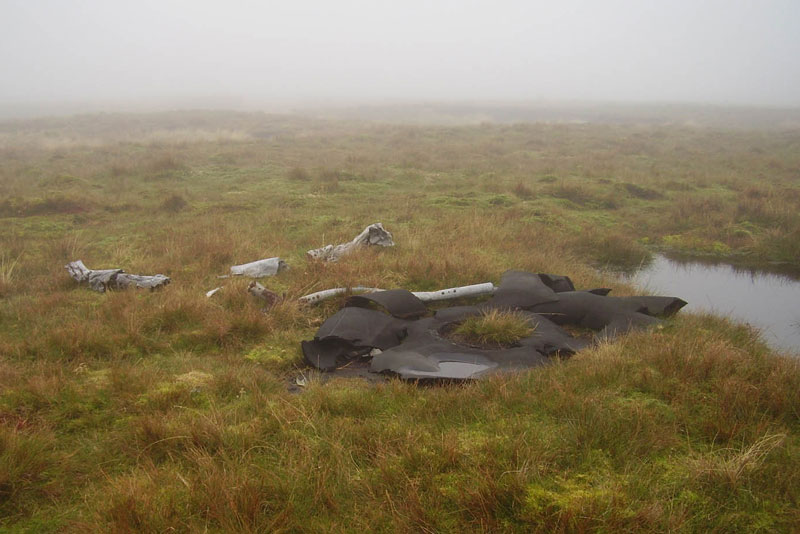
The remains of a tyre at the crash site.
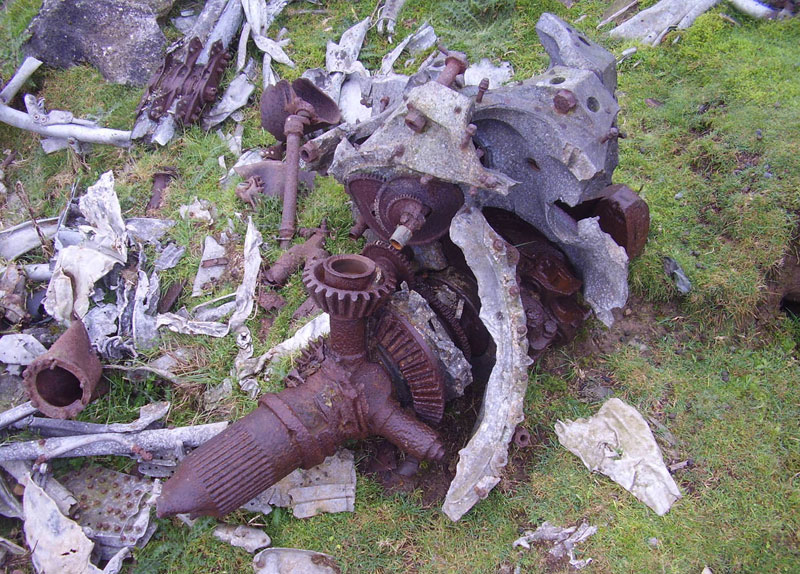
One of the shattered engines at the crash site.
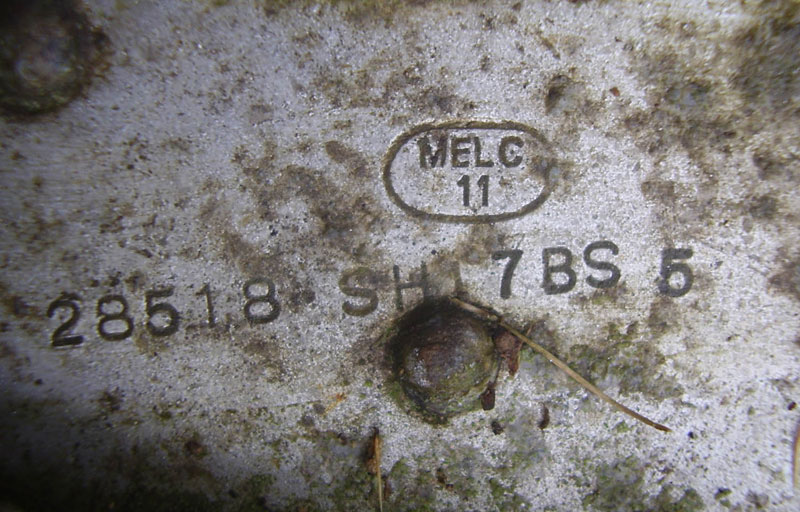
A good example of a Wellington part number confirming the type, as if the large amount of Wellington geodetic structure wasn't a good enough clue!
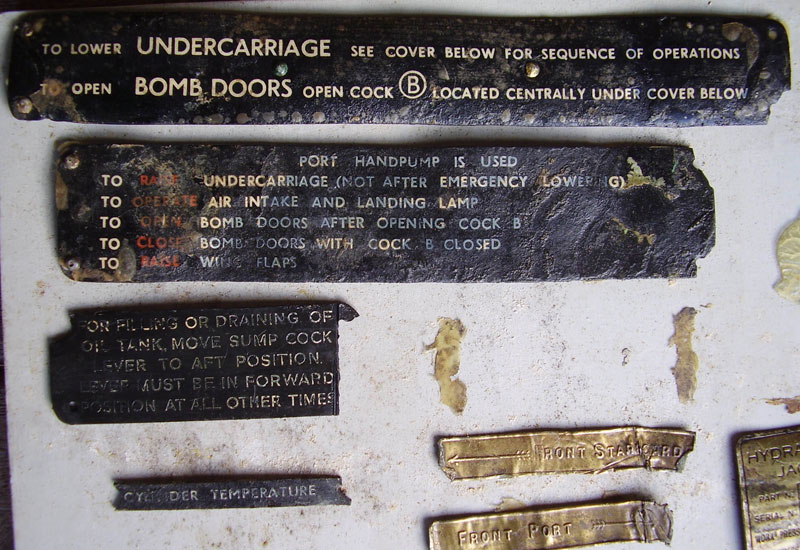
A number of plates picked up at the crash site by Nick Roberts in the 1970s.
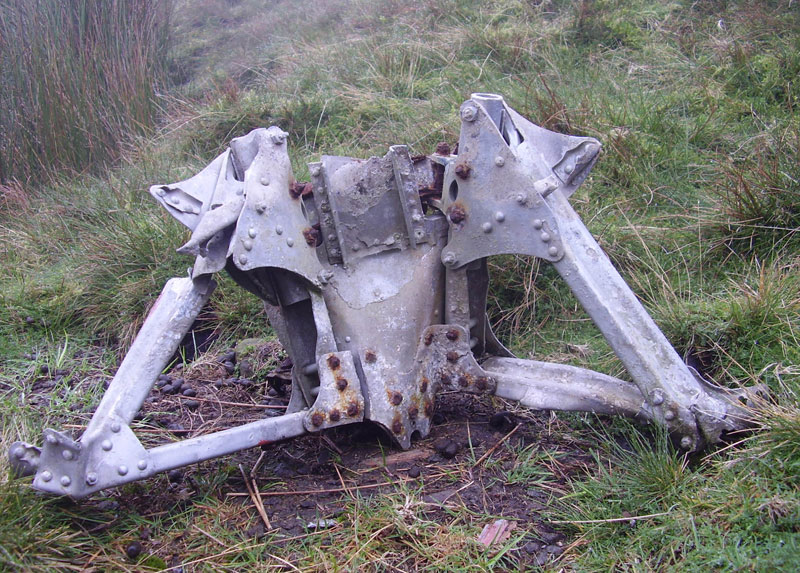
An interesting but unknown thing at the crash site.
Wellington HE226 was built to contract 124362/40 by Vickers Armstrong Ltd. It was issued directly to 1474 Flight on 22nd December 1942. 1474 Flight became 192 Squadron in early 1943. On 20th June 1943 it was taken on charge by 20th June 1943. A repair on site was made on 10th July 1943, which may have been for minor damage sustained in a flying accident. It was returned to 12 O.T.U. on 17th July 1943. It received Cat.B damage on or just before 3rd September 1943 which saw it taken away for a repair in works by Fairfields. With the repair complete it was eventually issued to 18 M.U. on 12th March 1944 and was then taken on charge by 17 O.T.U. on 29th March 1944. On 28th December 1944 another repair on site was made by a team from Vickers at Weybridge, why this happened is not yet known. It was returned to 17 O.T.U. on 11th February 1945. As a result of the accident in Wharfedale on 28th May 1945 Cat.E damage was the damage assessment and it was struck off charge on 5th June 1945.