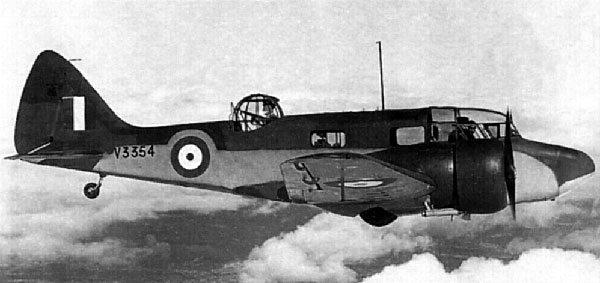
On 12th April 1941 this aircraft took off from Catfoss airfield with the intention of flying across the country to Silloth airfield but crashed in the Lake District before it arrived at the destination. On board with the pilot was a wireless operator and one other person and all were killed when the aircraft crashed near Braithwaite. Full details of what the crew were doing is not known because the third person appears to have been too old to have been aircrew, the purpose of the flight was officially recorded as being a wireless exercise but I suspect that there was more to it that just a basic exercise. I suspect (but cannot yet prove) that the third airman was a passenger and had requested a "lift" across to Silloth. The crew had obtained permission for the flight under the guise of a wireless training exercise which was authorised at Catfoss. Such flights around in the UK appear to have been common practice in the war. The records suggest that poor weather was forecast over the Lake District and was known by the ground personnel at Catfoss but prior to taking off it would appear that the pilot had not checked the weather forecast or informed flying control of their intended route which would take the aircraft into the poor weather. Had he informed them of his route flying control would not have permitted the flight. Having encountered poor weather across the northern Lake District, with rain and low cloud and with visibility limited the pilot was flying using his instruments when he lost control and the aircraft flew into a hillside near Braithwaite. Sadly all three men on board were killed. The site was located later in the day by Keswick police and the bodies of the crew were recovered. All were buried at Silloth five days later. Just two weeks earlier Hurricane V7539 had crashed less than a mile away from where Oxford T1201 crashed.
Oxford T1201 was built to contract B.19646/39 by Airspeed Ltd. at Portsmouth and was awaiting collection in February 1941. It was delivered to 2 (C)OTU at Catfoss on 16th February 1941 and as a result of this accident near Keswick on 12th April 19411 Cat.E2/FA damage was recorded.
Pilot - F/O Colwyn William Reeves Sawyer RAF (41212), aged 23. Buried Silloth Cemetery, Cumbria.
Wireless Operator / Air Gunner - Sgt Frederick John Bliss RAFVR (912225), aged 27. Buried Silloth Cemetery, Cumbria.
Passenger - F/Lt Reginald Edwin Brice RAF (43334), aged 42. Buried Silloth Cemetery, Cumbria.
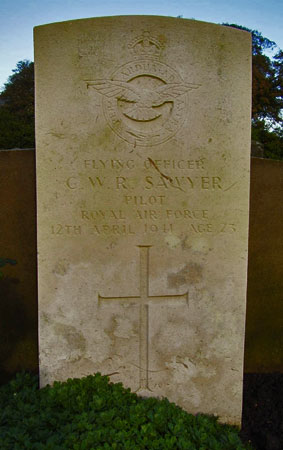
Colwyn Sawyer was born on 23rd May 1917 at Lancing, Sussex and was the son of Frederic William Campion and Winifred Ethel (nee Reeves) Sawyer; and the CWGC lists him as being a nephew of Mercedes Longstaff, of Balcombe, Sussex. His father appears to have played Rugby for Blackheath Football Club but was killed while serving with the Royal Engineers on 4th April 1917 in France, he is buried in Foreste Communal Cemetery, Aisne, France. His mother, older brother (Fred Richard Campion Sawyer) and the young Colwyn then left England in 1919 from Southampton by ship bound for Buenos Aires, Argentina but returned to England in September 1922. He then attended Imperial College London prior to joining the RAF and received commission in the RAF on 17th September 1938 to the rank of Acting P/O on probation. He was later graded as P/O on 25th July 1939 (he missed out the more common grading to P/O on probation as was more common in the 1930s) and was then promoted to F/O on 3rd September 1940. He had gained his Wings on 14th January 1939 and had a total of 61 hours flying on the Oxford type but with only fourteen hours flying time on instruments. The 2 (C)OTU / Catfoss ORB states that on 2nd December 1940 two Fairey Battles were flown to Catfoss from Silloth to undertake target towing flight work with the officer in charge being F/O Sawyer. I speculate that Oxford T1201 may have been returning to Silloth from Catfoss as part of his attachment at Catfoss but have no evidence of this as yet.
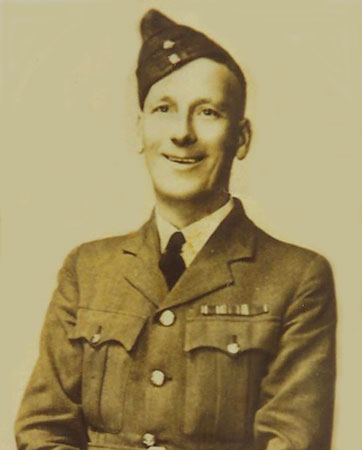
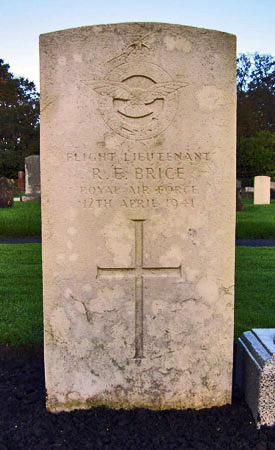
Reginald Brice was born in Ormskirk, Liverpool on 19th March 1899 and was the son of Edwin Greville and Rosina (nee Garbe) Brice. He served in the King s Royal Rifle Corps (K.R.R.C.) during the First World War and in 1919 he transferred to the 3rd Battalion of the Kings Royal Rifles and served in India. In 1921 he enlisted into the RAF on discharge from the Army and also married Doris Quartermaine at Chertsey, Surrey in the same year. He initially enlisted for twelve years RAF service which was later extended to twenty four years. During his RAF service he spent time in Palestine, Iraq, Egypt and Singapore. He was awarded the RAF Long Service Medal on 13th February 1936, with effect from 31st October 1935 while in the rank of Warrant Officer. He was granted a commission in the RAF to the rank of F/O on probation with effect of 30th April 1940 (with seniority of 29th February 1940) but it was rare not to initially receive a commission to the rank of P/O first before a later promotion to F/O and then to Acting F/Lt. Because of his age he wouldn't have been able to be aircrew during the Second World War. He was in the role of an equipment officer at Silloth just prior to his death but would appear to have been at Catfoss undertaking the role at the time of his death. On his death certificate his address given was in Silloth suggesting that his posting to Catfoss was temporary. His wife was also living with him at Silloth.
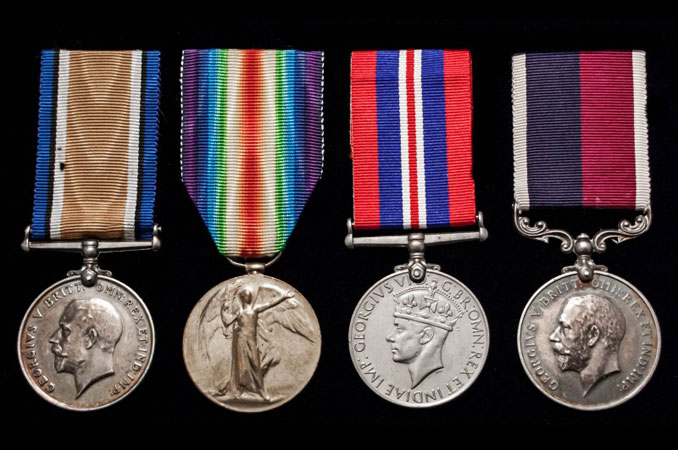
Reginald Brice's medal set sold at auction for just eighty pounds in 2006 and was purchased by Mr Kenneth Weston, Mr Weston kindly contacted me in January 2014 and supplied the photograph of Reginald Brice's medal set shown above. In August 2015 I was contacted by Dorothy Davies, grandaughter to Reginald Brice. I thank her for contacting me and for kindly supplying details of his grandfather's service and the photograph of him shown above. F/Lt Brice's medal set has also now been returned to his family. Superb result.
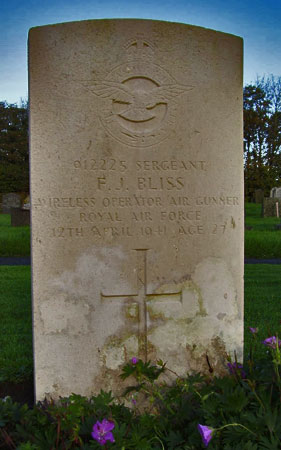
Frederick Bliss was born on 3rd November 1913 at Camberwell, London and was the son of William and Katherine Bliss. He married Olive Phyllis Merryweather in 1933 in London and had a son in 1936. In the 1939 Register he was working for an auctioneer and estate agent, and living at Greenwich.
In his book "Air Crashes in the Lake District" Michael Hurst credits a "B.Larson" as being killed in this incident but there is no evidence of this in 2 OTU's record book or anyone of this name listed on the CWGC database as having died on this date.
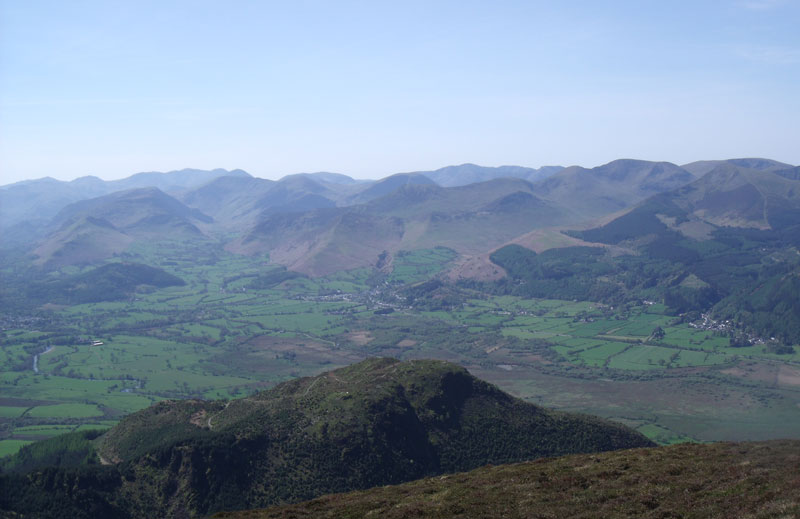
The general Braithwaite area as seen from Skiddaw. Ade Harris set about locating the crash site of Oxford T1201 in late-2013. Having found a witness to the incident who confirmed the aircraft had crashed into what is now a private area of woodland near Braithwaite he obtained permission for us to enter the woodland from the land owner Mrs Sheldon (via her mother), the land agent and the Lingholm Estate. We were kindly given a small window to locate the site which is on strictly private land and is in constant use for pheasant breeding and shooting. My thanks to all parties approached for kindly allowing our visit to record the location. The majority of our finds were located in this area of dead ground in the woodland (shown below).
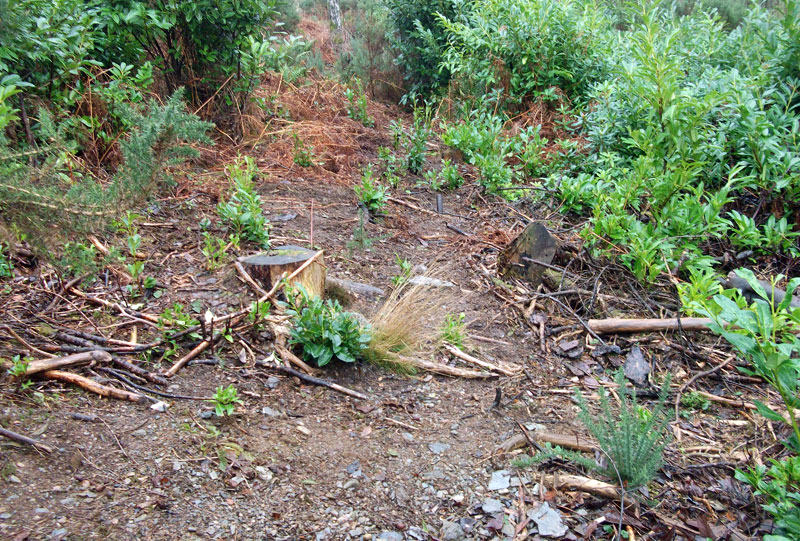
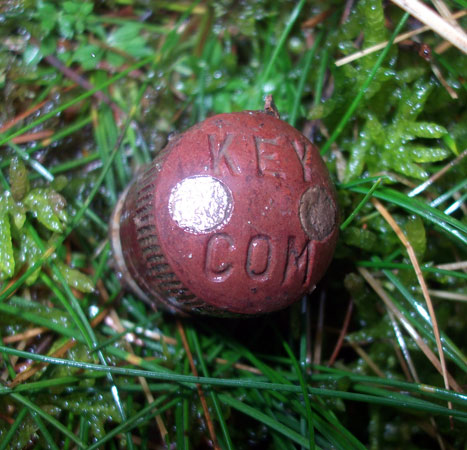
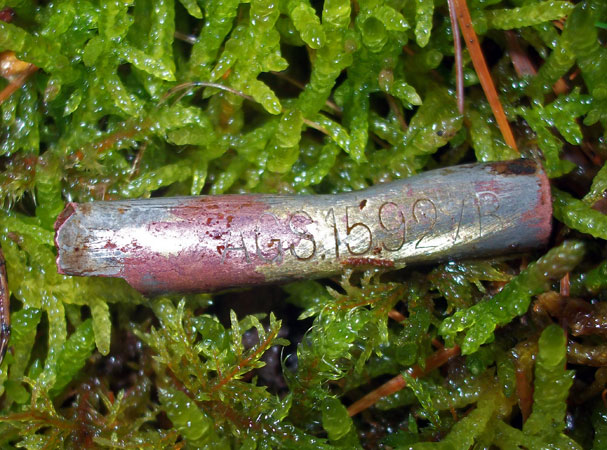
Ade Harris and I located numerous tiny fragments of the aircraft at the crash site in December 2013. Photgraphs are shown here of a number of the items with lettering on them. The "KEY COM" terminal may have been part of a morse key. The weather was not kind to us during our visit but despite this I was able to take a number of reasonable photographs to document our finds.
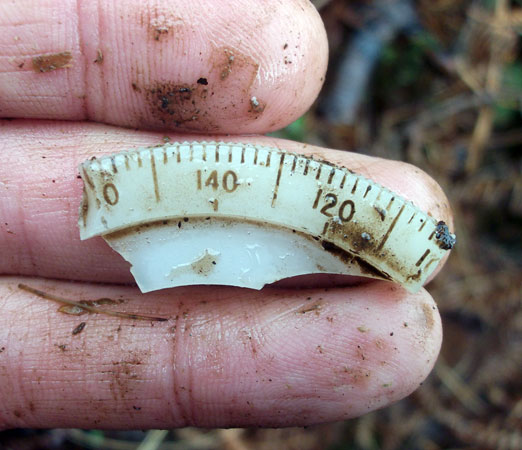
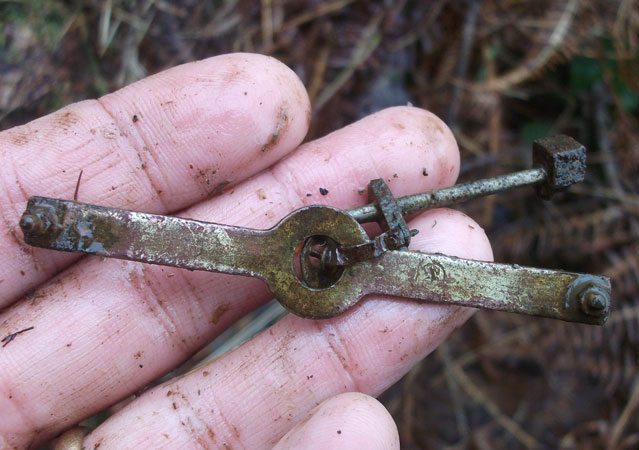
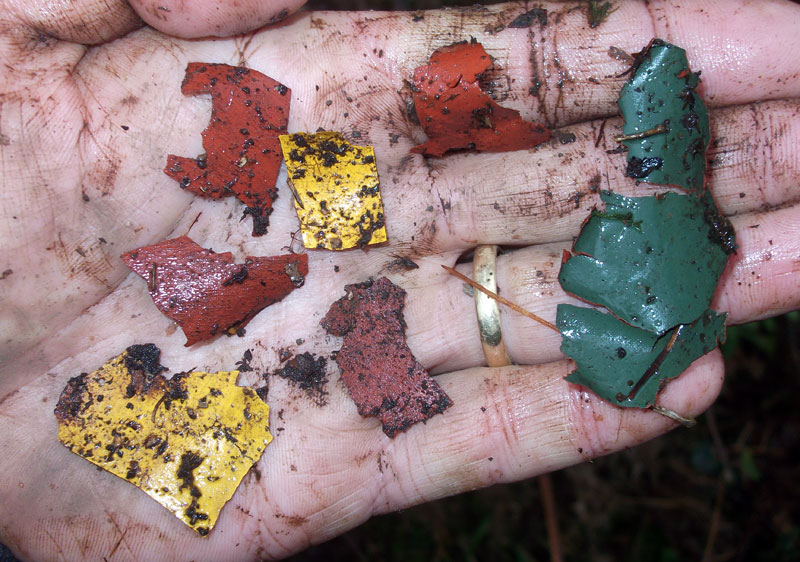
The area is littered with small fragments of what appears to be coloured paint and an example of which is shown above.
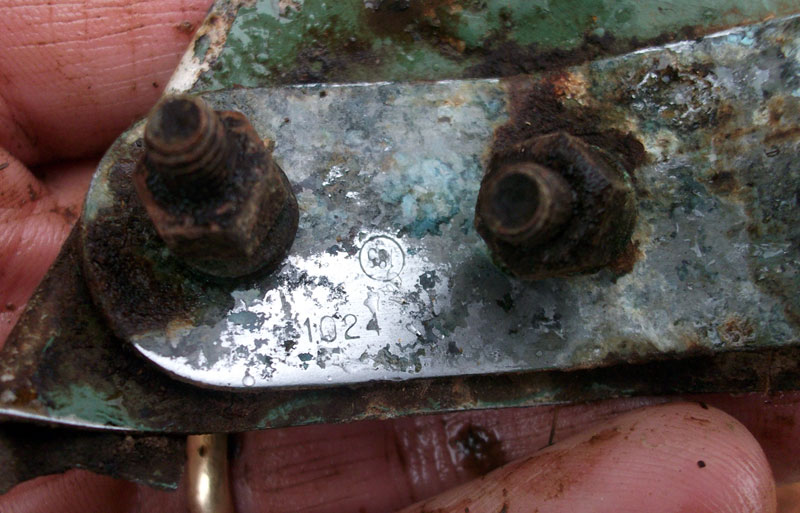
A small piece of the aircraft airframe containing a typical Airspeed Oxford part number, the "10" prefix on the number refers to the Airspeed "AS10" design number for the Oxford type.