Barracuda P9828 near Coniston.
During the night of 20th December 1943 the crew of this aircraft were flying low in the Lake District, the aircraft had just flown the full length
of Coniston Water with it's navigation and landing lights on and was seen to pass over Coniston village heading north-east. Little else about the
incident is known other than the aircraft had just made a climbing turn to starboard when it flew into rising ground, narrowly missing farm buildings,
hit a drystone wall and exploded. The aircraft was completely destroyed and the crew of three sadly killed. The crew were attached to HMS Nightjar
which was based the Fleet Air Arm airfield of RNAS Inskip in Lancashire.
Pilot - Acting Sub Lt Gordon Frederick Hopewell RNVR, aged 21. Cremated Nottingham Crematorium.
Observer - Acting Sub Lt William Herbert Rostron Young RNVR, aged 19, of Bath, Somerset. Buried Inskip Churchyard, Lancashire.
Wireless Operator - Leading Airman Dennis Buttery RN (86846), aged 19. Buried Ruddington New Churchyard, Nottinghamshire.
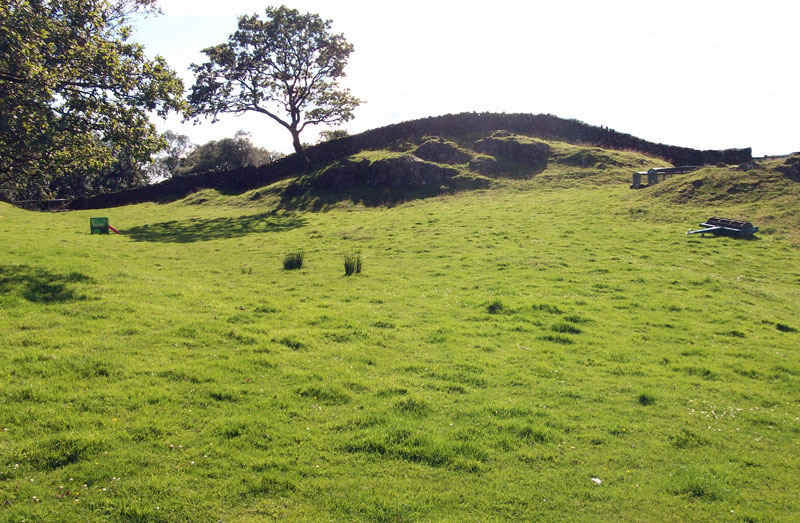
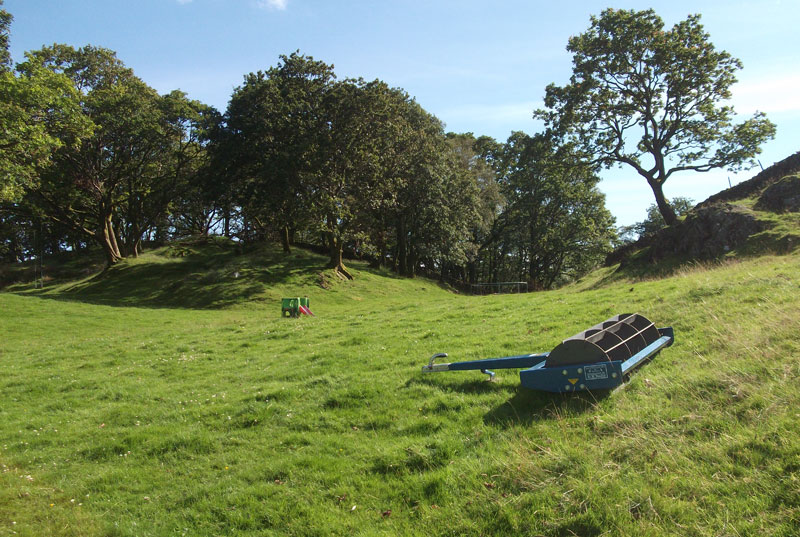
Mr Adrian Harris and myself located the crash site in a field between Skelwith Bridge and Coniston in August 2012, any crater that remained when the aircraft
exploded has long since been filled in. A metal detector was ran over the field where the aircraft was said to have crashed to confirm the location and while a
few small fragments were located just under the surface using this method it resulted in the tent-peg to aircraft relic ratio being somewhat greater than was
hoped for at the start of the day. This metal detector search was pretty much abandoned as every trace turned out to be a tent peg. We then set about trying
to work out where the aircraft had crashed into a wall as described in an account found in the former Millom air museum when Ed Stephenson visited the site in
1977. In this account he referred to the point of impact being on the crest of a hill with a furrow leading to a repaired wall with pieces of the aircraft
being built into this wall and on a small rock outcrop. The account also refers to children being employed in picking up all fragments of the aircraft in the
pasture. Here began a study of drystone walling around the crash site! A series of farm buildings have been built close to the crash site in the years after
the War and it appears that the original wall line that existed in 1943 is now not the same in 2012. It is possible that the wall was moved (or rebuilt) to
line up with the end of these newer buildings. A common drystone wall building technique was to use existing rocks or rock outcrops and form walls along the
edges of them. In this case the original wall line passes over the top of part of the outcrop as one would expect and then rather than to use a further rock
outcrop it curved to line up with the end of the modern farm building. This assumed newer part of the wall didn't look as well built as the other sections of
walling around the site nor did the stones have as much moss on them as other sections of wall.
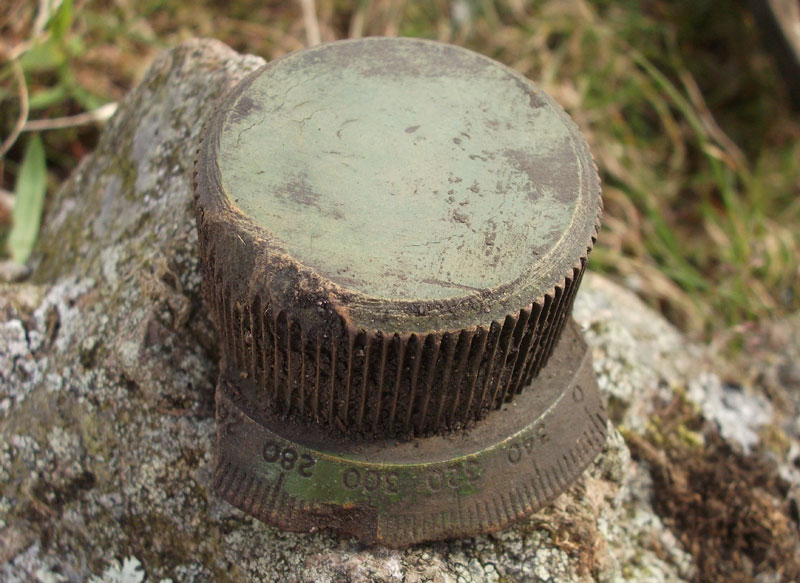
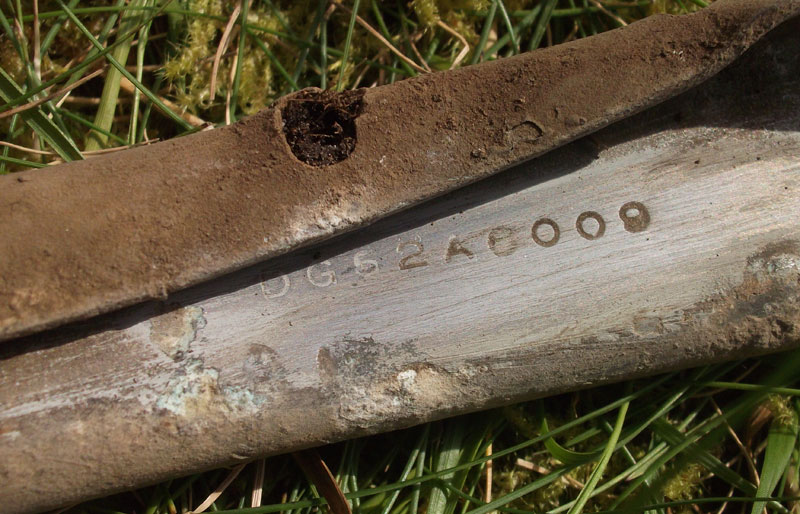
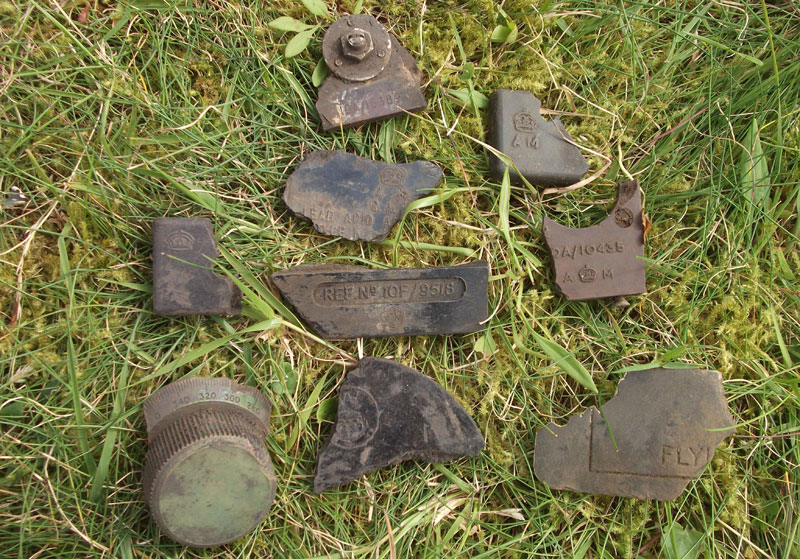
Numerous tiny fragments of the aircraft were found on the surface of one of the rock outcrops near the existing wall and then further fragments on top of a
second outcrop and some of these fragments are shown in the photographs below. The second outcrop had no wall on it but had similiar stones on the surface that
are commonly used as in-fill for drystone walling. It appears that the large stones from the existing wall were removed and re-used but the in-fill left on
the site of the orginal wall.
At the time of creating this webpage I also assume that the children were asked to pick up any bit of the aircraft they could find and instead of removing it
from the area they threw it at the wall and damaged section of wall where upon many of these pieces either lodged in it, in the ground where the wall was damaged
or bounced off onto the rock below. The rock outcrop and wall are shown on the right of the photographs above and below.
Part of a dial from a piece of navigation equipment.
The only fragment of alluminium with a part number that we found on the surface on the rock outcrop.
A collection of bakerlite fragments found at the crash site showing numerous Air Ministry reference numbers.
Barracuda P9828 was built built and ready for collection on 27th May 1943, it was taken on charge by 778 Squadron based at Crail in
June 1943 but was flown to the RAE on 13th July 1943, on 27th July 1943 it was taken on charge by 747 Squadron at Inskip and sustained Cat.Z damage
as a result of the accident detailed above in November 1943.
Gordon Hopewell was the son of Fred and Phoebe May Elizabeth (nee Rhodes) Hopewell and was born on 25th July 1922 at Basford, Nottinghamshire. When the 1939 register was made he was living with his parents at Carlton, Nottinghamshire and was an ARP warden. By the time the CWGC compiled their records his parents were living at Wollaton, Nottingham. He is also commemorated on the Trowell village war memorial in Nottinghamshire
Dennis Buttery was born on 12th March 1925 at Ruddington, Nottinghamshire and was the son of Rowland and Elsie (nee Wheat) Buttery. His mother was from Basford, Nottinghamshire and may well have known Gordon Hopewell's mother who was also from the same place.
He is commemorated on the Ruddington War Memorial.
William Young was born on 5th March 1924 possibly in Egypt and was the son of Charles Lawrence Rostron and Lilian Alice (nee Heritage) Young. His parents appear to have travelled the world and had lived in Egypt in around 1927. He received a commission in the RNVR to Acting Sub-Lt on 5th September 1943. When the CWGC compiled their records his parents lived at Bath, Somerset. His father died in Australia in 1973.
I thank Mr Adrian Harris for arranging our visit to the locate the crash site and to Mr Martin Meredith for his help and assistance.