On 30th January 1944 the crew in this No.5 Air Observer School aircraft were undertaking a night navigation training flight when the aircraft flew into the side of Starling Dodd on the side of Ennerdale and caught fire at 04.30hrs. At the time of the accident the aircraft was running low on fuel. One of the crew was killed in the accident and the navigator was so seriously injured that he died while being carried down the mountainside. The two others named below are believed to have been in this aircraft and survived.
Anson MG393 was delivered as new to No.1 (O)AFU on 12th September 1943 and was transferred to 5 A.O.S. on 22nd September 1943. It was slightly damaged on 21st October 1943 that saw it repaired on site and returned to 5 A.O.S. on 23rd October 1943. As a result of the crash on 30th January 1944 Cat.E/FA damage was the damage assessment and it was struck off charge.
Pilot - WO2 John Leonard Tennyson RCAF (R/148729), aged 27. Buried Blacon Cemetery, Cheshire.
Navigator U/T - P/O William Henry Williamson RAFVR (169329), aged 28. Died of injuries. Buried Romford Cemetery, Essex.
Wireless Operator / Air Gunner - Sgt Ronald William Robert Marshall RAFVR (1578623). Injured.
? - LAC Stanley Kenneth Lawry RAFVR (1339504). Injured.
John Tennyson was born on 6th December 1916 at York, Ontario, Canada and was the son of Gordon and Cora (nee Perry) Tennyson. His father was Canadian but his mother was born in New York. In the 1930 US Census they are recorded as living in Rocky River, Cuyahoga County, Ohio with John's younger brother Robert. In the 1940 US Census the family were living in Bay Village, Ohio.
William Williamson was the son of Henry and Hannah Maria Williamson and was born on 4th July 1915. As a child he attended Ashby Grammar School, Ashby-de-la-Zouch. On the 1939 Register the family were living at Dagenham. He married Dorothy Evelyn Turner at Romford, Essex in early 1942. He received a commission to the rank of P/O on probation (emergency) on 23rd December 1943.
Stanley Lawry was born in Plymouth on 26th April 1922 and was the son of Henry Stanley and Gladys Madeleine (nee Davey) Lawry. The family were at Tavistock in the 1939 Register. He married Anne Batchelor in Somerset in 1950 and died in Aberconwy in 2003.
Ronald Marshall was born in Oswestry, Shropshire on 25th July 1922. As a young man he worked as a clerk for the Great Western Railway. He married Dorothy Gladys Hayes at Llanfyllin, Montgomeryshire in 1946 and died in Wiltshire in 2015.
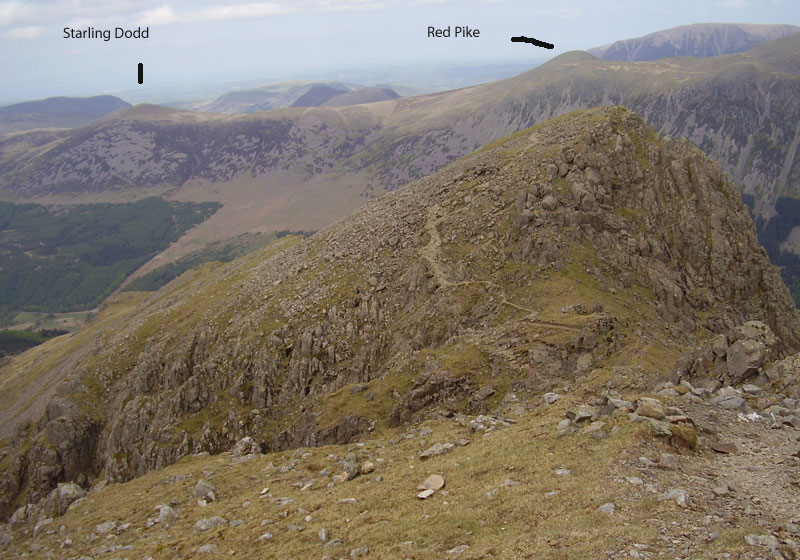
Starling Dodd is the round mountain to the left of the photograph taken from the otherside of Ennerdale with Steeple in the foreground. Red Pike is also marked; where Wellington HZ715 crashed in June 1944.
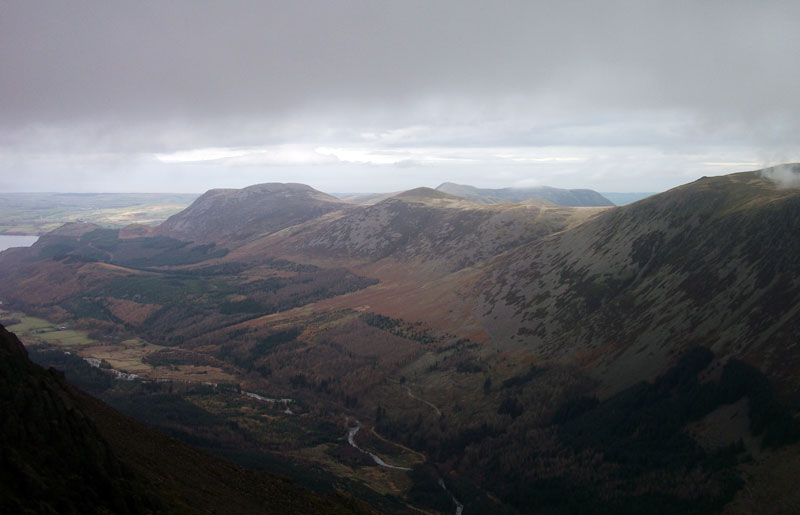
Starling Dodd is the mountain in the centre of this photograph, as seen from Pillar Rock.
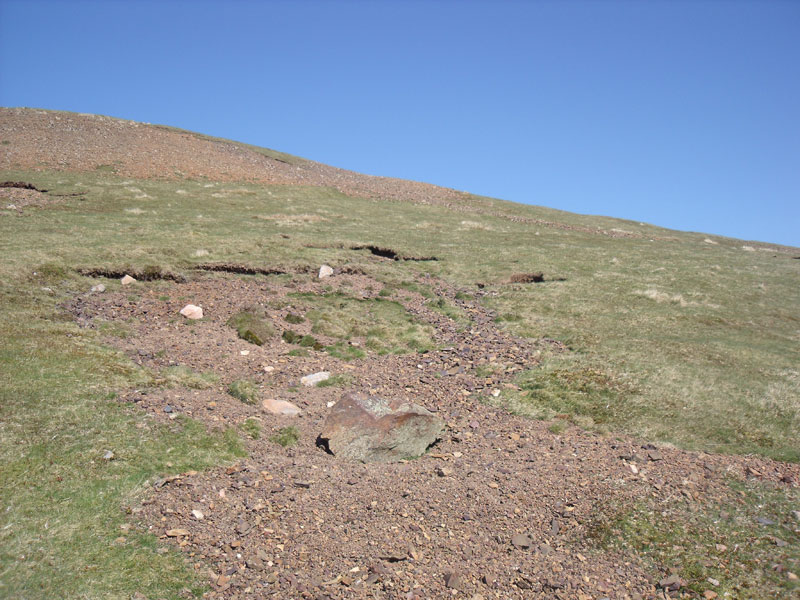
The aircraft crashed onto this side of the mountain with only very tiny and a small number of remains of the aircraft being found, in April 2011, in the steep scree. The aircraft's pitot head and other small less damaged pieces of the aircraft were found much lower down the mountain suggesting that the aircraft had first struck the ground lower down and then ran uphill before it came to rest on the steep ground.
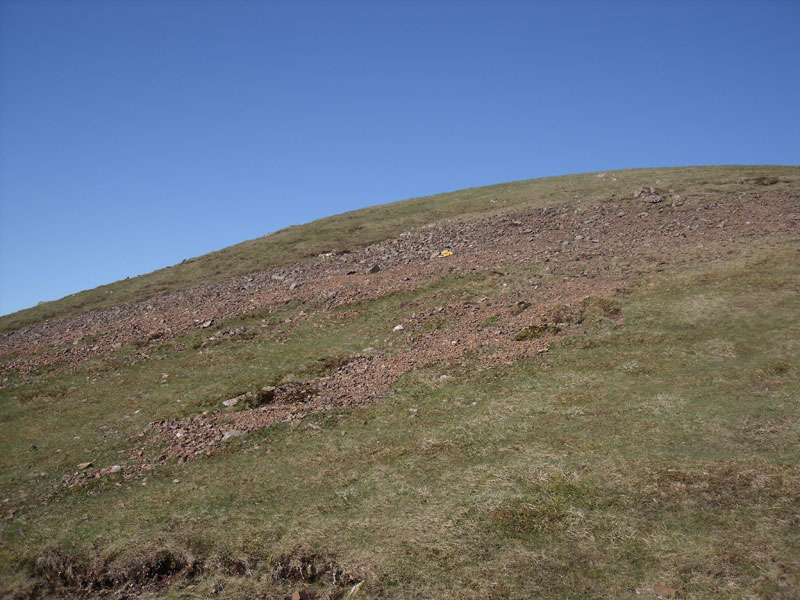
The aircraft came to rest in the area shown on the photograph shown above.
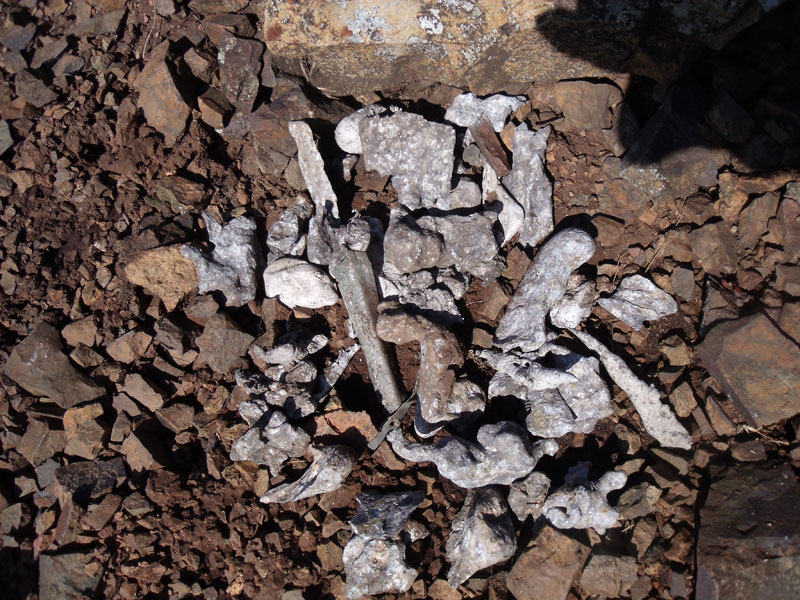
Small fragments located at the crash site in April 2011.
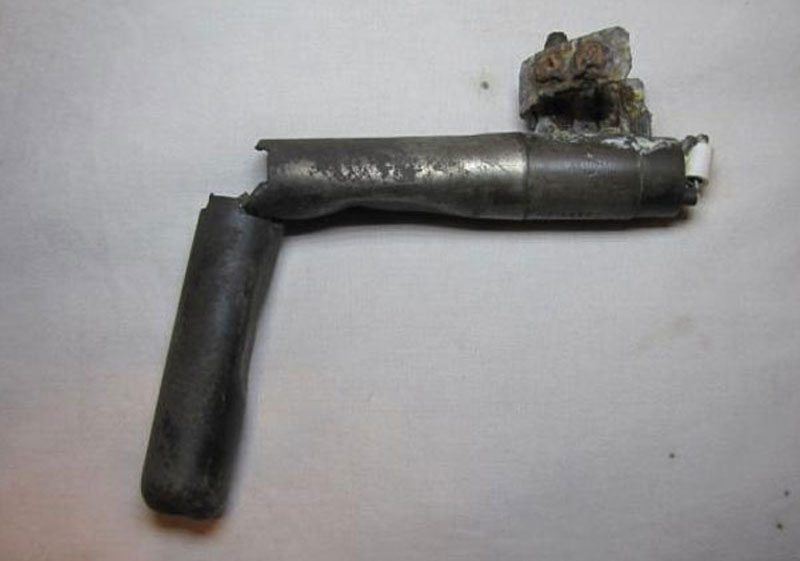
The pitot head found at the crash site in March 2011.
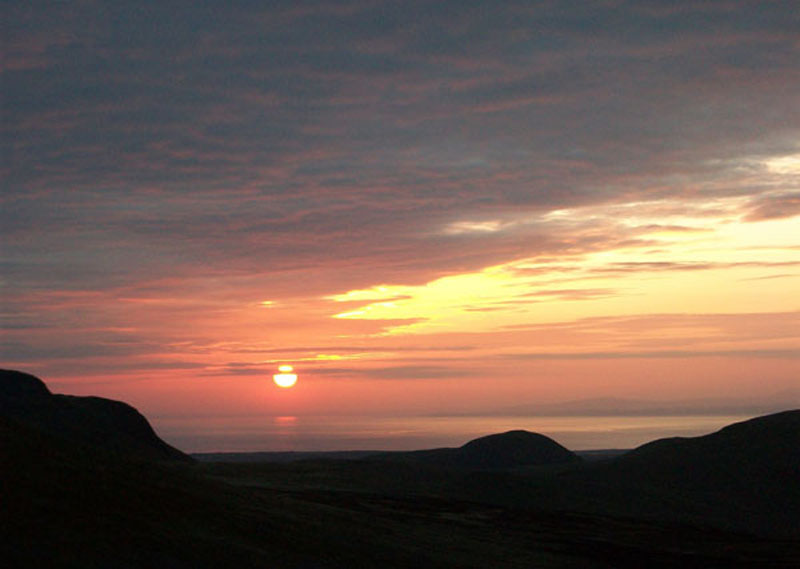
I visited this crash site in April 2011 during a holiday in the Lake District when I backpacked around some fifteen crash sites over a period of a week. The photograph above shows the sun setting behind Starling Dodd on one of these nights I camped out. It shows the close proxity of the Solway Firth to this side of the Lake District and had the aircraft not struck this mountain it was probably clear of all the hills and would almost certainly have made a safe return to base.