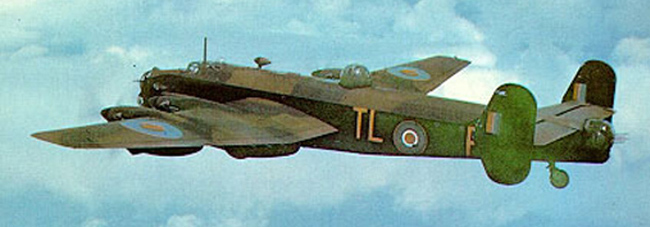
Halifax LL505 came to grief on Great Carrs in the Lake District on the night of 22nd October 1944 while the crew were undertaking a night navigation exercise flying from
Topcliffe in Yorkshire with 1659 Heavy Conversion Unit. The crew; seven Canadians and one Scot, took off from Topcliffe at 14.05hrs and the flight plan would have seen them navigate to various turning points in the UK before returning to land back at base on completion of the training exercise. By 18.56hrs the crew had encountered very thick cloud whilst over the north-west of England and they became hopelessly lost. They made a series of radio transmissions including a "Darky" message beginning at 18.56hrs that were picked up on the ground. Upon receiving the "Darky" Topcliffe Flying Control transmitted instructions including a bearing fly to locate Topcliffe and a height to remain above to clear high ground. Half
an hour later the crew were still struggling and were informed to climb to a safe height of 4,000ft and to orbit the area they were flying over.
Topcliffe Flying Control made a request to Church Fenton airfield that a Mosquito be scrambled to assist the Halifax crew. A first 307 Squadron Mosquito ("A-165") flown by P/O Jerzy Nowakowski and F/O Emil Sluszkiewicz was despatched at 19.50hrs, the Mosquito would have probably been equipped with the latest night-fighting direction finding equipment and with the
Halifax presumably being only one in the area the Mosquito crew were homed to it with the aim of guiding the Halifax crew to make a safe landing. The Mosquito crew were successful in locating the Halifax but literally as they located it they witnessed it crash on Great Carrs. The first Mosquito landed at Church Fenton at 21.10hrs. A second Mosquito ("N-113") took off at 22.05hrs and landed back at Church Fenton at 22.55hrs.
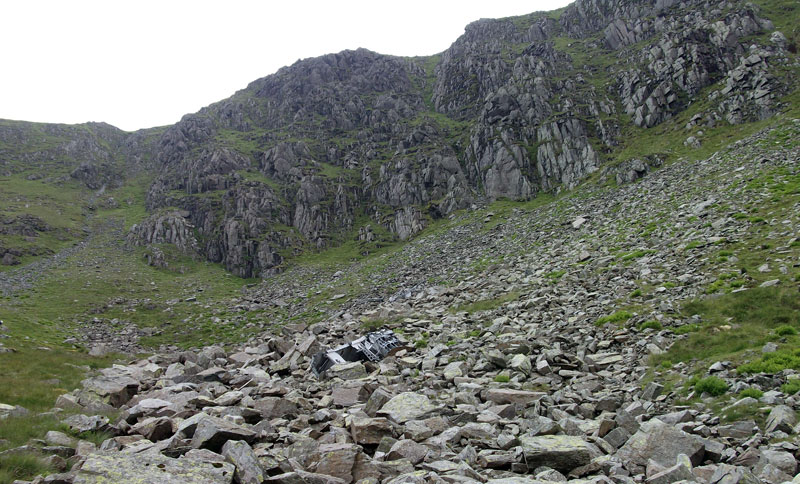
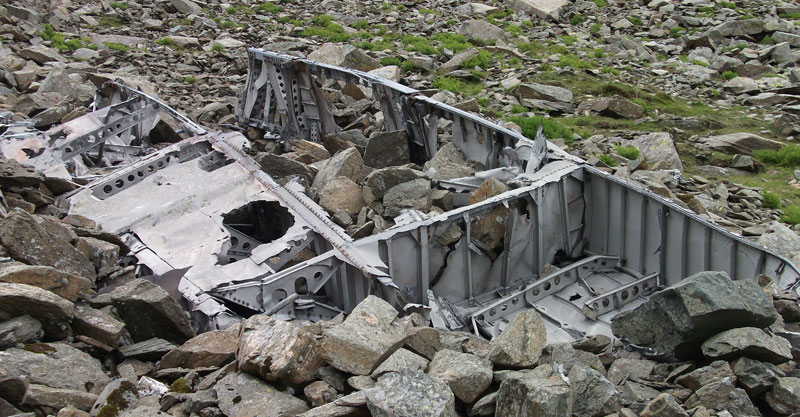
What appears to have happened is that instead of climbing the crew descended so they could get a visual fix on the ground but by this stage it was flying too low in the heart of the Lake District. The aircraft hit a sloping grass and rock stewn fellside near to the top of Great Carrs while flying in roughly from the west and sadly all on board were killed. A small part of the wreckage must have either caught fire near the crash site or was set on fire after the crash by the RAF team that were sent to clear the site because a large area shows signs of an intense fire. The site was inaccessable to large vehicles which were commonly used to clear larger pieces of wrecked aircraft so the belief is that the larger items were then pushed off the top of the mountain over a steep rockface into Broad Slack where much of it remains to this day. Some of the parts many also have carried on over the edge following the momentum of the crash.
Since creating this webpage I have been contacted by people suggesting that the aircraft crashed into the top of Broad Slack or that it clipped the top and went over the edge in the momentum of the crash. The aircraft certainly did not fly into the top of Broad Slack flying in from the east and most of the wreckage cannot have continued over the edge with the momentum from a crash flying from the west because the massive undercarriage legs are up where the aircraft crashed but the wings are down in Broad Slack. With the legs being located inside the wings it seems improbable that they would fall off in the crash but more likely the RAF removed the heavy legs to lighten the load of the wings so the could move them. Further more, I have also located the place where the aircraft first struck on the western side of the mountain. I climbed up the crags that form the wall of Broad Slack in July 2014 and found a few small pieces of the aircraft wedged in rocks which certain backs up the story of parts being rolled off the edge. Part of the wreckage must have caught fire when it landed on the scree below as there are signs of another intense fire on the scree. The parts of the aircraft that are known to have been or are still in Broad Slack are large parts of both wings, all four engines, all four propeller bosses, the aircraft's centre section and rear fuselage and mid upper turret fuselage area. I have never heard of anyone remembering finding anything of the cockpit area, the gun turrets, ammunition or large tail section in Broad Slack and would welcome recollections of anyone visiting the site in the years after the crash to suggest exactly what was in Broad Slack and what was on top in the years after the crash. Today the wreckage on the scree in Broad Slack is still moving slowly with the rocks damaging the larger wing sections.
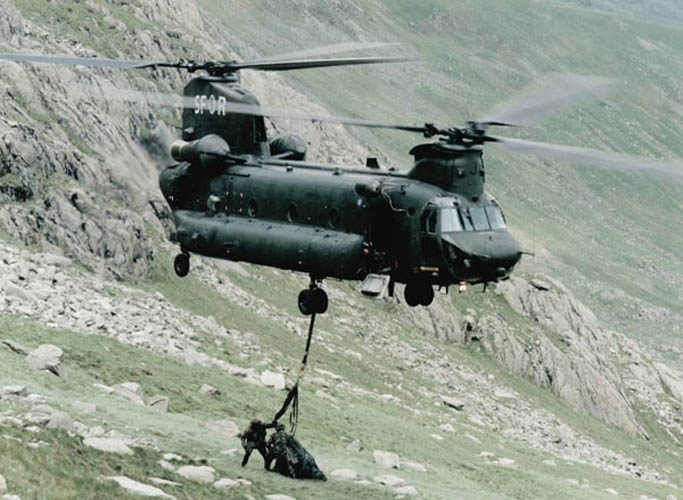
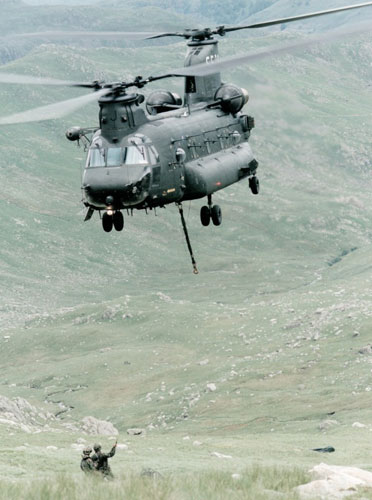
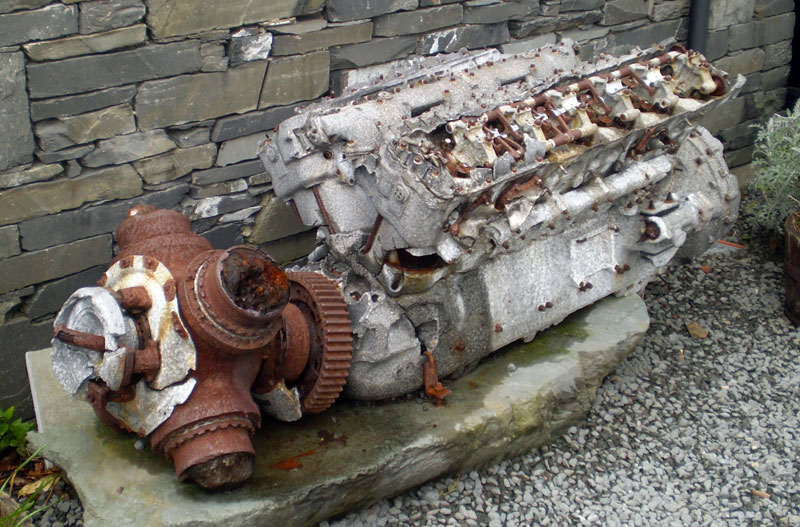
When people became interested in preserving historic aircraft a number of groups removed sections of this aircraft from Broad Slack; part of the tail was used by the group that created the Halifax at the Yorkshire Air Museum but they must surely have used other parts. A large upper fuselage section with the mid upper turret hole is on display at Newark Air Museum. Two of the Merlin engines were removed from the site by an Odiham-based Chinnock helicopter to be placed in museums; one is now at the Ruskin Museum in nearby Coniston along with a propeller boss and gear and the other engine is believed to be at a museum in the "south" of England; Newark is suggested as is the RAF Museum Hendon. The Ruskin Museum engine was originally on display in the village churchyard. I am told that the Yorkshire Air Museum has one of the engines but is almost certainly not on display due to their apparent no-crash-relics display policy. The former Millom Air Museum may have been a receipient of some of the aircraft wreckage but since its closure in 2011 the where-abouts of their collection is unknown. An MoD licence to excavate / recover items from the site was granted on a number of occasions, I suspect some were to recover parts for the Halifax at the Yorkshire Air Museum but I would welcome contact from anyone involved in any of these licences and would love to see any photographs of items found and recovered. The dates licences were granted were 10th May 1989, 22nd January 1990, 28th May 1991, 18th June 1991, 19th April 1993, 16th May 1994 and 12th March 1997.
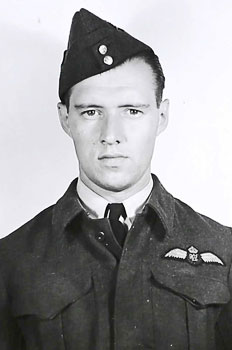
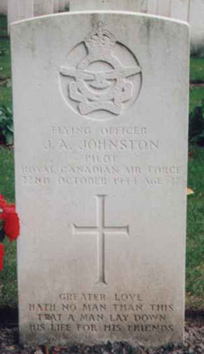
Pilot - F/O John Armstrong Johnston RCAF (C/29783), aged 27. Buried Blacon Cemetery, Chester.
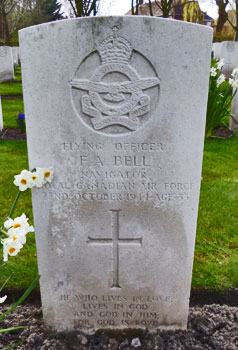
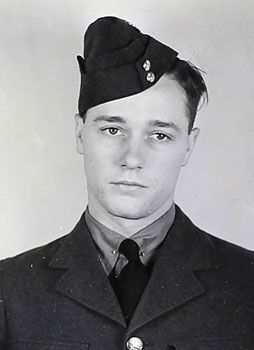
Navigator - F/O Francis Aubrey Bell RCAF (J/39888), aged 33. Buried Blacon Cemetery, Chester.
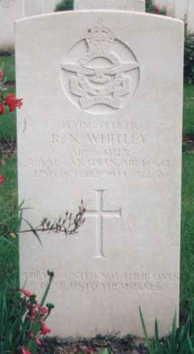
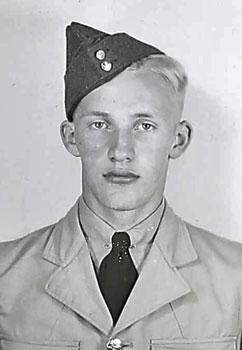
Bomb Aimer - P/O Robert Newton Whitley RCAF (J/38243), aged 20. Buried Blacon Cemetery, Chester.
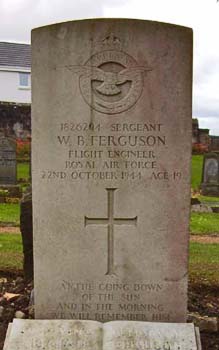
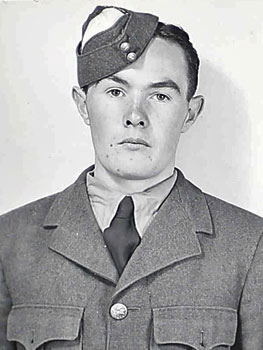
Flight Engineer - Sgt William Brisbane Ferguson RAFVR (1826294), aged 19. Buried New Monkland Cemetery, Lanarkshire, Scotland.
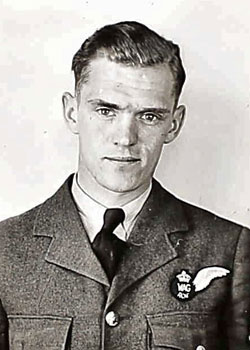
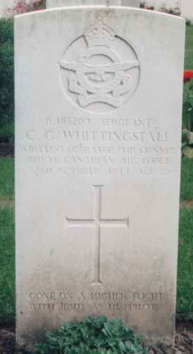
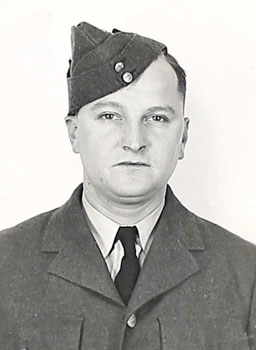
Wireless Operator / Air Gunner - Sgt Calvin George Whittingstall RCAF (R/198207), aged 20. Buried Blacon Cemetery, Chester.
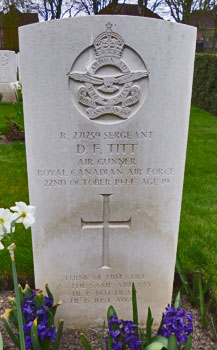
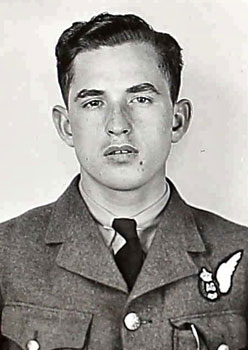
Air Gunner - Sgt Donald Fraser Titt RCAF (R/271259), aged 19. Buried Blacon Cemetery, Chester.
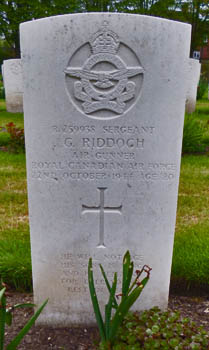
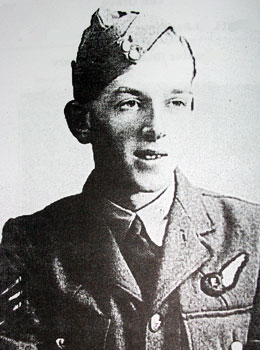
Air Gunner - Sgt George Riddoch RCAF (R/259938), aged 20. Buried Blacon Cemetery, Chester.
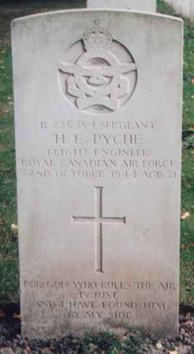
Flight Engineer - Sgt Harvey Ellsworth Pyche RCAF (R/225354), aged 21. Buried Blacon Cemetery, Chester.
This photograph shows the seven regular members of the crew who were killed in the accident, all are shown apart from the second flight engineer Sgt Pyche who was not a regular member of the crew. Left to right are Ferguson, Johnston, Whitley, Titt, Riddoch, Bell and Whittingstall. This photograph was found outside the Ruskin Museum in Coniston in 2000 but has now gone.
John Armstrong Johnston was the son of William Richard and Emily Maude (nee Armstrong) Johnston and was born on 12th October 1917 in Pembroke, Ontario, Canada. He had been working as a gold miner at the MacLeod Cockshutt Goldmines, Little Long Lac, Ontario for three years when he enlisted for RCAF service on 8th November 1940 in Fort William, Ontario. He trained as a pilot in Canada and was awarded his Pilot's Wings on 29th May 1942 and he then flew as a staff pilot serving with No.4 Bombing and Gunnery School at Fingal. While in Canada he married Janet Isabella (Nita) Laing on 27th April 1943 and her address was given as Minitonas, Manitoba. John Johnston received a commission to the rank of P/O on 4th July 1943. He must have later been re-selected for service overseas and was posted overseas to the UK in October 1943. He was promoted to F/O on 4th January 1944 and received further training at 21 (P)AFU and at 82 OTU The main part of his crew formed at 82 OTU, namely Johnston, Bell, Whittingstall, Titt, Riddoch and a different bomb aimer called Sgt Eddie D Pickard RCAF (R/192700). This six-man crew were then posted to 1659 HCU on 9th September 1944 and were joined by Sgt Ferguson as their regular flight engineer. Pickard left the crew in late September / early October 1944 to join the crew of F/Lt Donald Selfton Rogers RCAF (J8917), Rogers' crew would later join 433 Squadron and survive the war. Pickard's place as bomb aimer in John Armstrong's crew were taken by Robert Newton Whitley. Whitley had become a spare bomb aimer following his original crew being involved in a crash at Topcliffe on 31st August 1944 involving Halifax LL168 killing an air gunner.
Calvin Whittingstall was born on 6th December 1923 in Toronto, Ontario, Canada and was the son of George and Edith (nee East) Whittingstall. Both his parents were born in England but had emigrated to Ontario, Canada before their marriage in 1923 though they appear to have separated by 1942. Calvin and his mother later lived in Mount Dennis, Ontario, Canada. After attending high school and college he worked for the Canadian Kodak Company as a stock keeper. He enlisted for RCAF service on 22nd October 1942 and after training in Canada was awarded his air gunners' flying badge on 13th March 1944. He was posted to the UK in April 1944 where he trained at 2 (O)AFU and 82 OTU before posting to 1659 HCU with his crew on 9th September 1944.
Francis Bell was the son of Aubrey Arthur and Winnifred (nee Campbell) Bell and was born on 4th January 1912 at Montague, Prince Edward Island, Canada. He appears to have moved to the St.John area of New Brunswick with his mother while his father remained on Prince Edward Island. He had two brothers who would also serve in the RCAF during the Second World War. From 1933 until enlisting into the RCAF he had worked as a book-keeper, accountant and auditor. He enlisted in Moncton, New Brunswick on 29th September 1942 and undertook basic training in Canada. He received a commission to the rank of P/O on 23rd December 1943 receiving his navigator's badge on the same date. He left Canada for service in the UK in April 1944 he would later rise to F/O on 23rd June 1944. On arrival in the UK he trained at 8 (O)AFU and 82 OTU before posting to 1659 HCU on 9th September 1944 with John Johnston and his crew.
Robert Whitley was born on 19th July 1924 in Regina, Saskatchewan, Canada and was the son of Leslie Alfred and Mary Newton (nee Duff) Whitley. As a young man he worked as an office clerk for Imperial Oil in Regina before he enlisted into the RCAF there on 13th October 1942. After training in Canada he was awarded his air bombers' flying badge and a commission on 12th November 1943. On arrival in the UK he trained at 7(O)AFU and 82 OTU where he joined the crew of P/O E R Millbank RCAF (J/35420). He and his then crew completed their training at 82 OTU and were posted to 1659 HCU on 4th August 1944. Millbank and other members of his then crew were involved in a serious flying accident on 31st August 1944 at Topcliffe in which one member of his crew died and everyone else was injured. He was not in the aircraft at the time. As his crew were all off flying duties for some time he effectively became crew-less so joined Jack Johnston's crew when their original bomb aimer left to join another crew. His brother John Ross Whitley also served in the RCAF.
Donald Titt was born on 31st January 1925 at Detroit, USA and was the son of Cyril Ernest and Margaret Ethel (nee Fortune) Titt. The family lived in Detroit, USA for two years, Montreal for eleven years and in Ontario for five years with the family settling in Rockwood, Ontario. After leaving school he briefly worked for the Canadian National Railways in Montreal before undertaking further warwork for Massey-Harris in Weston, Ontario as a woodworker. After eight months at Weston he enlisted for RCAF service. He enlisted on 23rd August 1943 in Toronto and after training in Canada was awarded his air gunners' flying badge on 10th March 1944. On arrival in the UK he trained at 82 OTU before posting to 1659 HCU on 9th September 1944.
George Riddoch was the son of Andrew and Georgina (nee Harrison) Riddoch and was born on 19th August 1924 in Aberdeen, Scotland. His family emigrated to Sarnia, Ontario, Canada with his family when he was less than a year old. he left school when in 1938 and initially worked in farming before gaining employment as a service station attendant in Sarnia in 1940. He enlisted into the RCAF on 16th August 1943 in London, Ontario. After training in Canada he was awarded his air gunners' flying badge on 25th February 1944. In the UK he too trained at 82 OTU before posting to 1659 HCU on 9th September 1944.
Sgt Ferguson's grave in New Monklands Cemetery, Airdrie. Willie was born on 21st June 1925 at Airdrie and was the son of Isaiah and Mrs Ferguson. He enlisted for RAF service on 19th July 1943 after
basic training received flight engineer training at No.4 School of Technical Training. He was posted to 1659 Heavy Conversion Unit at Topcliffe on 9th September 1944. He is buried with his brother.
Harvey Pyche was born on 3rd June 1923 at New Glasgow, Nova Scotia and was the son of William Edmund and Florence (nee Waller) Pyche. Sadly his father died in 1937 and his mother would later re-marry. After attending school in New Glasgow Harvey began working as an orderly at the Aberdeen Hospital in New Glasgow in July 1940. In July 1941 he enlisted into the Canadian Army as a nursing orderly in the Royal Canadian Army Medical Corps on 9th July 1941. Both his brothers also served in the same regiment. He was posted to serve in the UK in November 1940 but his postings for the next two years are not yet known. He enlisted into the RCAF in London on 19th February 1943. After being accepted for aircrew he was posted back to Canada to train. He initially trained as a bomb aimer but switched to flight engineer and was awarded his flying badge on 13th May 1944. He was then posted back to the UK where he trained at No.4 School of Technical Training before posting to 1659 HCU on 13th October 1944. Harvey Pyche was flying with Johnston's crew for experience and to add log-book hours at the time of the crash, he was not a member of this crew.
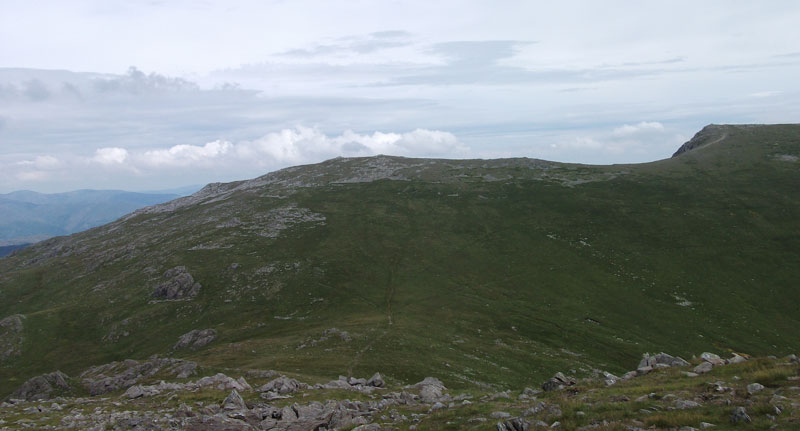
The general area of the crash site in Great Carrs, as seen from nearby Grey Friar in July 2014. The aircraft was delivered directly to 1659 Heavy Conversion Unit from Rootes Securities who built it on 27th June 1944.
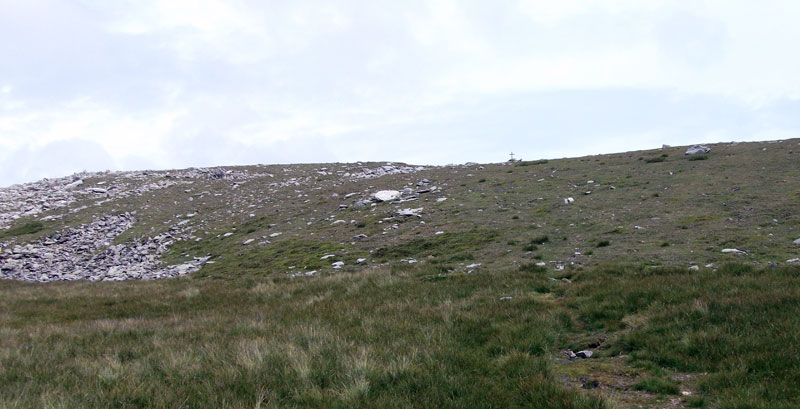
The aircraft crashed onto this slope with the memorial cross on the horizon, as seen in July 2014.
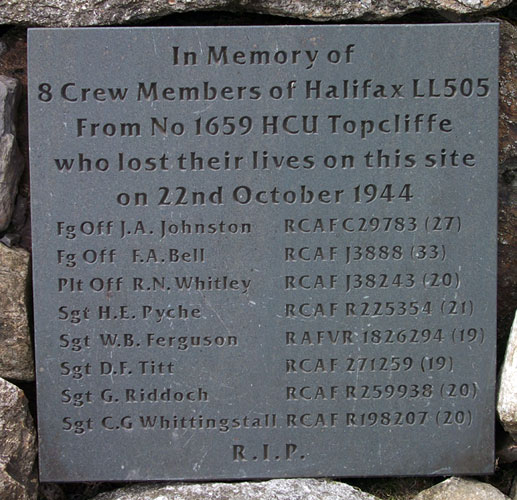
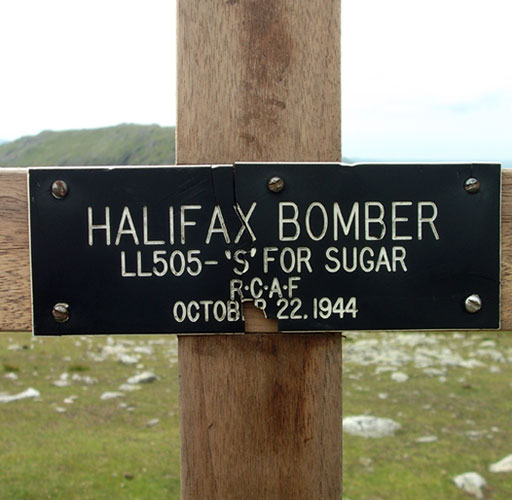
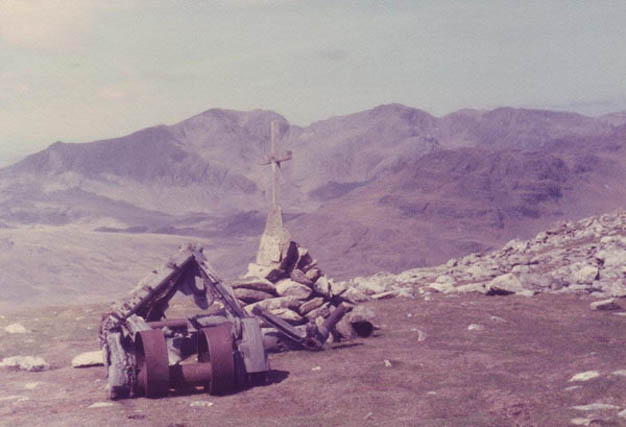
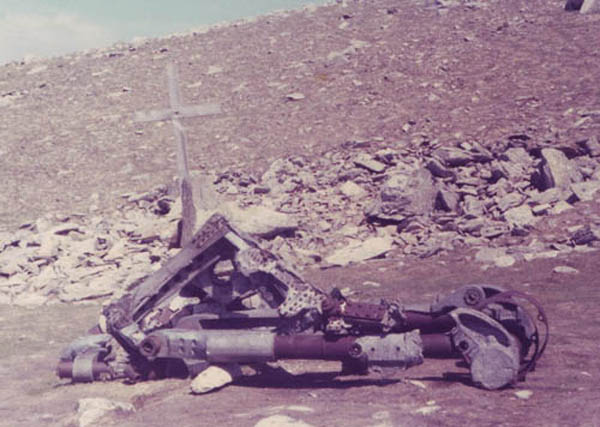
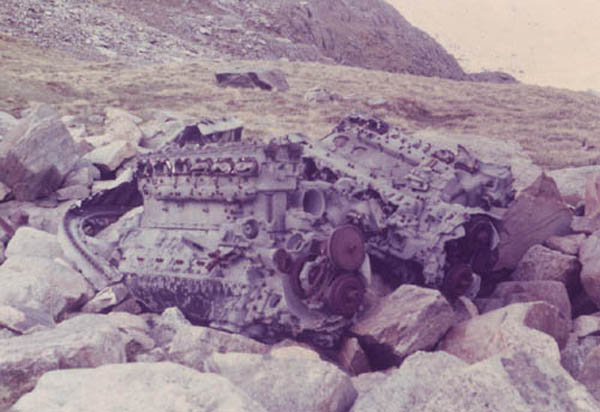
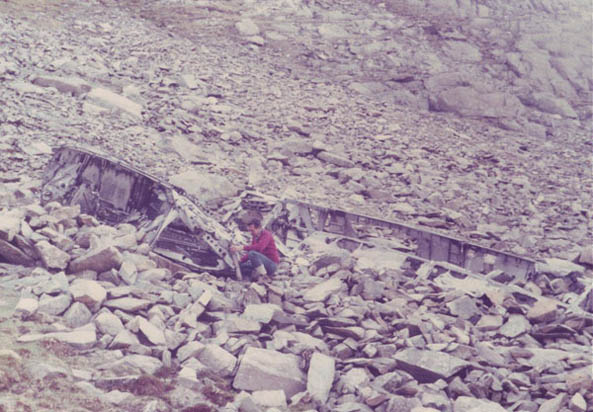
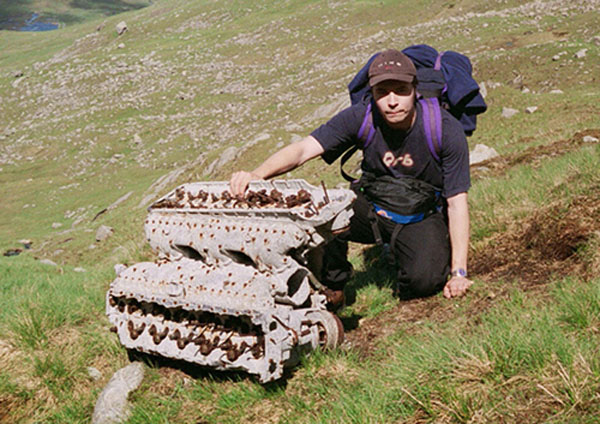
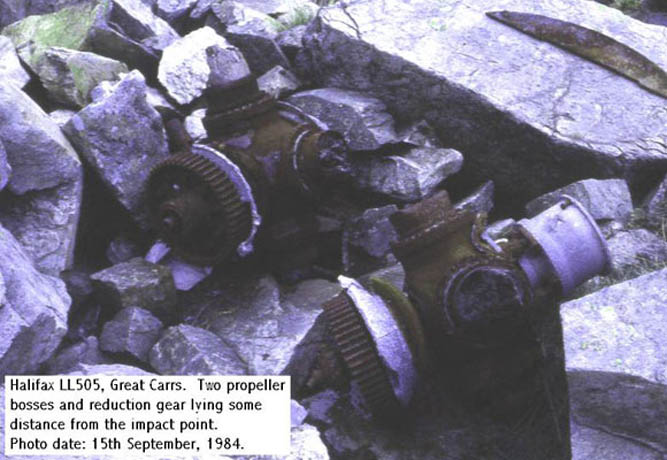
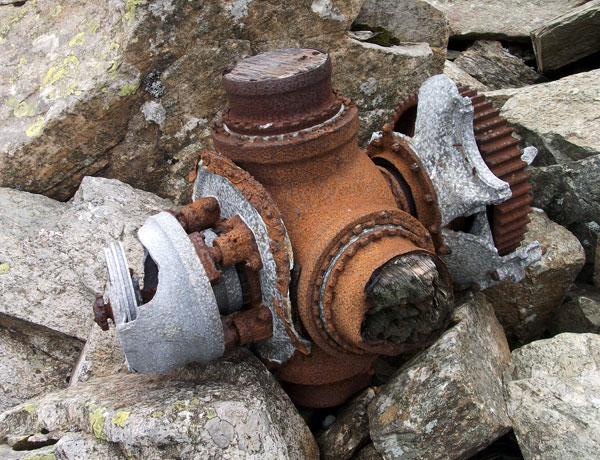
Detail of the memorial plaque and plate on the earlier memorial cross as seen in July 2014. I first visited the crash site in June 2002 with an old school friend and it was one of the first Lake District sites I visited and it was one of the first non-Yorkshire related incident that I vaguely documented on this website, it is possibly the most widely documented and visited crash site in England. In 2002 the wreckage was in slightly better condition that it was when I then visited in July 2014 and August 2016. I updated and expanded this webpage following my 2014 visit and upon realising that it featured first in a Google search for the aircraft it needed a better webpage. In Broad Slack today a battered Rolls Royce Merlin engine lies in a stream with two of the aircraft's four propeller bosses nearby. Further structural and outer skinning pieces are scattered down in the Greenburn valley for some distance. Closer to the crash site are the remains of two large sections on steep scree with smaller sections of the aircraft around this area and this is easily seen from the top of nearby Swirl How. While the smaller sections have moved in the years I have seen the site they are all still at the crash site though I suspect tiny items have been taken by the casual interested passer-by. Because this is a site that has been visited by numerous people in the past I have been fortunate to have received contact from people photographing the site in the 1970s and 1980s, I would still welcome further photographs for inclusion here and will fully credit any additions. The photographs in just below show wreckage in the 1970s and 1980s prior to the removal of the engines and fuselage.
The two undercarriage legs and the newly created memorial as it was in 1984 - although these photographs show the full view of just one leg the second is just visible on the left side of the right photograph (photographs Mr Jim Andrew).
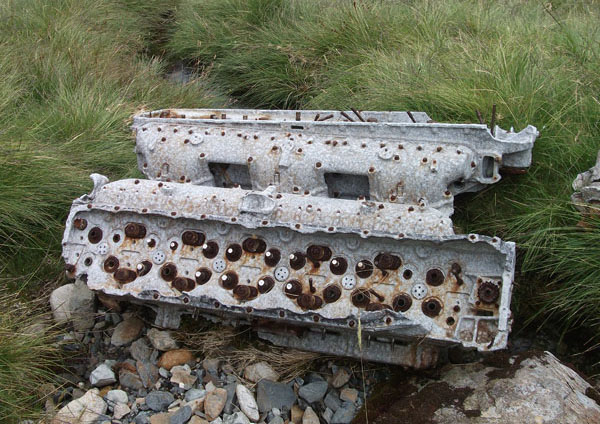
Two of the Merlin engines that were present at the site in 1984, the one nearest the camera being the one now at the Ruskin Museum and the wing sections as they were in 1984 (photographs Mr Jim Andrew).
The recovery operation of the engines and propeller bosses by a Chinook from Odiham.
Broad Slack where much of the Halifax was dumped into following the crash and where a fair amount still remains today. In July 2014 I climbed up the crags to try and find any signs of the aircraft following the items being pushed over the edge of the crags, there were small fragments in the grass and rocks on the route I took but I may have climbed up on the edge of the line the items fell. I did find some small parts of cast alluminium which I assume were part of one of the engines.
The remaining engine below the crash site with me in 2002 and again in July 2014.
The of two propeller bosses at the crash site, left photograph was taken by Graham Sharpe in 1984 and right was taken by me in 2014.
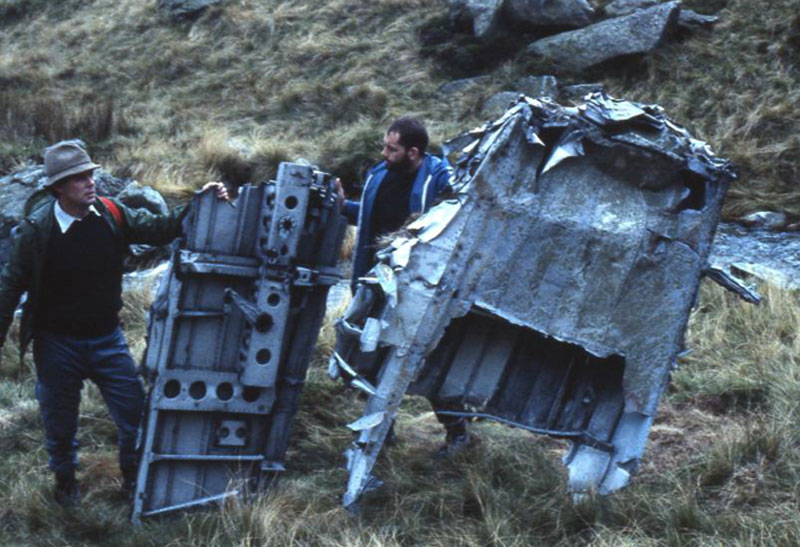
A large section of the aircraft main spar, centre section and wings are on scree in Broad Slack and this photograph looks to be part of one of the wings with the top skinning removed to get at the fuel tanks.
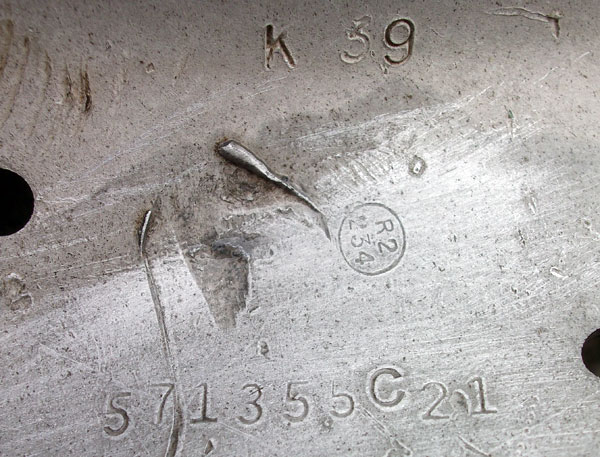
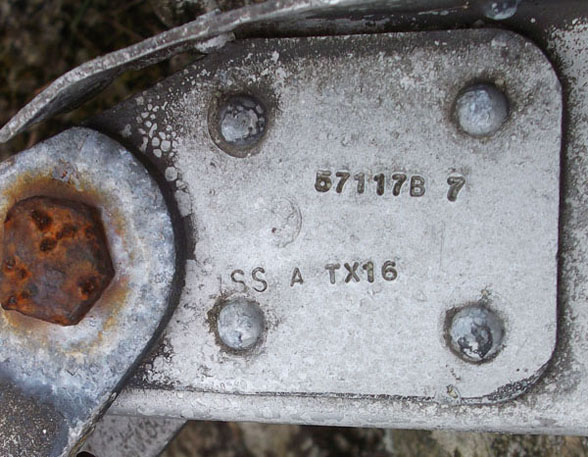
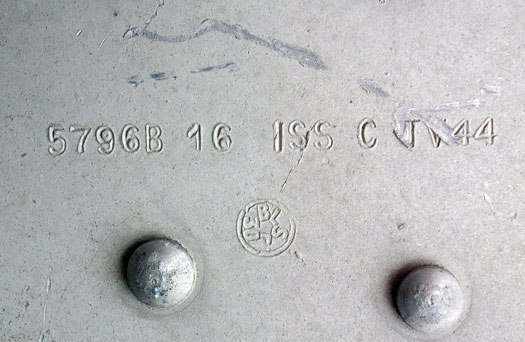
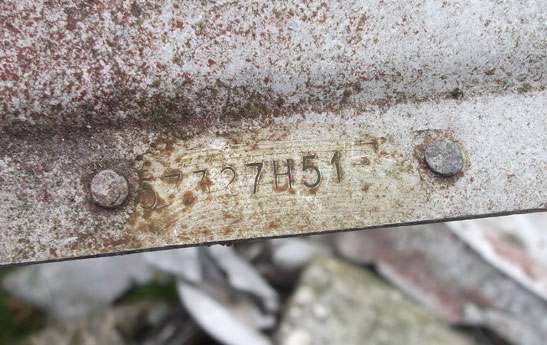
A couple of typical Halifax part number sequences with an "R2" Rootes inspection stamp visible. Rootes built a batch of Halifaxes on contract including LL505. The letter "B" in the sequence shows the items are connected with the wings, ailerons or flaps. The letter "C" relates to fuselage structure.
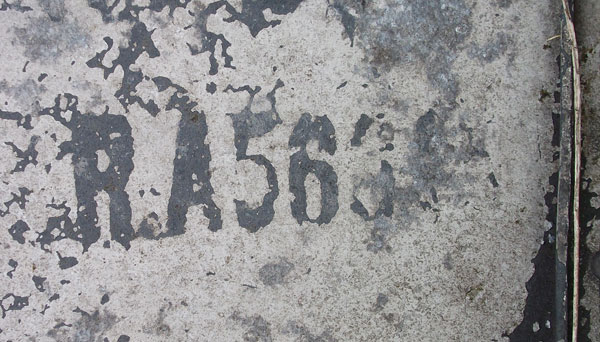
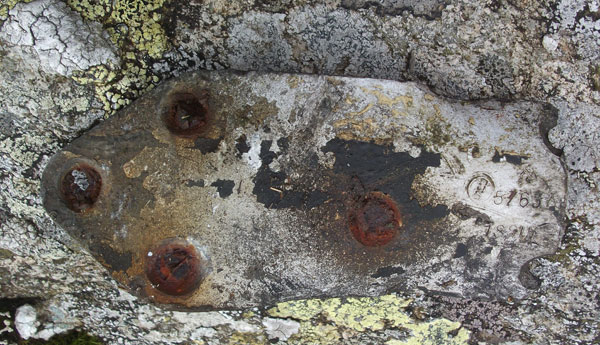
Further markings found on items at the crash site.
Much lower down in the Greenburn valley were these two larger sections of wreckage when seen and photographed by Graham Sharpe in 1984.
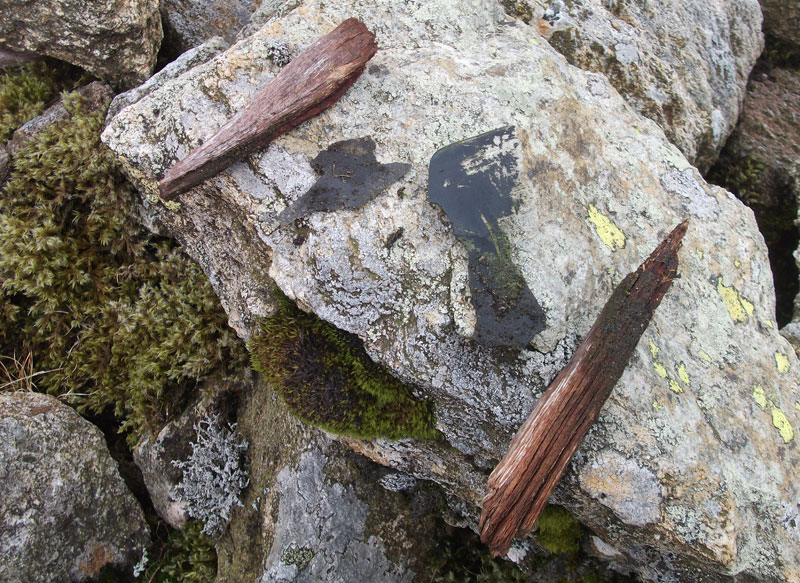
In August 2016 I returned to find out more about where the aircraft must have first struck lower down the western slope of Great Carrs and located the probable impact point which contains a large number of wood fragments (probable propeller blade fragments) as well as perspex and small pieces of the aircraft's alluminium. The photograph above shows two pieces (of many) of wood along with two pieces of the black Rotoloid composite propeller blade covering. The letter "H" on the part numbers is linked to engine fittings and controls (but in this case probably relate to engine cowling fittings).
An engine from Halifax LL505 at the Ruskin Museum, Coniston.
A number of other websites have used older accounts and photographs from an earlier version of this webpage on their websites, the information shown in this current
webpage is all believed to be correct and outdates any copied accounts that have appeared on other webpages. The early name of my website used to be "www.allenby.info"
and would appreciate that anyone who has copied this link correct it to this current web address.
In creating this webpage I credit David Earl and Alan Clark for the additional information and photographs they have been able to provide. I also credit Peter F Lloyd who wrote a book "The Halifax with a Tail to Tell" about this accident, but perhaps more importantly he was the first to research the lives of the young men involved way before the advent of the internet made things much easier. The book unfortunately does not include an ISBN number.