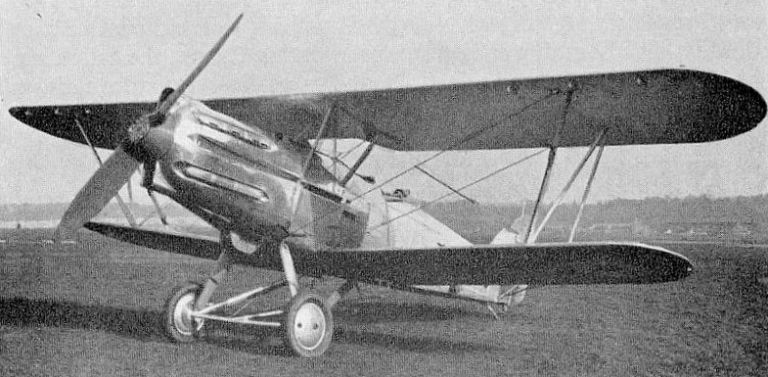
Only 179 Hawker Hectors were ever built. After the prototype the first batch of 78 (K8090-K8167) were built by Westland and the second batch of 100 (K9687-K9786) were later also built by Westland.
On 8th September 1941 two pilots were instructed by the chief test pilot at 18 M.U. to ferry two Hectors from Binbrook airfield to Dumfries airfield where it is believed that they would then be converted to glider tugs by 18 M.U. and then assigned to No.10 Bombing and Gunnery School for their training activities. Both pilots were flown to Binbrook to collect their aircraft. After taking off from Binbrook they were instructed to fly to Catterick to re-fuel before then crossing the Pennines using the commonly flown route following the railway / A66 road over Stainmore, then passing Penrith and north towards Dumfries. The Hector carried enough fuel for around 2.5 hours flying which, in theory, would have allowed an extra hour in the air with it being 1.5 hours flying time from Binbrook to Dumfries without non-stop. The instruction was to land at Catterick to refuel as this would then permit a longer flying time should any problems with navigation come about during the flight. After taking off little is known about the flight and much of the text below is somewhat speculation but feasable. The pilot of the other Hector, Sgt Dukszto, landed to take on fuel at Catterick as instructed but did not take off again and remained there overnight.
For what ever reason the very experienced pilot opted to try and fly direct to Dumfries missing out the Catterick stop, it could be that the weather appeared good as the aircraft headed north-west and the pilot opted to try and fly direct with good weather seen over the Pennines. The aircraft then somehow ended up towards the western side of the Lake District with visibility reduced by low cloud at the time. It is possible that the pilot had flown over the Pennines much further south and was trying to make his way up the west coast of England to cross the Solway Firth and land at Dumfries. The aircraft struck Red Pike around two thirds of the way up the mountain and was destroyed with the pilot being killed instantly. The crash investigation concluded that the aircraft must have been running low on fuel at the time of the crash and that the pilot was probably attempting to find somewhere to land the aircraft, the aircraft struck the ground after he descended below the height of the surrounding mountains. It would appear that almost nothing of the aircraft was recovered following the crash other than the pilot's body, which was taken down to Wasdale and later away for burial. The crash site still shows the signs of the post-crash fire and of the force the aircraft struck the mountain in the badly damaged Napier Dagger engine.
Pilot - F/O James Anderson Craig DFC RAFO (70146), aged 50, of Glengarnock, North Ayrshire. Buried Beith New Burial Ground, Ayrshire.
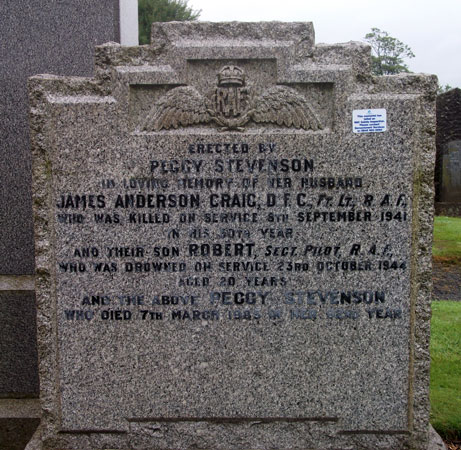
James "Jimmy" Craig was a very experienced military pilot having flown in both World Wars. When he transferred to the RFC in 1916 he had already seen service with the Royal Fusiliers. After pilot training he saw serve in France in 1917 and flew with 59 Squadron. He is believed to have been recommended for the Military Cross on a few occasions for his RFC flying though none of these recommendations came through. He was wounded prior to 5th July 1917 when notification was printed in Flight Magazine and was awarded the DFC holding the rank of Lieutenant but serving as Acting Captain, for service in France, the citation for his DFC reads..
"On August 24th (1917) this officer performed gallant service on a special reconnaissance. Having located our line and the enemy positions, despite very heavy hostile fire and under adverse weather conditions, he proceeded over the enemy lines at a very low attitude to try and find some of our troops that were believed to be cut off. His machine being hit in many places, he returned, made his report and proceeded again on a further contact patrol."
He was later posted to 15 Squadron as B-Flight Commander and survived the First World War. He married and had at least one son. He was granted a commission in the Reserve of Air Force Officers on 15th May 1923 to the rank of F/O and took up a role in the General Duties Branch. As F/O he transferred from the General Duties Branch of the RAF to the Administration and Special Duties Branch on 29th August 1939 and later back to the General Duties Branch on 28th October 1940. At the time of his death he had logged over 1600 hours flying time.
Sadly his son AC2 Robert Craig RAFVR (1570793) died on active service on 23rd October 1944, noticing a four year old girl in trouble in the sea at Scotburgh Beach, Natal he attempted to rescue her but sadly drowned, he was just twenty years old and is buried in Durban, South Africa. He was in South Africa to train as a pilot and it is stated on another website that he had just been awarded his Wings prior to his death.
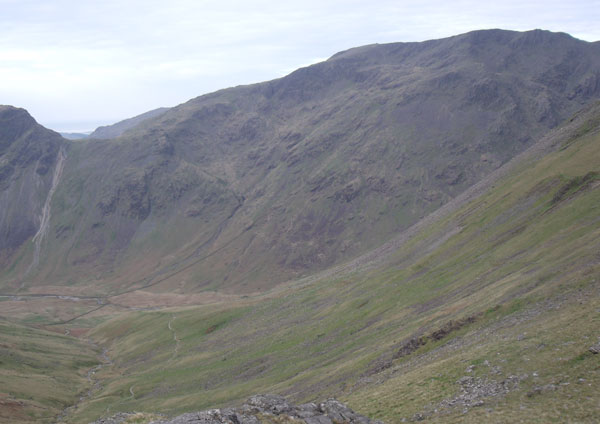
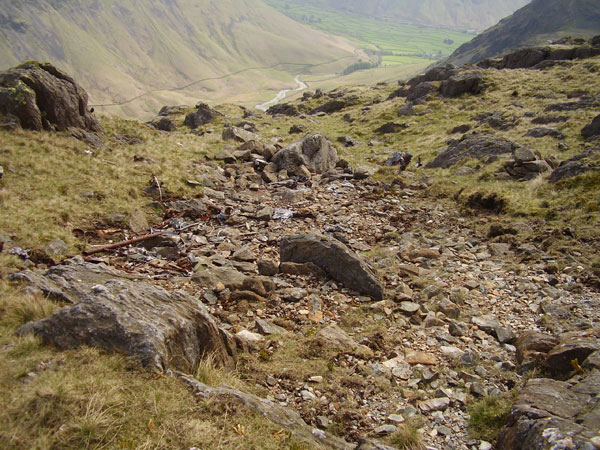
The aircraft struck Red Pike around 100 metres below the summit and just to the right of centre on the photograph shown above.
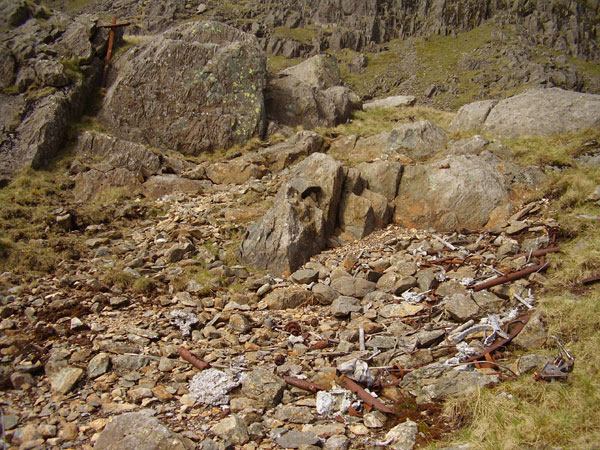
A couple of photographs of where the aircraft crashed which still show signs of the intense fire that must have occurred following the crash.
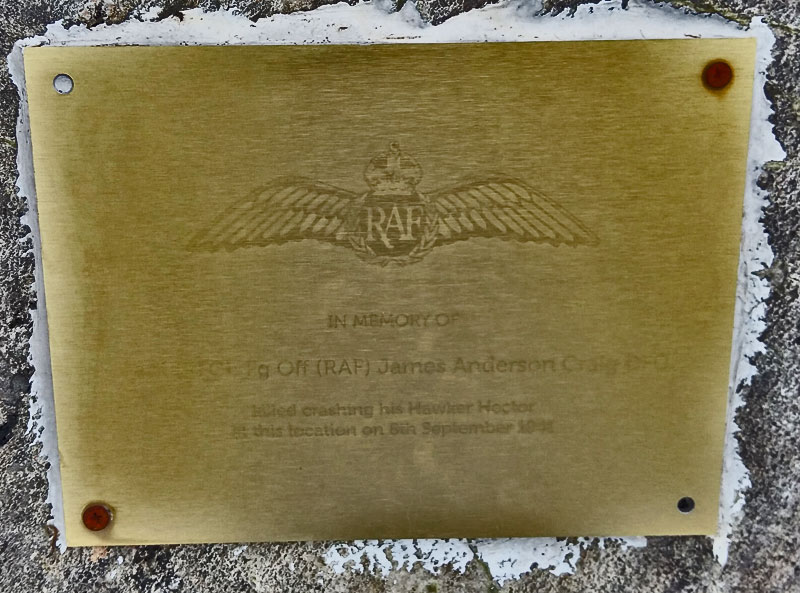
A memorial plaque that has been attached to a boulder at the crash site.
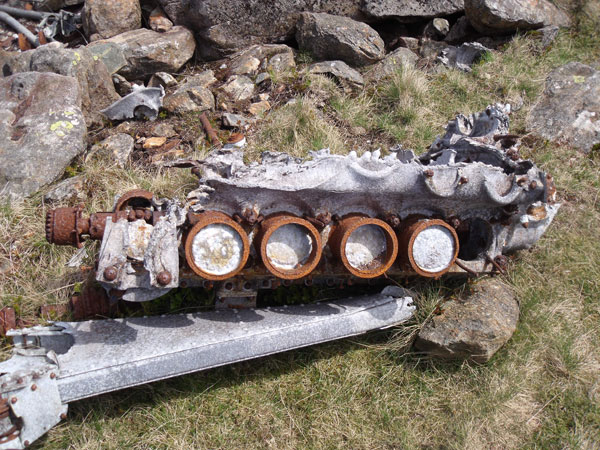
The remains of the Napier Dagger engine at the crash site in a very poor condition. It appears to have been shattered in the crash with this section being the only large piece still remaining on the site.
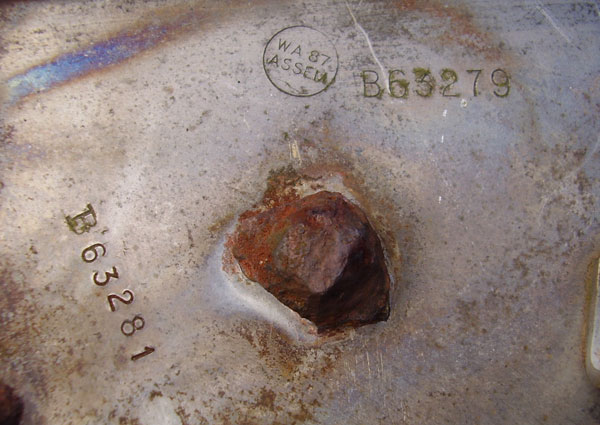
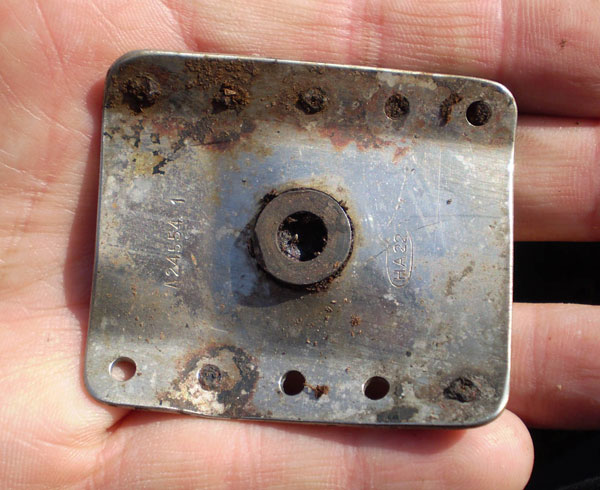
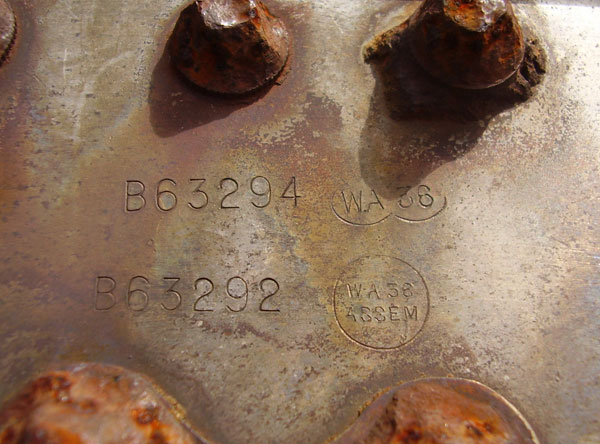
A large number of stainless steel parts still remain at the crash site in very good condition. The two photographs shown here show Hector part numbers with the "WA" inspection stamps showing they came from the Westland aircraft factory.
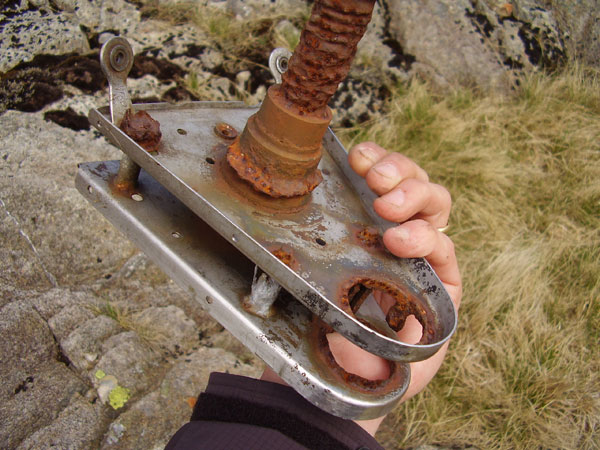
One of the larger stainless steel sections found at the crash site.
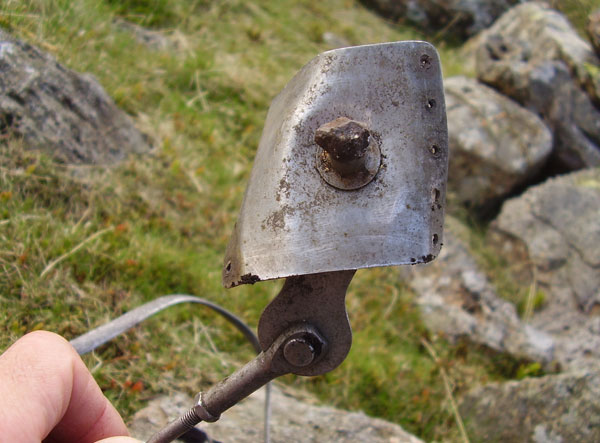
The photograph above shows a part found at the crash site and is of further interest to my Yorkshire-based research, an identical part was found at the crash site on the North Yorkshire Moors of Hawker Fury K8221 near Rosedale. It possibly means that Hawker were using identical parts for parts of different aircraft.