On 8th March 1938 this aircraft was force landed in a field near Coniston in poor weather. I have not yet obtained the full details of the incident but the Cumberland and Westmoreland Herald newspaper
report on the landing stated that the pilot was flying from Speke airfield to Aldergrove and was flying up the west coast of England to land (and probably refuel) at Carlisle before crossing the Irish Sea.
The aircraft may not have been damaged in the landing at Coniston.
Pilot - P/O James Henry Gordon McArthur RAF (37925).
He was appointed to a short service commission in the RAF to the rank of Acting P/O on probation on 6th July 1936 and was graded as P/O on 11th October 1936, being posted to 64 Squadron on the same date. He was later posted to No.2 Armament Training Camp, Aldergrove on 14th January 1937 (probably because he was a capable pilot but had had no experience with flying armed aircraft). He is listed elsewhere as being being posted to the Station Flight at Aldergrove on 14th January 1937 but given the details of the No.2 ATC posting found in Flight Magazine on the same date this seems unlikely. He was promotd to F/O on 11th May 1938 and appears to have served at Aldergrove until Autumn 1938 when he was posted to the Royal Aircraft Establishment at Farnborough as a test pilot. I have not found any details stating how long he served at Farnborough. He was promoted to F/Lt on 11th May 1940. In July 1940 he was posted to 238 Squadron briefly but was soon posted to 609 Squadron on 8th August 1940 and became a Flight Commander. Over the coming weeks he flew many combat operations during the height of the Battle of Britain. On 15th September 1940 he was lucky to survive a serious incident, while flying at 25,000 feet his oxygen supply failed and he passed out, the aircraft entered a high speed dive and he only came round in time to pull the aircraft out of the dive and land safely. As a result of this incident it seriously damaged his ears and he was subsequently not allowed to fly above 5,000 feet so was taken off operational flying. He was awarded the DFC for service with 609 Squadron, Gazetted on 22nd October 1940 and was credited with damaging or destroying at least eleven Luftwaffe aircraft between 8th August and the end of September 1940, the citation for his DFC reads.."This officer has led his flight and squadron with skill and determination. His brilliant leadership has been reflected in the high standard of morale in his flight. He has destroyed at least seven enemy aircraft." He was promoted to S/Ldr on 1st September 1941 and later to W/Co on 1st January 1944.
Postwar he emigrated to Canada and joined the RCAF, serving as a test pilot. He also resumed his civilian air racing while still serving in the Canadian forces and competed in a number of air races in the USA in ex-RAF Spitfire TZ138. Following a road accident in 1957 he left the Canadian Forces and appears to have lived in Mexico for a time. He was sadly killed in a flying accident at the Las Vegas airshow 12th May 1961.
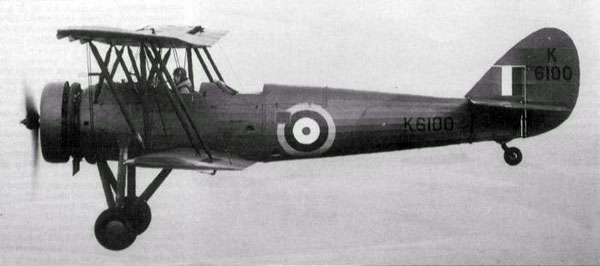
Tutor K3249 was built to contract 195190/32 by A.V.Roe & Co. Ltd. at Newton Heath, Chadderton and was delivered to Kenley on 15th May 1933. After being accepted for RAF service at Kenley it was taken on charge on 24th October 1933 by 5 FTS at Sealand. It was also allocated to 2 FTS but this allocation was not taken up. On 1st May 1936 it was transferred to 16 Squadron at Old Sarum and on 18th June 1937 it was transferred to the Station Flight at Debden. On 11th November 1937 it was transferred to the Station Flight at Aldergrove with whom it was still on the books with when the landing at Coniston took place on 8h March 1938. The following day it is listed as being transferred to H.Q.P. (Headquarters Pool) at Catterick but there is no indication of whether it was flown there or transported by road but it seems that it is likely that it was simply flown from Coniston to Catterick as there is no indication of the aircraft as having to be repaired in the pblished history of the aircraft. It appears to have remained at Catterick and on 14th September 1939 it was taken on charge by 609 Squadron at Catterick, it was then transferred to 219 Squadron also at Catterick on 10th October 1939 and was used as a run about aircraft for both 609 and 219 Squadrons. On 1st March 1940 it ran out of fuel and collided with a hedge in a forced landing at Rugeley, Staffordshire. Following the mishap on 1st March 1940 it was deemed beyond repair and was struck off charge.
James McArthur's life is well documented on the internet, mainly down to Kenneth Wynn's research in his book "Men of the Battle of Britain" from which many of the internet biographies draw greatly from Mr Wynn's text. His pre-ww2 civilian flying is less well documented and I attempt to show this here. James McArthur was born on 12th February 1913 in Tynemouth and was the son of Thomas and Lilian E (nee Grant-Gordon) McArthur and he had two sisters. He is listed elsewhere as holding a London to Baghdad flying record at one point but I have found no details of this. He did however fly in Airspeed Viceroy G-ACMU in the England to Australia "MacRobertson Air Race" in 1934 as a wireless operator (which would have seen him fly from London to Baghdad non-stop) but they withdrew at Athens because of a technical problem. He was trained to fly in 1935 at Redhill aerodrome where he was awarded a Royal Aero Club Aviators' Certificate (Cert.No.12614) on 5th March 1935 and at that time is occupation was listed as a wireless instructor. On a London to Capetown and back speed record attempt in Summer 1935 in a DH Comet G-ADEF "Boomerang" the aircraft's owner, Mr Thomas Campbell Black and he flew from Hatfield to Cairo non-stop and landed to re-fuel, they then took off to fly to Kenya for another re-fuelling stop but due to a problem with the aircraft they were forced to bale out of the aircraft around 100 miles north of Khartoum and landed in the desert. They were later rescued and then awarded Catapillar Club badges by Irvin. He joined British Continental Airways as a wireless operator in early 1936. Miles Sparrowhawk G-ADWW was registered on the UK civilian register to him on 27th May 1936 and he listed the aircraft as being housed at Yatesbury. Later in 1936 he entered the 1936 King's Cup Air Race in this aircraft but was disqualified and the aircraft was de-registered later in the year when it was shipped to the USA. He bought the second Miles Mohawk G-AEKX and this aircraft was registered on the UK civilian register on 14th July 1936 but doesn't appear to have ever been completed, when he registered it he listed it as being housed at Thornaby during his ownership, but the registration was cancelled as "withdrawn from use" in 1937 and he may never have actually taken charge of the aircraft.
The location of where this incident occurred in Cumbria has not yet been found. If you can assist please contact me
HERE. Thank you.