This aircraft took off in Bedfordshire in the early evening of the 10th February 1945 for a training exercise with No.51 Operational Training Unit. The crew were briefed with carrying out a night intruder exercise at Charterhall airfield, in southern Scotland. Poor weather was forecast over the western side of England so their route was to be up the east coast with the planned route to have been from base to Goole, Hexham, Alnwick, Berwick, Charterhall and then returning by the same route. Their course plotted by Church Fenton and also by a number of Royal Observer Corps posts flying a rough north westerly route from the Flamborough Head area all the way across to Carlisle flying at around 8,000 feet. The crew are assumed to have eventually became lost in heavy cloud, the aircraft descended and struck Striding Edge and exploded killing the crew on impact. It was later realised that the aircraft compass had not been swung for a month or so, though this was not thought to have been a factor in the crash. Because of the weather conditions the lowering of the aircraft's height could have been the result of icing on the surfaces and not a deliberate act by the pilot.
David Earl's book "Hell on High Ground 2" has an account of this loss and further photographs of the crew. I thank him for allowing these two photographs of the crew to appear on this webpage.
Pilot - W/O William Donald Garland Frost RAAF (420616), aged 25. Buried Chester Blacon Cemetery.
Navigator - F/Sgt Corbie Frank Marshall RAAF (433705), aged 25, of Earlwood, New South Wales. Australia. Buried Chester Blacon Cemetery.
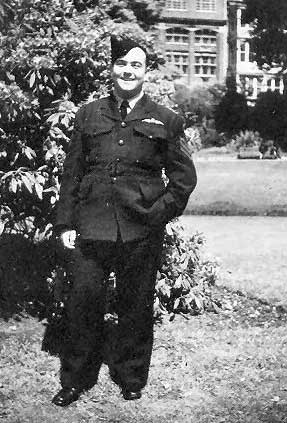
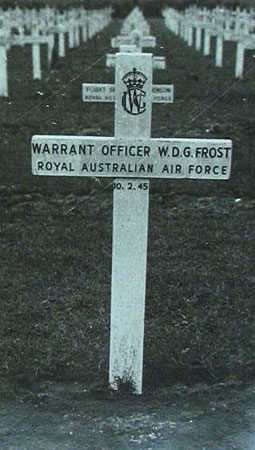
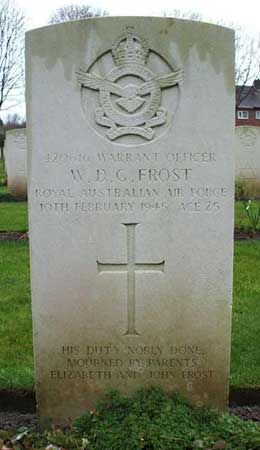
William Frost was born on 27th February 1919 at Barraba, New South Wales, Australia and was the son of John Thomas and Sarah Elizabeth (nee Brown) Frost. As a young man he worked as trainee draughtsman. He enlisted for RAAF service on 8th November 1941 at Sydney and after training in Australia he left for England on 15th January 1943. In England he was posted to 20 (P)AFU on 21st September 1943 and 12 (P)AFU on 29th February 1944. A problem with his ears while flying developed while in the UK and he was taken off training for some time in 1944. He was eventually posted to 51 Operational Training Unit at Cranfield on 22nd August 1944. The photographs show his original grave marker at Chester Cemetery and the modern gravestone. (Photo of Bill Frost courtesy of Mr David Earl).
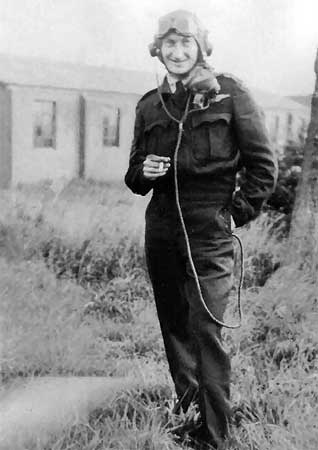
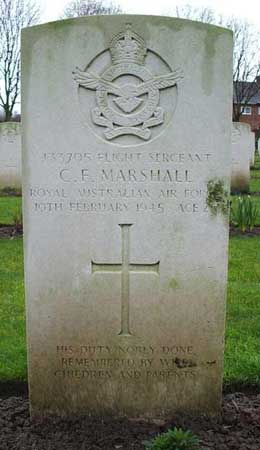
Corbie Marshall was born on 30th October 1919 at Redfern, New South Wales, Australia and was the son of Harry and Mona Gabriel Marshall. He married Betty Mary Burtonn in 1941 and they lived at Earlwood, New South Wales. Australia. He enlisted for RAAF service at Sydney on 5th May 1943 and undertook initial training in Australia. He was then posted to Canada in November 1943 for further training where he was awarded his air navigator's flying Badge in May 1944. He was then posted to the UK. He then trained at 62 Operational Training Unit before posting to 51 Operational Training Unit on 26th September 1944. He left a young son and daughter. The photograph of Corbie Marshall shown above is courtesy of Mr David Earl. The two modern photographs of the crew's gravestones were taken by Mr Alf Beard and found on the internet.
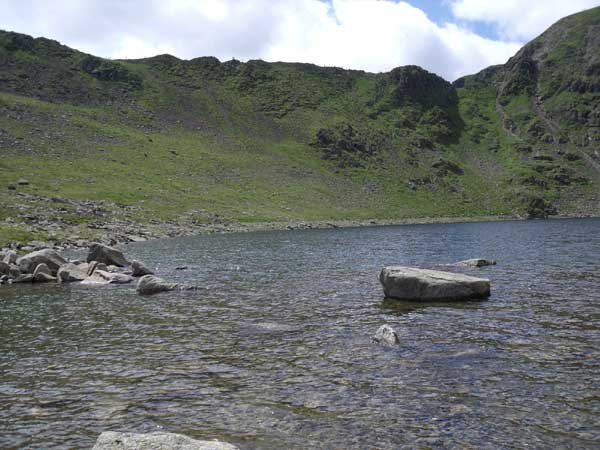
I searched for the crash site in July 2003 and did not find anything. A number of people spotted that I recorded these lack of finds on an earlier version of this webpage and contacted me to give further information and thanks to them for this. In July 2009 on a very hot, and busy day on Striding Edge I located the site and a few small fragments of the aircraft at the foot of Striding Edge and by the edge of Red Tarn. Enough to say the location of where this accident occurred.
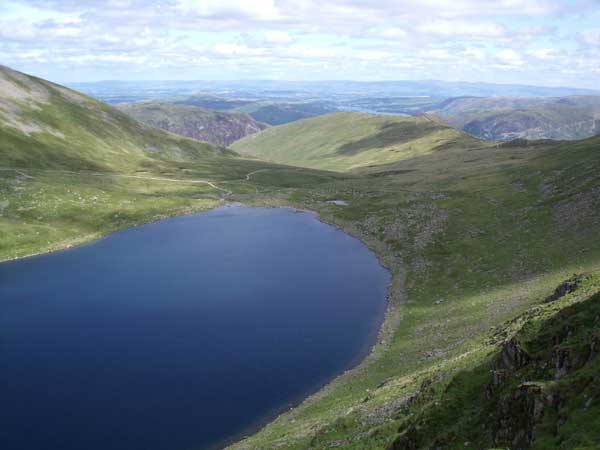
The general area of the crash location..
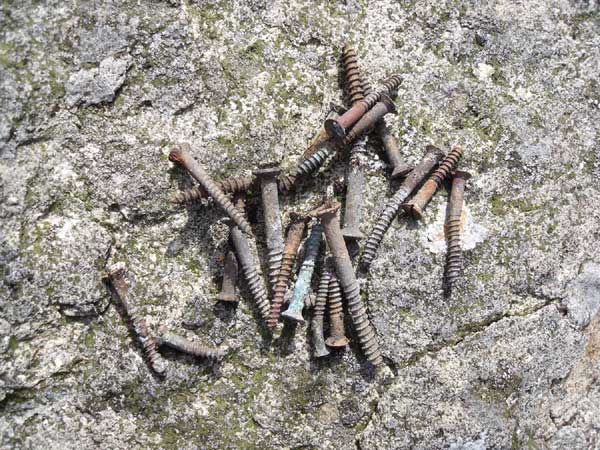
The usual sign of a Mosquito crash site, lots of brass screws.
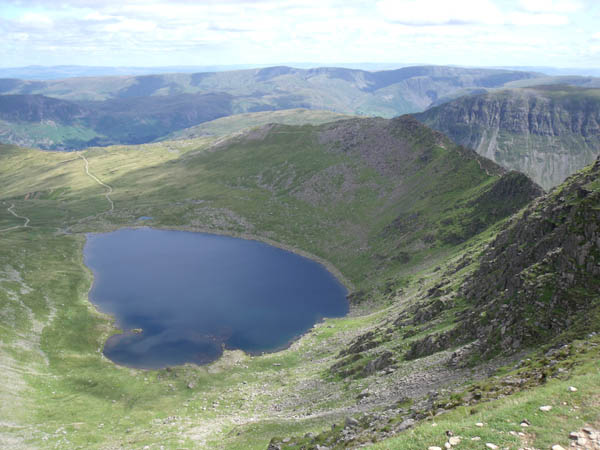
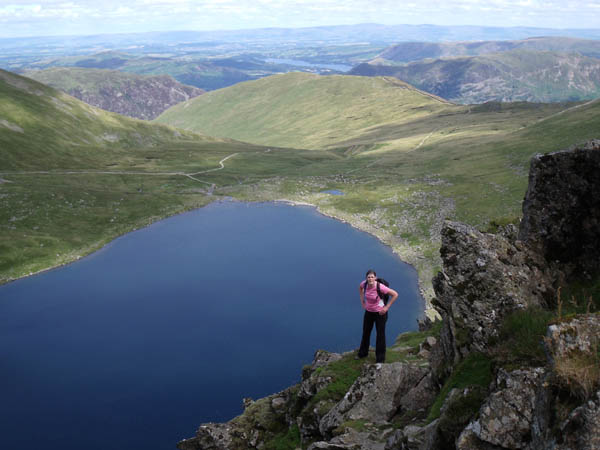
Further photographs of Red Tarn from above.
Mosquito HK141 was built by De Havilland at their Watford factory and was delivered new to Marshall's Flying School on 22nd March 1943. The aircraft was passed to 218 MU on 13th April 1943 and was taken on charge by 85 Squadron on 17th April 1943. The aircraft was later transferred to 307 Squadron on 6th February 1944 and then to 51 OTU on 28th December 1944. As a result of the crash on 10th February 1945 in the Lake District Cat.E/FA damage was the damage assessment and it was struck off charge on 15th February 1945.
An MoD licence to excavate / recover items from the site was granted on 1st June 1990. I would welcome contact from anyone involved and would love to see any photographs of items found and recovered. Whether this was a dive in Red Tarn to recover items I do not yet know.