Anson EG686 on Swirl How, Coniston Fells.
The purpose of the Staff Pilot Training Unit (S.P.T.U.) was to give newly qualified pilots some training in basic dead reckoning navigation with prominent landmarks used as
turning points to assist them when flying with less experienced aircrew on future navigation training flights. On 20th March 1944 the crew on board this aircraft were undertaking
a navigation exercise over the north-west side of England when the accident occurred. The planned route after taking off from Cark was said to have used the turning points of
Dumfries, the Isle of Man, Blackpool and return to Cark to land and because of a navigation error in the latter stages of the exercise the aircraft overshot Cark and crashed in
the Lake District. I have yet to read any form of accident report for this incident but it could be that the aircraft never got as far as Dumfries after taking off from Cark
because the crash site is pretty much in a direct line between the two places. Exactly why the aircraft hit the ground is not known but it is likely that poor weather,
visibility or low cloud was shrouding the high ground of the southern Lake District by the time the accident occurred and while flying lower than the height of the hills
or with the crew lost, heading east to the coast and descending to locate a position the aircraft struck the ground. At 04.30hrs the aircraft flew into the side of Swirl
How, a peak of the Coniston Fells and sadly all on board were killed. The following day and despite bad weather a search from the air was conducted and led by Commanding
Officer of the unit the Anson belonged by W/Co Jim Gibb AFC in a Magister aircraft, he located the wreckage and directed members of RAF Millom MRU to the site.
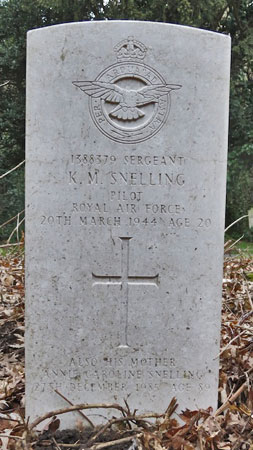
Pilot - Sgt Kenneth Montague Snelling RAFVR (1388379), aged 20. Buried Islington Cemetery, London (O/2/21403P).
Pilot - Sgt Kenneth John Brettell RAF (552030), aged 23. Buried Barry (Merthyr Dyfan) Burial Ground (R/1776).
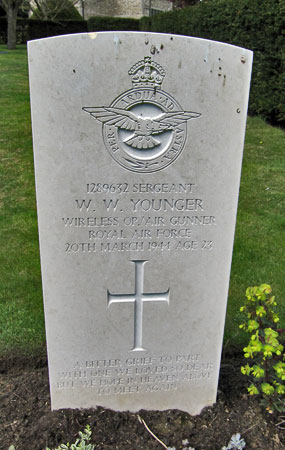
Wireless Operator / Air Gunner - Sgt Walter William Younger RAFVR (1289632), aged 23. Buried Durrington Cemetery, Worthing, Sussex (2/10/29).
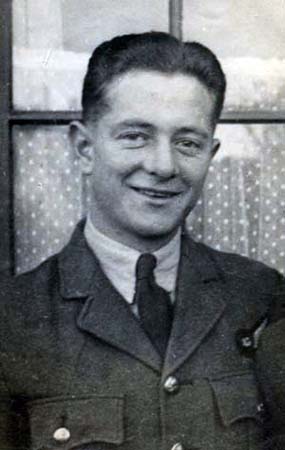
Sgt Walter Younger (photograph kindly supplied by his grand-daughter Mrs Karen Kelly) and his gravestone in Worthing (photograph kindly supplied by Nikki Sheeran).
Walter Younger was born in Copenhagen, Denmark on 27th August 1920 and was the son of Walter and Margaret Younger. His family later moved to Worthing, Sussex. Prior to enlisting into the RAFVR he was working as
an electricians mate and enlisted on 20th September 1940. As part of his service he served at a number of training units No.2 Signal School in June 1941 and later 5
AOS in June 1942, 4 AOS in September 1942, a spell at RAF Station Wick and returning to 4 AOS in April 1943 and was later posted to S.P.T.U. on 11th October 1943. He
was almost certainly a staff wireless operator at the SPTU rather than a trainee airman as a regular course there lasted just six weeks. Sgt Younger and his wife Lorna
were expecting a child when he lost his life in this flying accident near Coniston and this accident meant he was to never meet his baby son. I thank his grand-daughter
Mrs Karen Kelly for contacting me in 2007 and as a result the family were able to visit the crash site.
Kenneth Snelling was born in 1923 at Brentford, Middlesex and was the son of Ernest Montague and Annie Caroline (nee Brown) Snelling. Gravestone photograph credit to Iain MacFarlaine, via "Findagrave.com".
Kenneth Brettell was born in Barry, Glamorgan in 1921 and was the son of George John and Esther Jane (nee Davies) Brettell.
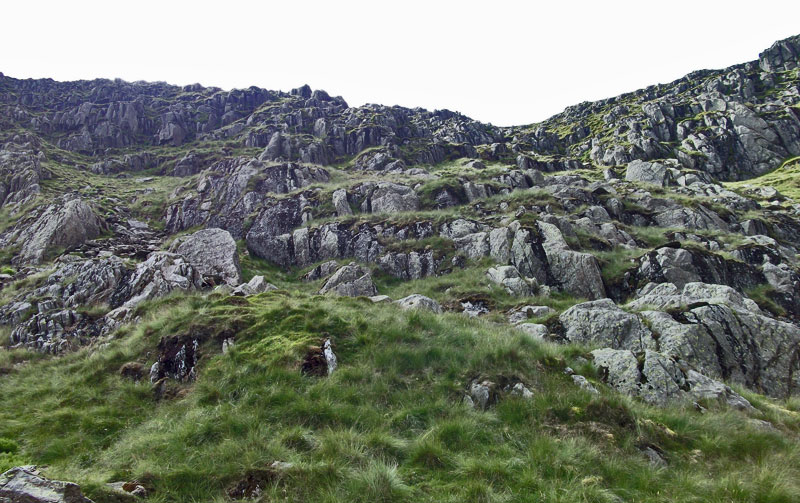
A wide view of the Coniston Fells with the crash site of Anson EG686 on Swirl How, in the middle of this photograph.
This was the first ever crash site that I attempted to locate back in Autumn 1996 with Ben Thompson and Steve Sutherland, not exactly knowing where we were going we eventually located one of the two
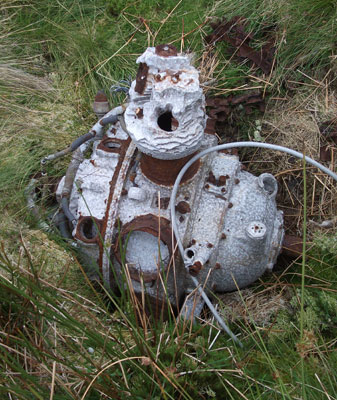
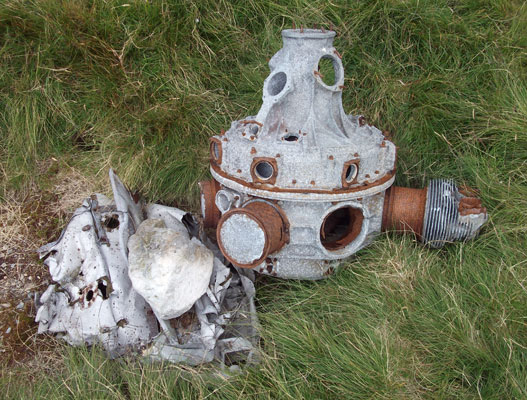
engines in the stream below the crash site before retreating to Coniston due to failing light. Since 1996 I located the second engine in 1997 and have passed them both numerous times since then. Over
the last eighteen years they've moved around slightly to where they were last seen in July 2014. On one of my return trips with Will Lund in 2002 we went up the fellside to attempt to locate the actual
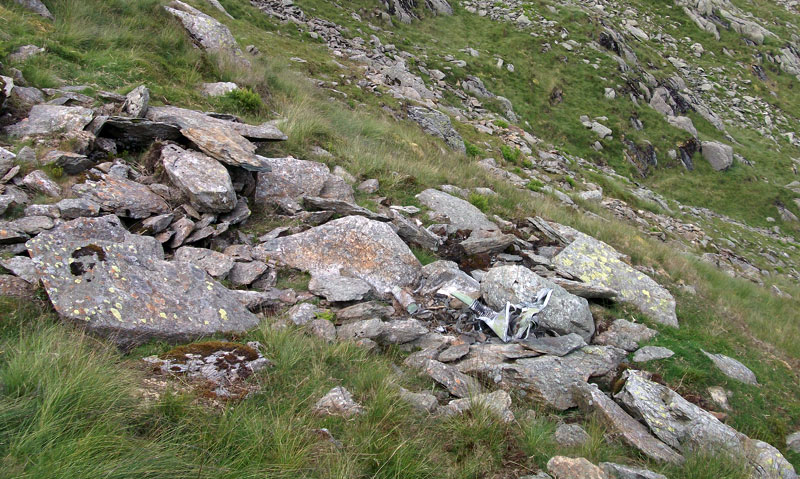
crash site and found an area close to the impact point where a small amount of burnt wreckage remains. I descended from the ridge down to the crash site in July 2014 and feeling more brave climbed up
to the point of impact where small remains of the aircraft are wedged in rocks.
The highest area where part of the aircraft fell down to following the crash higher up the fellside.
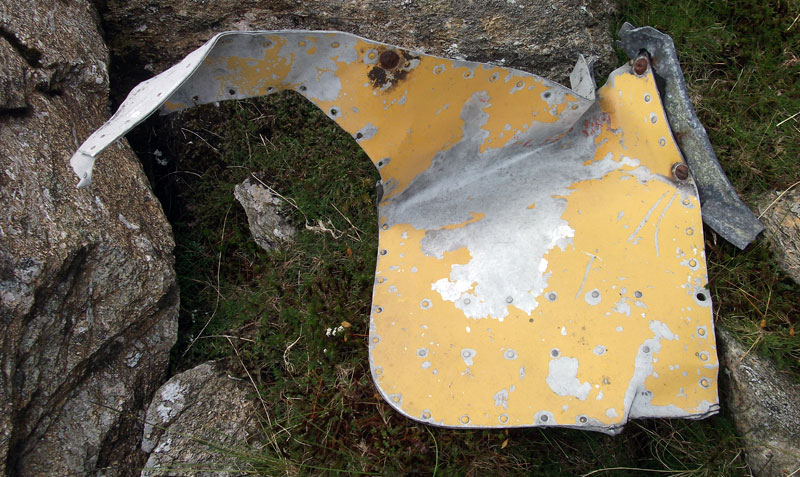
A large yellow painted panel in scree below the crash site.
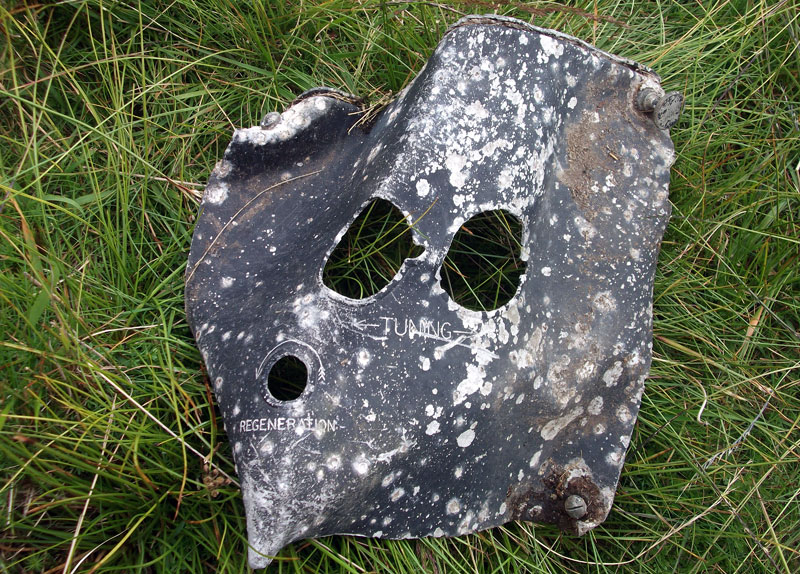
Half of the front panel from a TR9d radio set.
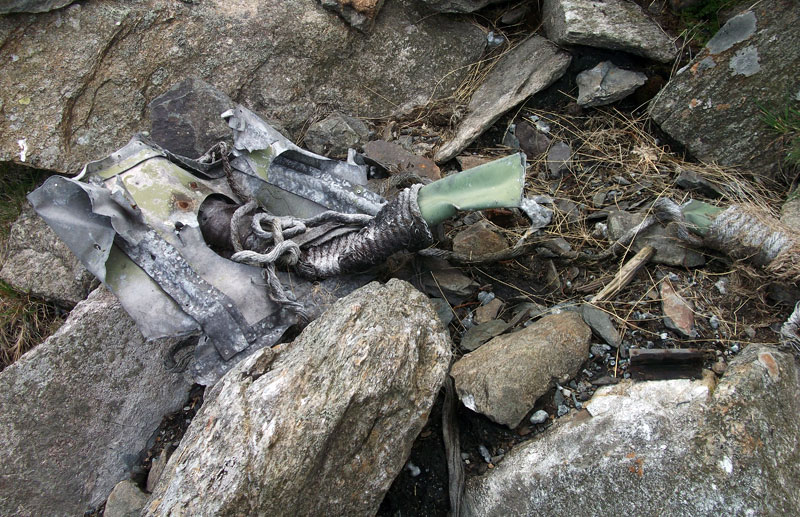
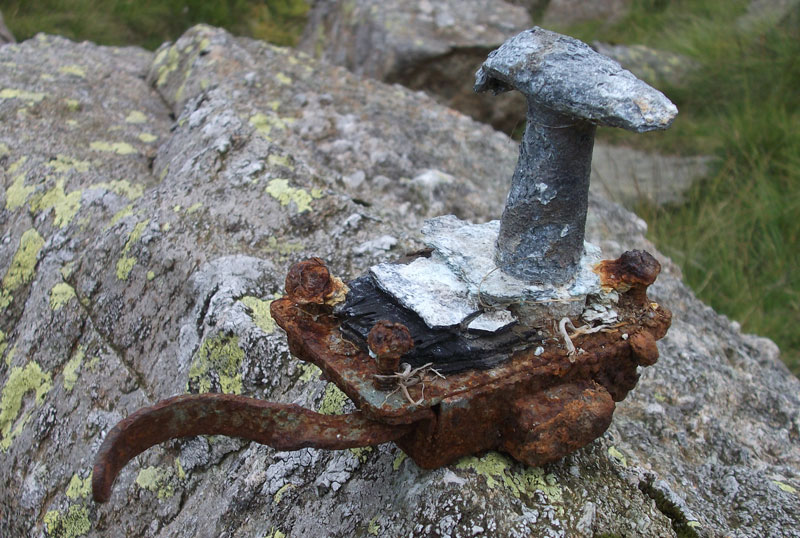
A door latch.
A few smaller items at the crash site.
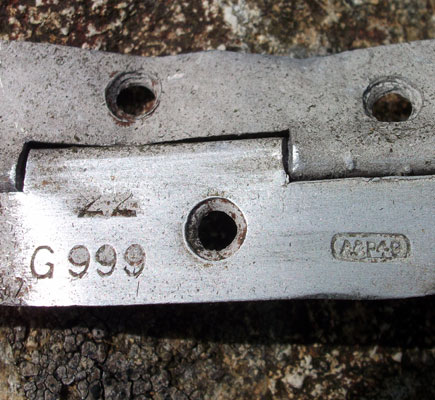
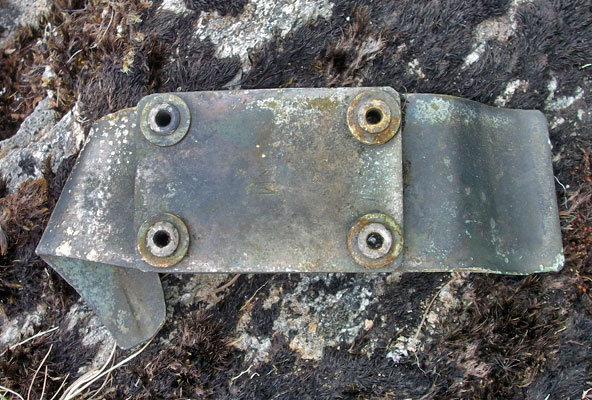
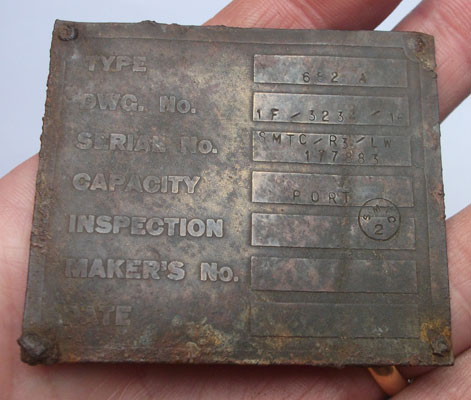
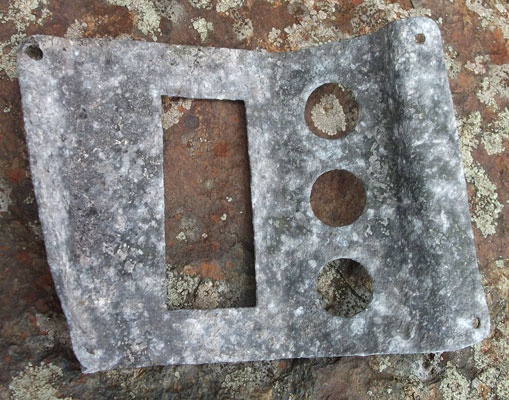
A plate from a fuel tank and the punched face of an item of equipment (as yet unidentified).
The two engines below the crash site.
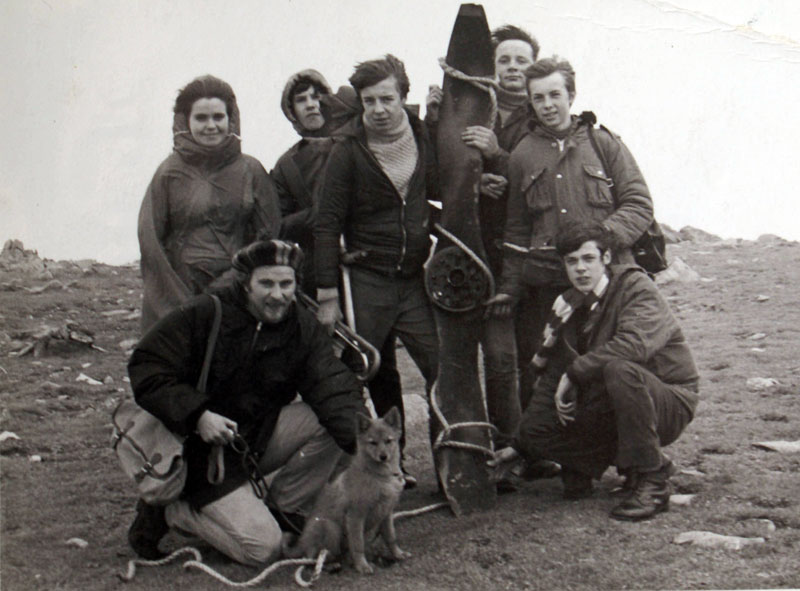
ATC Cadets possibly from Windermere recovered a propeller blade from this crash site in 1974 and this photograph once held in the former Millom Air Museum and copied by Alan Clark/Mark Sheldon just before it closed its doors probably shows the same propeller blade leaving the site. This photograph probably needs properly crediting and I would welcome contact from anyone shown on this.
Also of note is that on 9th June 1942 32 year old P/O Reginald Maddern Harris RAFVR (117159) was killed in a climbing accident on the southern side of Wetherlam when he fell from High Wether Crag into Red Dell and his body was found on 13th June 1942. He was later buried in Milverton Cemetery, Leamington, Warwickshire.



A couple of other notes to include on this webpage are that a Spitfire may have crashed in the general area of the Coniston Fells but remains unidentified if indeed this is
correct. Michael Hurst recorded in his book on Lakeland air accidents that it was found when this Anson site was being searched for and this aircraft had been reported as missing some time previously, this second aircraft was visited and it's pilot had also been killed, Mr Hurst records that this Spitfire was later recovered and was eventually repaired to fly again. To date no trace of an identity or crash location for this Spitfire has been found and I include reference to it here in the hope that someone who knows.