Wellington DV600 on High Doat, Borrowdale.
On the night of the 4th / 5th September 1942 the crew of this No.25 Operational Training Unit aircraft were briefed to undertake a night cross-country training flight. The aircraft took off from Finningley
airfield at 21.00hrs. The route to be flown was planned to see them use turning points of Boroughbridge, St.Bees Head, Maughold Head, Douglas, St.Tudwals, St.Bees Head and Northallerton before returning to
base. The aircraft had to fly across the north of England twice during the flight but poor weather over high ground appears to have caused the crew navigation problems. The aircraft ended up flying into the Lake
District. The exact circumstances of the later stages of the flight or what occurred to cause the aircraft to fly into the ground is not known. At around 22.30hrs the aircraft crashed onto the steep-sloped hill named High Doat;
the wooded hillside is known locally as Johnny Wood, between the small villages of Seatoller and Rosthwaite some five miles down the Borrowdale valley from Keswick. River levels at the time of the accident were
much higher than normal and this made any rescue attempt difficult. The RAF had difficulty even getting to Keswick because of the increased height of the River Derwent but it was believed that all of the crew were killed when it
crashed into the wood and there would have been very little chance of any of them surviving the crash.
The modern roads along the side of Borrowdale and further afield between Keswick and Cockermouth have changed greatly in the last seventy years, at the time
of this accident the road system was more liable to flooding than today. Despite more modern road improvement schemes prolonged heavy rain in the mountains that
feed streams that flow into the River Derwent can severely effect the local road network as was proven during a mountain-running event in 2007 which received
national news interest. Because Johnny Wood is on one side of the river and the road system of Borrowdale being on the other then crossing over the river become
s difficult except for the more specialised vehicles even today. Many of the worst floods in the area have been recorded locally, with this date not being one of
them it would seem not to have been a severe flood in the terms of what locals had seen and was possibly at a level they were used to at the time following a
period of heavy rain. On the same night 25 O.T.U. lost another aircraft, that of Wellington X3940 near Tadcaster in Yorkshire with sadly two further airmen being
killed in this incident.
Johnny Wood is now a Site of Special Scientific Interest and is in the care of the National Trust. Access is permitted so long as nothing is done to damage any
of the wildlife that exists in the wood. Although the SSSI designations were not introduced until 1981 it seems likely that the wood was recognised as important
many years before that date. The crash site would also appear to have been very thoroughly cleared and this, combined with leaf fall, moss and grass any small
pieces of the aircraft are well covered and are hard to locate today. During an arguably equally poor day in July 2010 I found two small pieces
of the aircraft while "passing" through the woodland during a walk. With the weather being so poor I limited any search and I returned to the area
a year later on a good day.
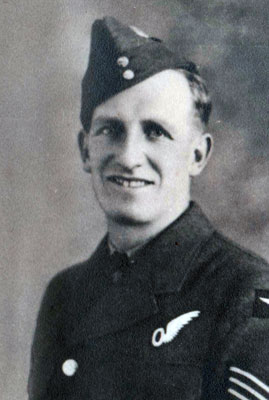
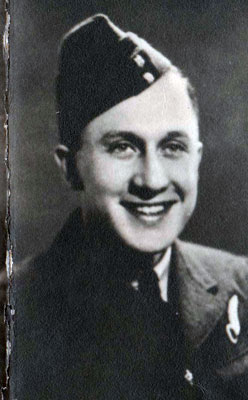
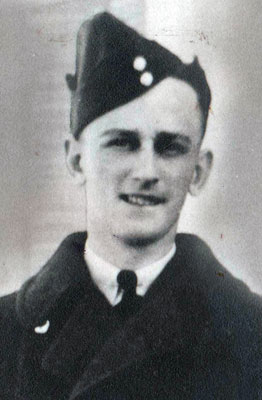
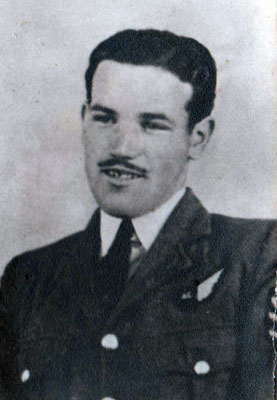
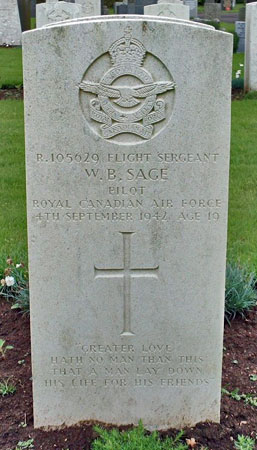
Pilot – F/Sgt William Bruce Sage RCAF (R/105629), aged 19. Buried Silloth Cemetery, Cumbria.
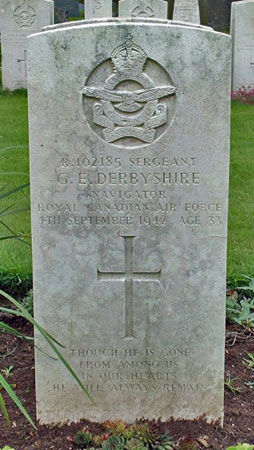
Observer – F/Sgt George Edward Derbyshire RCAF (R/102185), aged 33. Buried Silloth Cemetery, Cumbria.
Observer (/Bomb Aimer) – Sgt Jack Lionel Brovender RCAF (R/90611), aged 24. Buried Layton Jewish Cemetery, Blackpool, Lancashire.
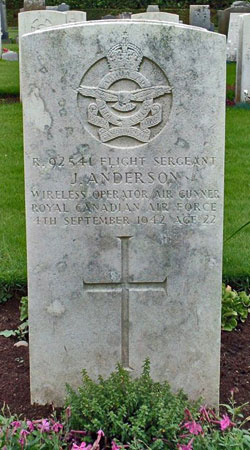
Wireless Operator / Air Gunner – F/Sgt James Anderson RCAF (R/92541), aged 21. Buried Silloth Cemetery, Cumbria.
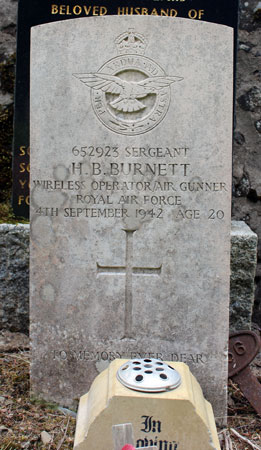
Wireless Operator / Air Gunner – Sgt Henry Brown Burnett RAFVR (652923), aged 20. Buried Culter Churchyard, Biggar, Lanarkshire.
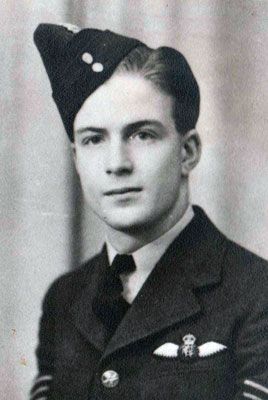
The five airmen sadly killed in this accident, left to right are F/Sgt Sage, F/Sgt Derbyshire, Sgt Brovender, F/Sgt Anderson and Sgt Burnett. I thank Ms Kay Burnett for
contacting me and allowing me to show the photographs of all five airmen sadly lost in the accident in Borrowdale. It appears that all the families corresponded following
notification of the deaths of these airmen and the series of photographs was compiled.
Gravestones of three of the crew, their bodies were taken to the nearest RAF station at Silloth and buried locally to Silloth at Causewayhead Cemetery.
George Edward Derbyshire was born on 17th March 1909 in Moose Jaw, Saskatchewan, Canada and was the son of Herbert and Elsie Derbyshire (nee McDonald). He left college in 1929 and
begun working as a teacher working at various schools in Saskatchewan; with Burstall, Borderland and Weybridge Schools listed on his service papers. Both his parents had died before 1941.
He enlisted for RCAF service on 10th May 1941 in Regina. After basic training in Canada he was awarded his Air Observer's Badge on 20th December 1941 and he was then soon posted overseas, arriving in the UK in March 1942. He then trained at 3 AOS before posting to 25 OTU on 16th June 1942. He was married to Thelma Marguerite and with at least one young child who were living in Winnipeg, Manitoba in 1942.
Jack Brovender was born on 9th July 1918 in Montreal, Quebec, Canada and was the son of Moris Joseph and Rebecca Brovender (nee Pierce). He was born Jacob Lion Bovender but changed his name. His father
was born in Russia but ad moved to Canada as a young man. Jack attended school in Timmins, Ontario and later studied commerce at the Sir George Williams College, Montreal. He began working in the family
book-keeping buisness after completing his college course. He enlisted for RCAF service on 7th April 1941 in North Bay, Ontario and after undertaking basic training in Canada he was awarded his Air
Observer badge on 3rd January 1942. He arrived in the UK in March 1942 and after training at 3 AOS he was posted to 25 OTU on 16th June 1942.
James Anderson was born on 3rd June 1920 (possibly at Troon, Ayrshire, Scotland) and enlisted for RCAF service on 12th February 1941. His family were living at Medicine Hat, Alberta, Canada at the time.
William Sage was born on 13th September 1922 and enlisted for RCAF service on 5th June 1941. His family lived at Lacombe, Alberta, Canada.
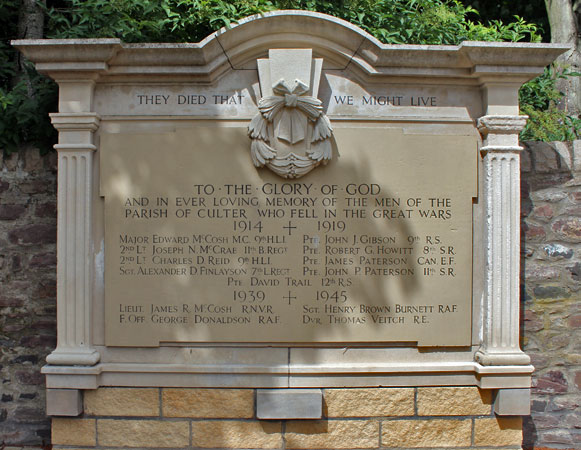
Henry Burnett's gravestone in Culter Churchyard and the village war memorial. He was born on 15th September 1921 and enlisted for RAF service on 16th August 1939. His family lived at Biggar, South Lanarkshire.
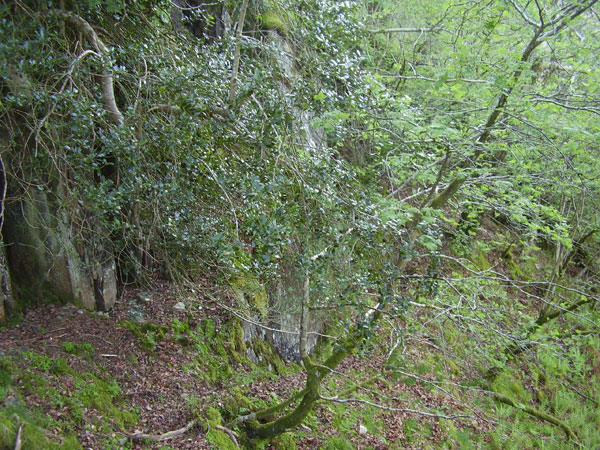
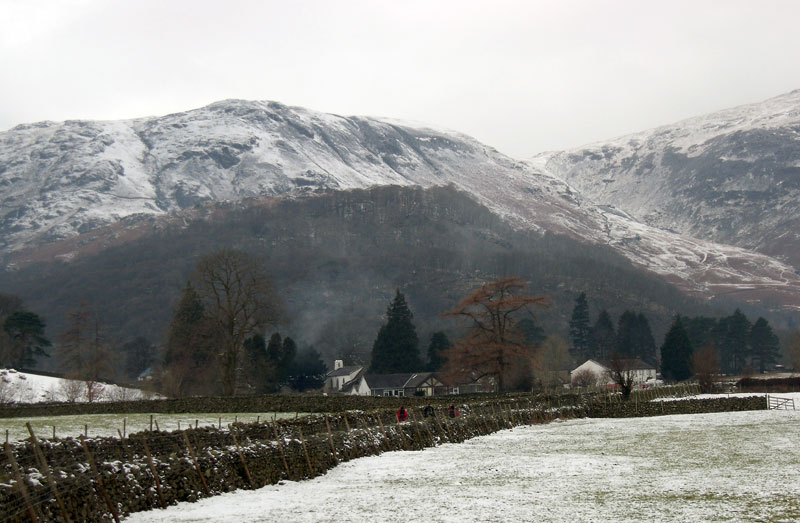
Johnny Wood is the woodland shown across the centre of this photograph above. The woodland reaches virtually to the top of
High Doat which this photograph does not clearly show. High Scawdell is the much larger mountain behind High Doat and is often
incorrectly referred to as being the crash location.
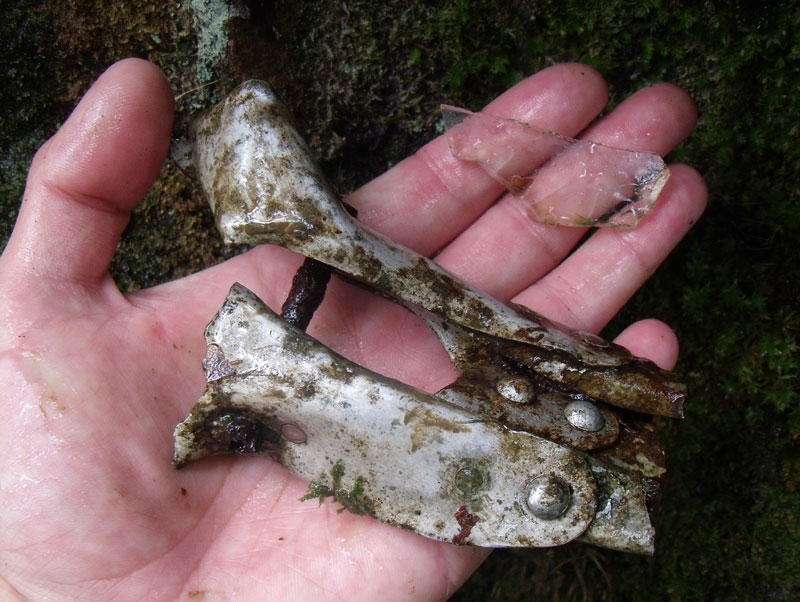
The two pieces of the aircraft I located in July 2010, the piece of perspex was only spotted because the rain
landing on it was making it shine from some distance and the metal part was found nearby. While the metal part looks
similar to that found by and depicted on Alan Clark's "Peak District aircraft accidents" website at the site three
years ago I find it remarkable we may have found the same piece of the aircraft given neither of us exchanged
information to the where-abouts of it.
I would suggest that the aircraft crashed into or very close to this crag shown on the photograph above.
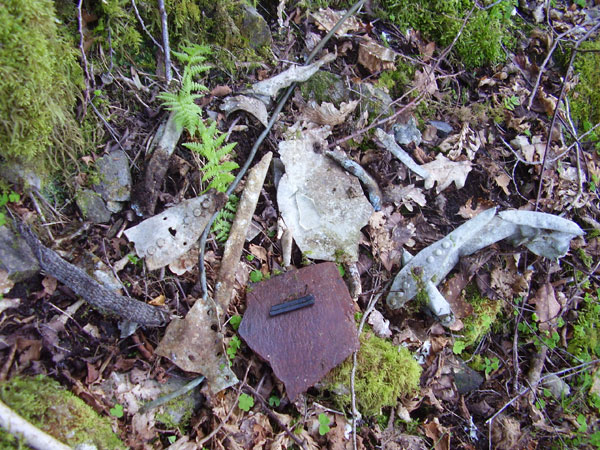
Some of the pieces found at the crash site.
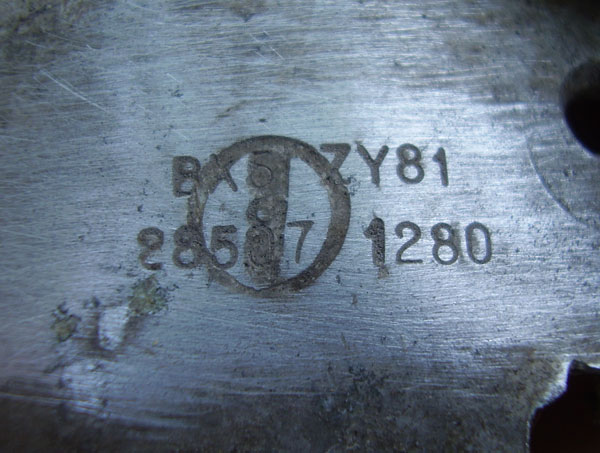
A typical Wellington part number sequence found on one of the pieces at the site in April 2011.
Wellington DV600 was built to contract 124362/40 by Vickers Armstrong Ltd at Chester and was received by 18 M.U. on 5th February 1942. It was taken on charge by 16 O.T.U. on 8th March 1942 but was then transferred to 25 O.T.U. at Finningley on 13th April 1942. On 29th June 1942 the starboard tyre burst on take off so it's then pilot landed at Finningley with the undercarriage leg retracted. The aircraft received minor Cat.Ac/FA damage and it was repaired on site by a team from "Fairfields" with the repair beginning on 7th July 1942. It was returned to 25 O.T.U. on 18th July 1942. As a result of the crash on 4th September 1942 in Borrowdale Cat.E damage was the damage assessment and it was struck off charge on 18th September 1942.
In April 2011 I returned to the woodland on a perfect sunny day to conduct a further search of the woodland with the aim of
identifying the crash site location. Because of the thick woodland the GPS was not working correctly though I was able to return to
my initial finds. Many more pieces of the aircraft were found nearby which would suggest that this was near or the crash location.
The photographs shown below show some of these finds and their location.