On Tuesday 22nd July 1952 this aircraft flew from London to Squire's Gate near Blackpool with a female passenger and had landed briefly at Wolverhampton en-route. Having dropped off his passenger at Blackpool the pilot was intending on continuing to fly to Kingstown airfield near Carlisle on a business trip. The further north the aircraft flew up the West Cumbrian coastline the poorer the visibility became and when he arrived over the Seascale area he decided it was safer to turn around and return to Blackpool, he turned the aircraft around but flew inland during this turn and became lost. With visibility reduced and realising the aircraft was about to fly into rising ground the pilot put the aircraft into a steep climb to avoid a head-on crash with the hillside, the aircraft struck the side of Lank Rigg with it's fixed undercarriage. The aircraft came to rest badly damaged having lost its wings, tail and undercarriage but the pilot escaped with only slight bruising, he was able to free himself from the overturned cockpit and walked down to Side Farm where he was given assistance before continuing on to the Abbots Court Hotel in St.Bees where he stayed the night. Ironically he had lived in that hotel while working in the area in the late 1930s. Many of the details surrounding the accident shown here were given in a West Cumbria Newspaper report following the crash.
This Miles M14a Hawk Trainer was built by Phillips & Powys Ltd. at Woodley to contract 778435/38 and was delivered to the RAF as "T9889" in September 1940. It entered service with 15 EFTS at Carlisle before moving to 21 EFTS at Booker, 7 FTS (7SFTS) at Peterborough, 10 OAFU at Dumfries and finally served with 10 ANS also at Dumfries in 1945. It was then put in storage. The RAF sold the aircraft after the War and it was first registered on the UK civilian register as G-ALGJ on 15th January 1949 to Wilfred Lawrence Foster. Following the crash on Lank Rigg the aircraft was written off as "destroyed" on 28th July 1952 when he submitted the paperwork six days after the crash and the registration was cancelled.
Pilot - Major Wilfred Lawrence Foster. Of Ealing, Middlesex. Minor injuries.
Wilfred Foster was born in Richmond, Yorkshire on 15th August 1896 and was still living in the area when the 1911 census was taken. In the First World War he served as an officer in the Machine Gun Corps (Heavy) and later served in India. Having retired from the Army he gained his Royal Aero Club Aviator's Certificate (Cert.No.18408) at the London Air Park Flying Club on 29th May 1939. What he did during the Second World War is not known. The Miles Hawk involved in the accident on Lank Rigg was first registered on the civilian register as G-ALGJ on 15th January 1949 to him. Major Foster died in the Hastings area of Sussex in 1985.
His son F/O John Lawrence Foster RAFVR (123108) was a pilot with 3 Squadron when he was killed on 5th October 1943 when Typhoon JP514 was shot down over Belgium on a "Rhubarb" low-level flight. He was twenty years old and is buried in Wevelgem Communal Cemetery, Belgium.
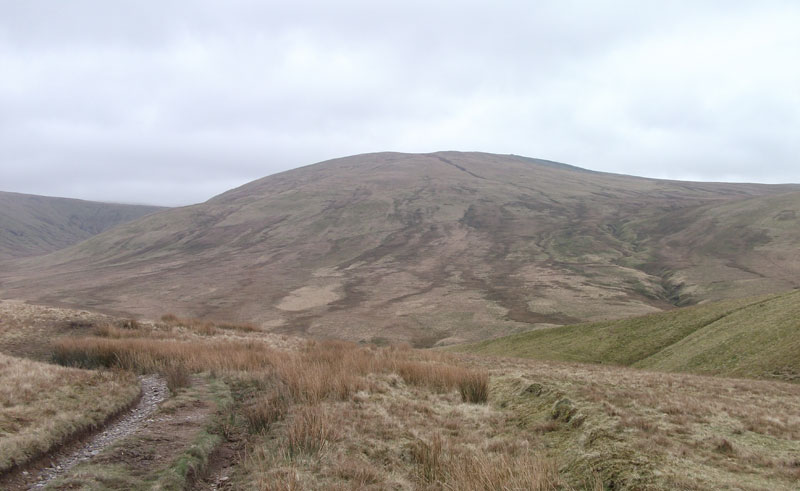
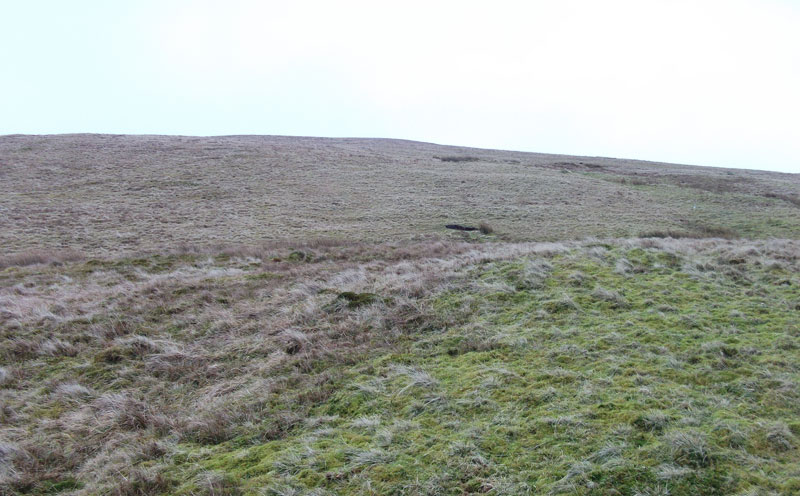
I visited the crash site of Hawk G-ALGJ in March 2014 but none of the larger items that remained at the site (at least until 2010) were located. The crash site is about half way up Lank Rigg shown in the photograph above and almost certainly within the photograph of the area shown below where fragments used to be located. The aircraft had been converted from a twin seat training aircraft to a single seater prior to 1949 when it was photographed at Hatfield in 1951.
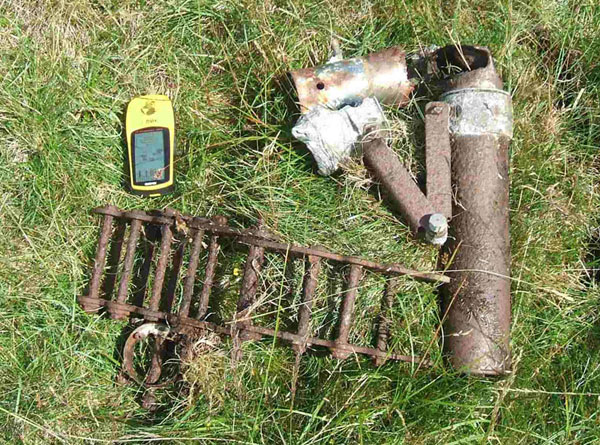
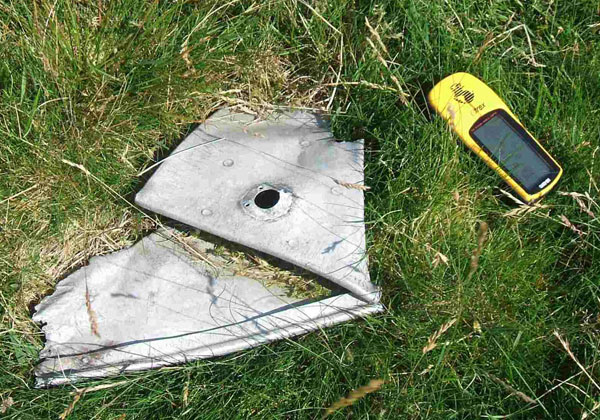
Two photographs showing the wreckage that remained in 2010, photographs kindly supplied by Mr Doug Brown.
A couple of friendly little people I found on the walk to the site.