Hurricane AG264 on Brim Fell, Coniston Fells.
During the morning of Good Friday, 23rd April 1943 at least two Hurricanes pilots from No.55 Operational Training Unit were undertaking formation flying practice over the northwest coast of England having
set out from Usworth airfield near Sunderland earlier in the day, there was probably an instructor flying in a third aircraft as well as these two trainee pilots. After
an hours practice formation flying the trainees were ordered to break away and undertake low flying and direction finding homing exercises individually but were warned to
watch the weather conditions and stay local to the Maryport area over which they were flying. A short time later whilst flying in cloud at 12.00hrs both aircraft crashed
into high ground in the Coniston Fells towards the south west side of the Lake District. Both pilots were killed instantly when the aircraft crashed in the Brim Fell area.
The crash investigation recorded that prior to taking off both pilots were overheard discussing flying to Blackpool in the course of this training flight and it seemed
probable that having completed part of the exercise had taken it upon themselves to fly to Blackpool. The crash report suggested that then having then flown into low
cloud it was possible that they did not see the mountains in their path and flew into high ground.
Research done by myself and experienced mountaineer Mr Adrian Harris adds extra information. The crash report was quite critical of the pilots by stating that they had
intended on flying to Blackpool as part of this flight. What it does not mention is that they had almost certainly become aware of the low cloud and had become lost well
in advance of any crash. Mr Harris located a witness who was in Coniston at the time of the accidents and heard the two aircraft fly roughly over the village. Having
located both crash sites and assuming that both aircraft were flying together and roughly in level flight we were able to use a compass to work out a likely heading both
aircraft were on to avoid striking the ground prior to where they did. It was only possible for the aircraft to have been in a very narrow sector around the heading of
270' and it is probable that they had realised they were lost and steered onto a 270'/ West heading to make for the coast to work out their position. The Coniston Fells
were in the way and both aircraft crashed into high ground. The heading of 270' would also have taken them over an area just North of Coniston village and within earshot
of the witness located.
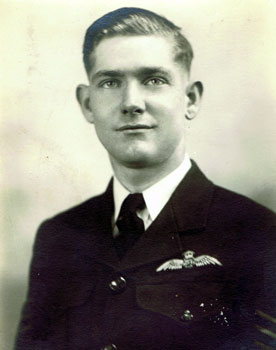
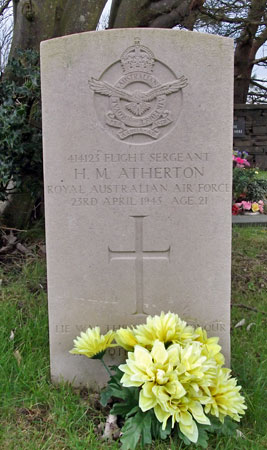
Pilot - F/Sgt Henry Marinus Atherton RAAF (414123), aged 21. Buried Haverigg Churchyard, Cumbria.
Henry Atherton and his grave at Haverigg Cemetery. Henry Atherton was born on 31st July 1921 at Cairns, Queensland, Australia and was the son of Ernest Albert and Honoria Christina Atherton. He
was one of four children. Prior to enlisting into the RAAF on 16th August 1941 in Brisbane he was working as a bank clerk for the Commonwealth Bank. Following training he was awarded the pilot's
flying badge on 23rd June 1942. He then left Australia in August 1942 and arrived in the UK in November 1942. On arrival in the UK he trained at 5 (P)AFU from 19th January 1943 before posting to
55 OTU on 2nd March 1943. At the time of his death a month later he had flown 31 hours on the Hurricane type and 144 hours in total.
Between June 2002 and April 2008 I visited the Coniston Fells numerous times and searched a wide area of Brim Fell for aircraft wreckage. During my first visit in June 2002 I came across
scattered parts in Gill Cove; above Levers Water. In the years that followed further searches for aircraft remains were made without much success. In April 2008 I was in the area again and
found some small fragments on Brim Fell but because of the conditions abandoned a further search. The following day I returned to this location, with the snow about melted the main crash site
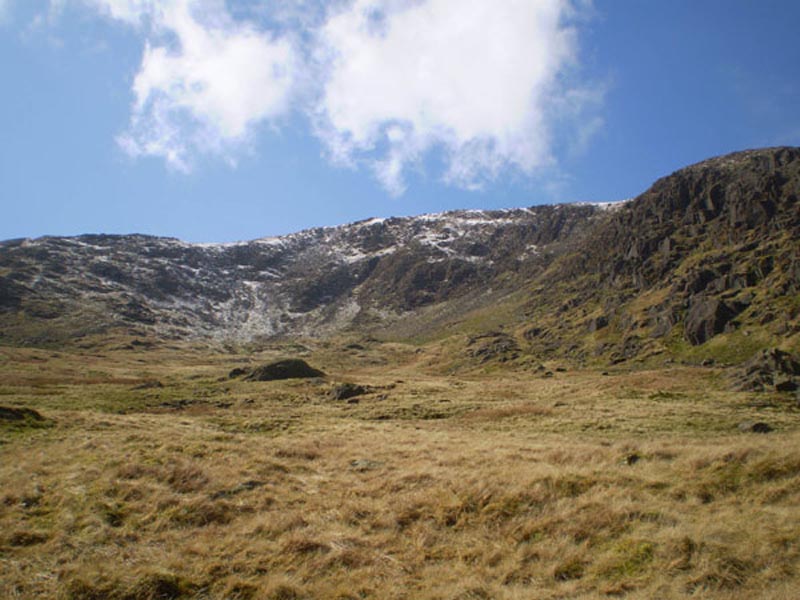
of one of the Hurricanes was finally found. The photograph above shows the general area of Gill Cove with the crash site high up on Brim Fell beyond. Both crash site and previously found
scattered wreckage must be from the same aircraft and having found an item at Hurricane AG275 in August 2012 to identify that one then these scattered parts and main crash site must belong to Hurricane
AG264. Michael Hurst's book on Lakeland air accidents shows a photograph of a Hurricane wing section and engine remains on a flatter area than my scattered finds however
these all appear to be part of Hurricane AG264 which were in the process of making their way down off the mountain assisted by persons unknown over many years. I have
since returned to the crash site of AG264 on a number of occasions to photograph, plot and record all surface remains I have located.
Part of a flying instrument casing found at the site in 2008.
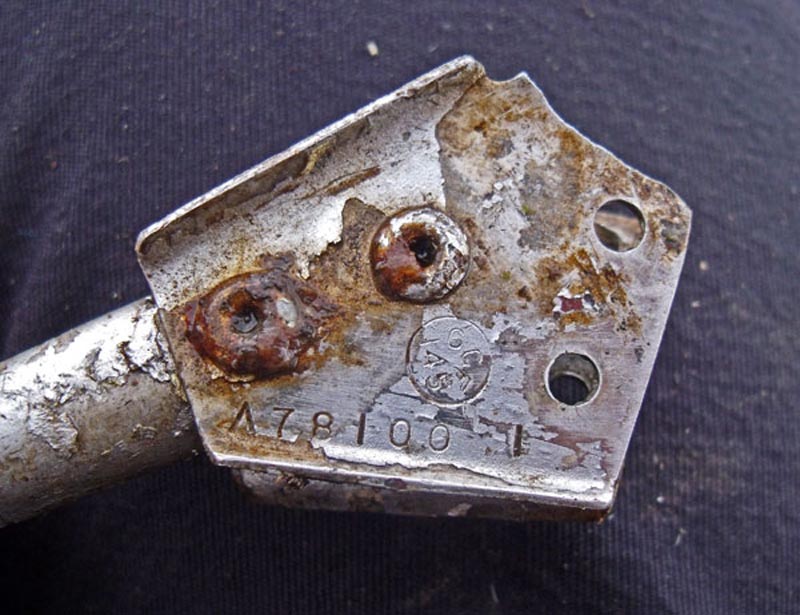
An inspectors stamp which the lettering "CCF" clearly readable, Both AG275 and AG264 were made by the Canadian Car and Foundary Corporation, who built many numbers on contract. CCF refers to this manufacturer.
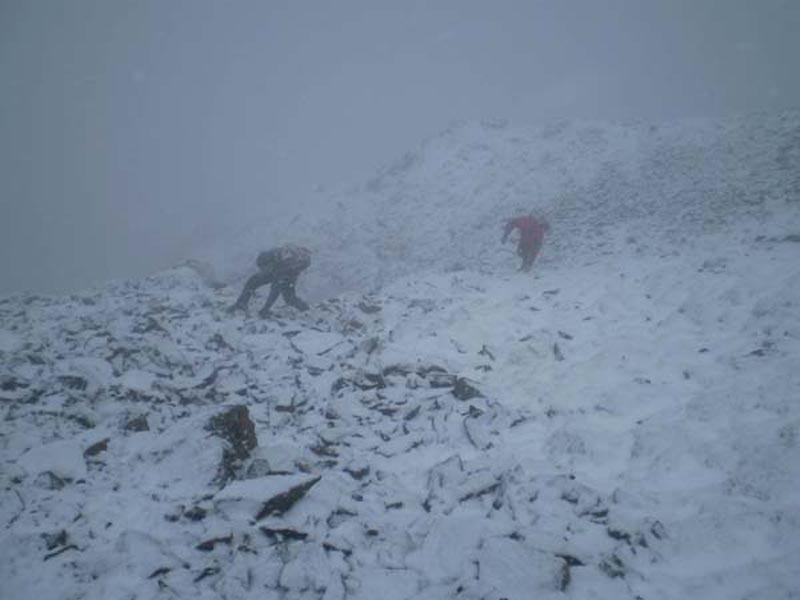
Hunting for crash sites on steep scree in snow is not ideal but it did result in the site being located on this occasion in April 2008.
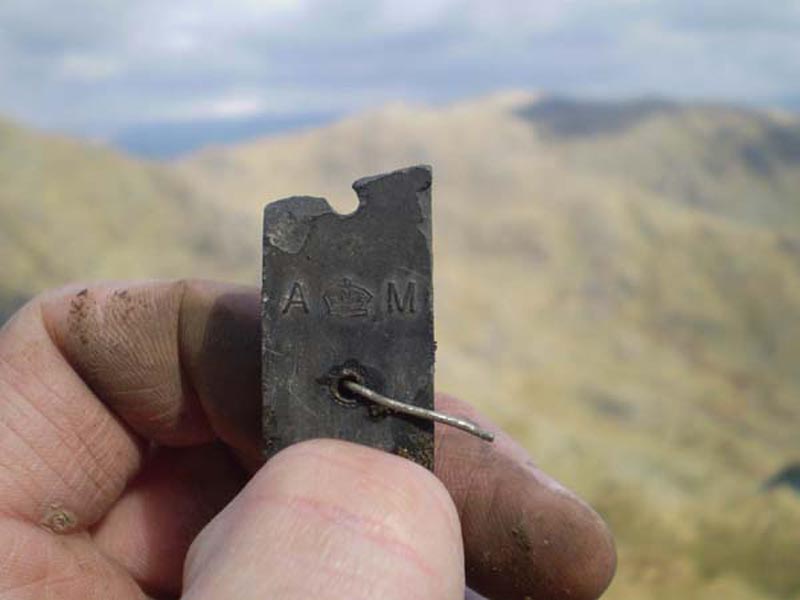
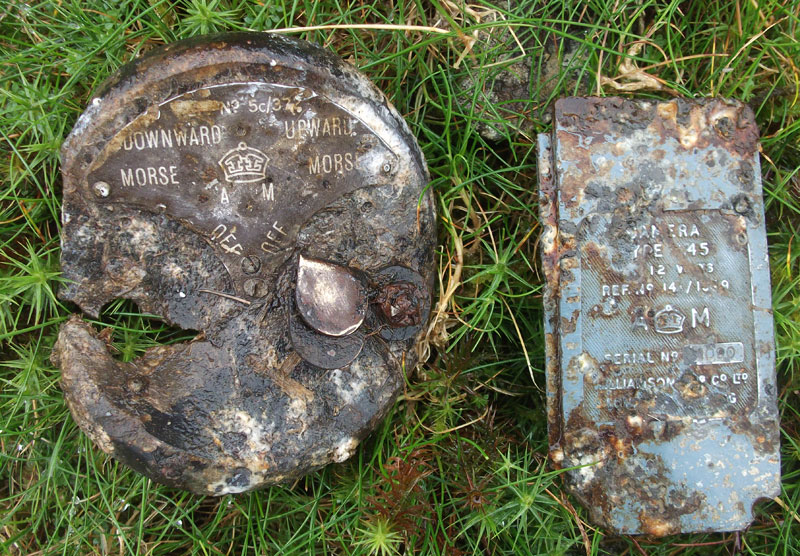
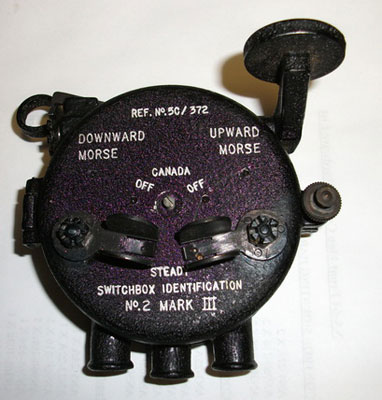
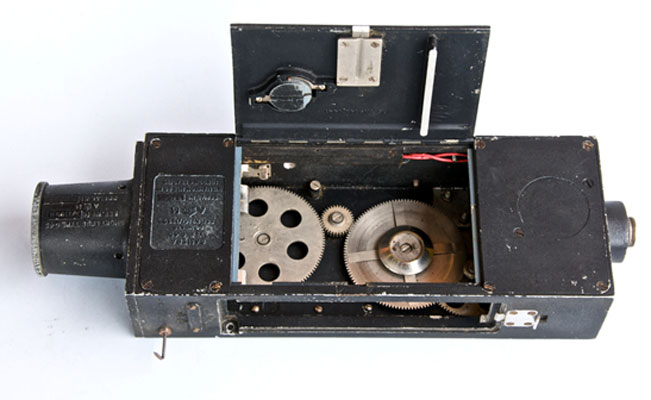
Two further pieces of the aircraft with Air Ministry markings. Left is a Morse Key indentification switchbox and right is a gun camera identification plate.
Complete examples of both are shown below thought the morse key is a different variant.
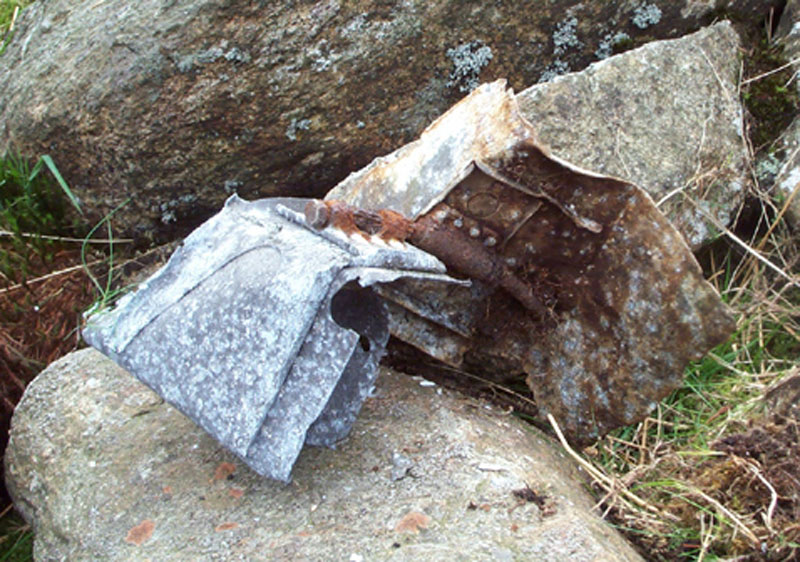
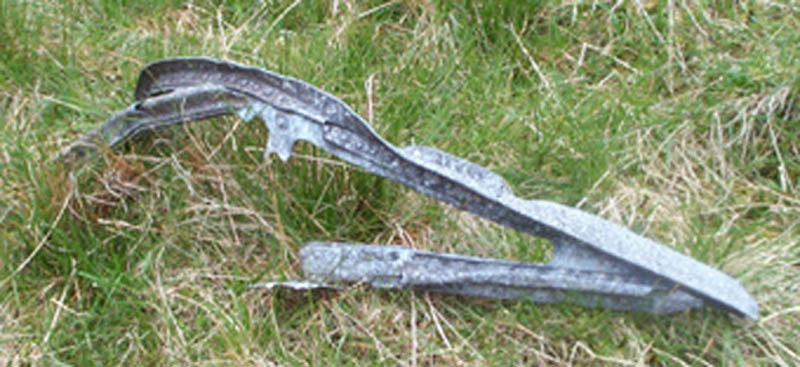
These three photographs show parts of the aircraft found much lower down in Gill Cove and must roughly be where the wing remains and shattered Merlin engine once were
to be seen. An identical piece of aircraft shown in the photograph above was found at Hurricane AG275 in August 2012.
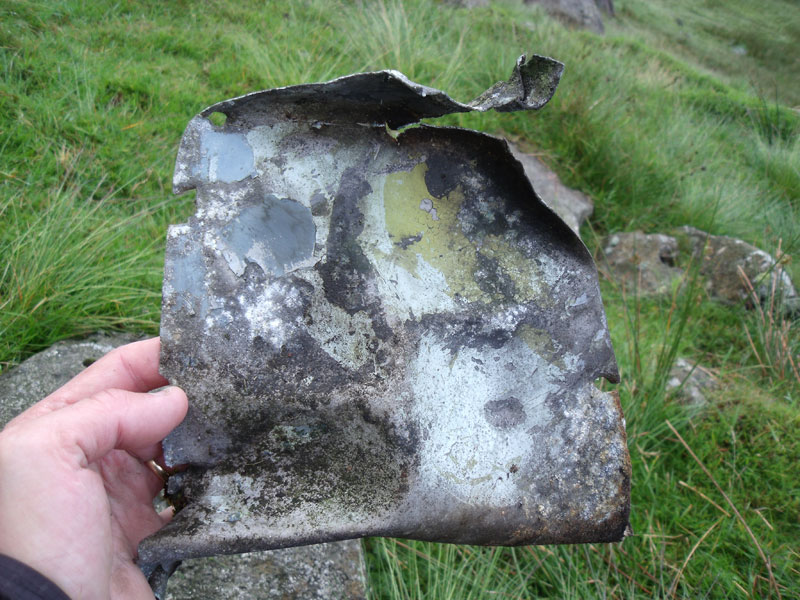
A section of the aircraft's skin with two colours of paint still visible.
A further mid-sized fragment of the aircraft found in Gill Cove in 2002, this piece I hid in rocks but cannot locate again.
An MoD licence to excavate / recover items from the site was granted on 6th October 1986 and again on 8th May 1994. I would welcome contact from anyone involved and would love to see any photographs of items found and recovered.

Both Hurricanes, AG264 and AG275, were built by the Canadian Car and Foundary Corporation (CCF) and bought through the British Purchasing Commission and both were in the last but one batch delivered by sea to the UK in March 1941. After assembly and testing both were allocated to 32 Squadron at Pembrey in May 1941 who later moved to Angle with the unit on 1st June 1941. 32 Squadron ceased operating Mk.I Hurriances in July 1941 and coverted to Mk.IIB's. After a period in MU store both aircraft were allocated to 55 OTU at Usworth. Both aircraft moved with this unit to Annan on 28th April 1942. Both aircraft sustained Cat.E2/FA damage in the accidents in the Lake District on 25th April 1943.