On 21st January 1943 this aircraft was one of three that undertook a daytime formation flying exercise with other pilots of the same No.55 Operational Training Unit. The three pilots undertook the formation flying exercise and the leader (Sgt G.Haworth RAFVR (1514617)) took them back toward their base where he and the Number.3 in the formation landed at Annan normally but in cloudy conditions just before noon. The Number.2 aircraft was forced to fly an overshoot and then fly a circuit of the airfield to then attempt a second landing approach. As he flew the overshoot he then climbed back into cloud and was lost to sight. He then made radio contact once overhead again and was ordered by Flying Control to head toward Silloth and was given a course to steer. The visibilty was better at Silloth and he was instructed that if he could not locate Silloth after decending he was to fly a reciprocal course back to Annan. He later made contact to state he could not locate Silloth so was given a heading to take to return to Annan. Owing to the pilot's inexperience of only ten hours flying time on the Hurricane type at the time it was felt that this inexperience probably resulted in him not changing course immediately. The aircraft continued to fly south east but flew over the high ground toward the north of the Lake District and into Great Calva. When the aircraft failed to return to base, the pilot and aircraft were officially recorded as "missing" and when the weather improved a search was no doubt carried out from the air but it did not locate it or the pilot. The unit's record book made a brief mention that the weather had been foul on the day Hurricane AF959 disappeared. Nearly a week later on 27th January 1943 the aircraft was finally located reasonably intact on Great Calva and the body of the pilot was recovered. Two days later an RAF recovery party of 83 MU were working at the site when they were notified that wreckage of another aircraft had been located in the same area, they formed a search party and located the crashed remains of Anson AX145 on nearby Frozen Fell which had been missing since 1st January 1943.
The history of Hurricane AF959 has a number of gaps in the published Air Britain record detailing it's service history. It was built to a contract issued by The British Purchasing Commission by The Canadian Car and Foundry Company, Fort William, Ontario, Canada and was delivered to the UK in April 1941. After assembly and acceptance tests it was placed into long term storage until being taken on charge by 225 Squadron based at Thruxton in January 1942. The following month 225 Squadron began conversion to Hurricane Mk.IIc's so on an unknown date after this the aircraft was flown into MU store. It was later allocated to 55 O.T.U. at Annan on an unknown date, but after April 1942. As a result of the crash on 21st January 1943 Cat.E2/FA damage was recorded and the aircraft was struck off charge.
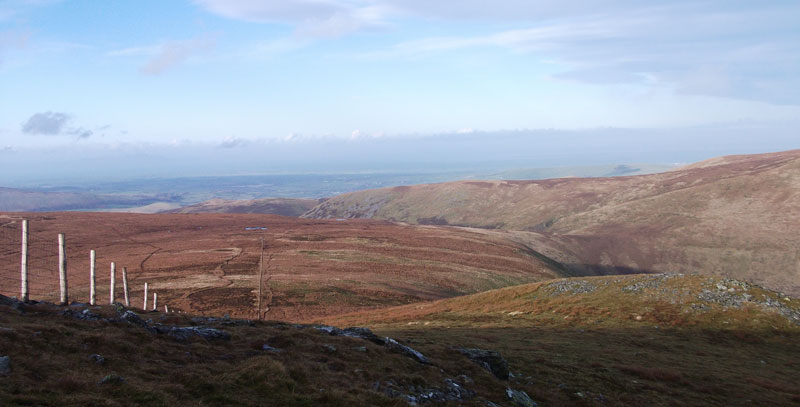
The crash site location of Hurricane AF959 is known because a very good photograph exists and was kindly shared with me by air historian Mark Sheldon, taken in 1943 by a member 83 MU it shows the damaged aircraft on the fellside before it was cleared. By lining up the ground features of the photograph today the site can be ascertained. The RAF did a very good job of clearing all the crash sites in the Northern Fells and nothing remains on the surface today to mark the spot where this aircraft crashed which is now very close to the rough track between Knott and Great Calva.
Pilot - Sgt Donald Leslie Baker RAF (656680), aged 25. Buried Stone-in-Oxney Churchyard, Kent.
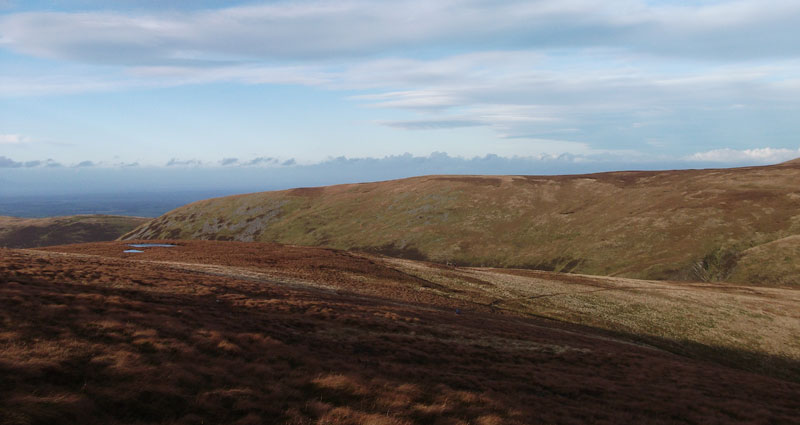
The aircraft crashed on the right of centre on the photograph shown above and the right side of the photograph shown below.
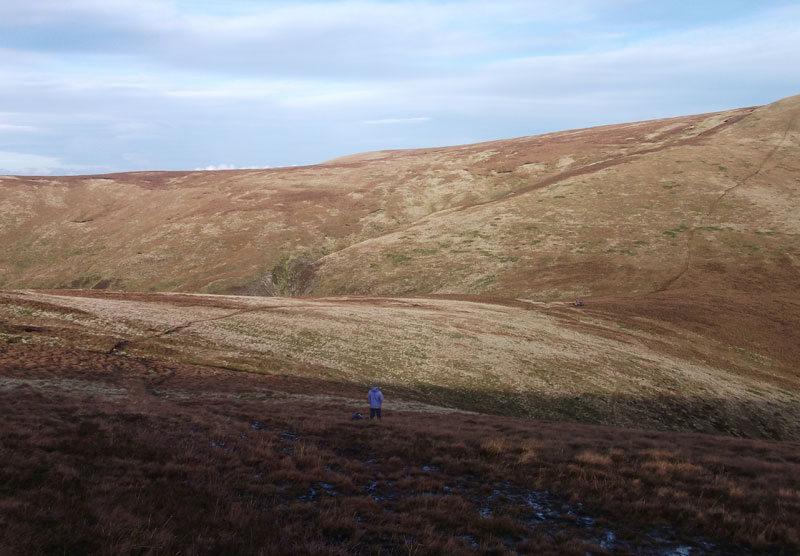
I visited the area of the crash in December 2013. This photograph shows where the aircraft crashed with Ade Harris standing virtually on the spot but nothing is at the site today to mark it. As can be seen the
area is a reasonably flat area of ground and it could well be that the gap developed in the cloud and the pilot was attempting to force land the aircraft when it crashed.
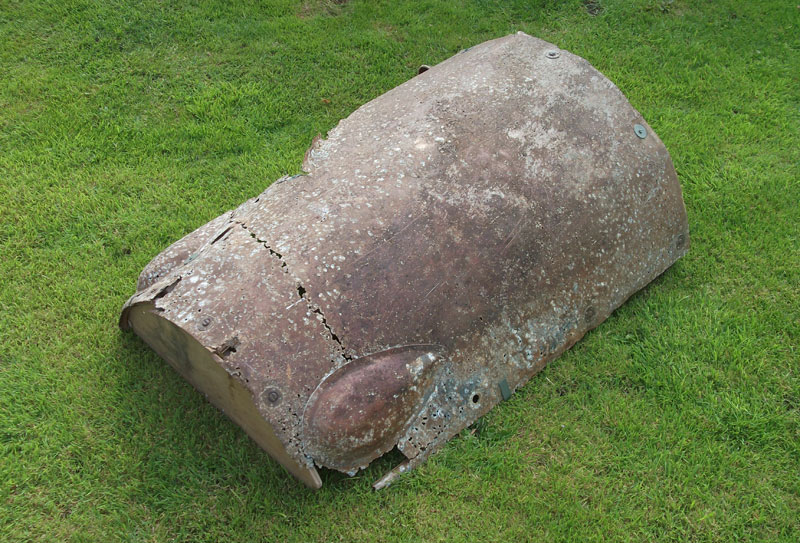
Historian Ade Harris found two Hurricane-related items from what can only be from Hurricane AF959 well away from the crash site some time ago; he found a complete engine cowling in a stream about a kilometre
from the known crash site which must have been in the water for many years when found. Some time later he found part of an ajoining panel nearer the crash site but in the same stream and in poor condition though
still identifiable. Closer inspection suggests that all the fasteners are in the unlocked position which would mean that the panel had been removed by the team from 83 MU but had blown away from the site before
being taken away. The gully is a substantial height lower than the crash site location and the recovery team probably couldn't be bothered to climb down to recover them. They have then have been washed downstream
over the years to where they were found.
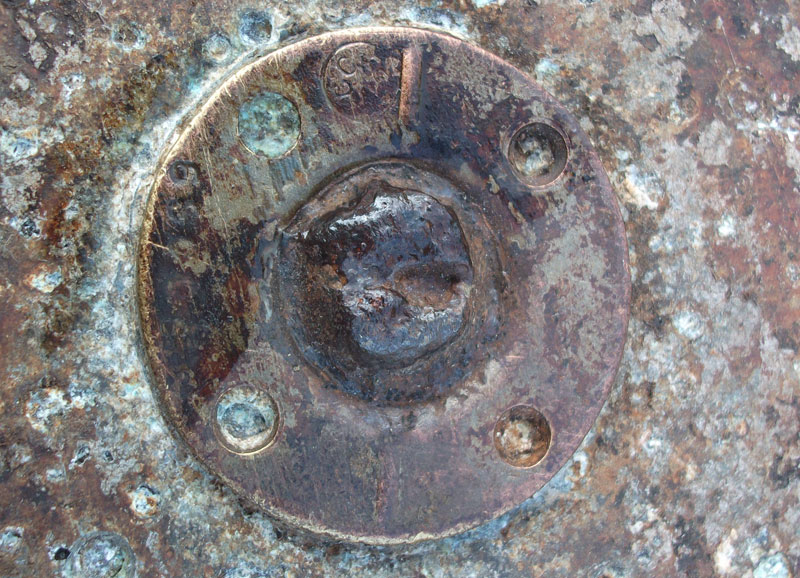
Various numbers and markings on the engine cowl which link it to Hurricane AF959 as this aircraft was manufactured by the Canadian Car & Foundry (CCF inspection stamp just about readable at the top of the brass fitting).
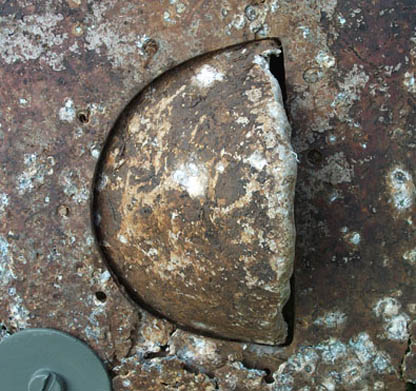
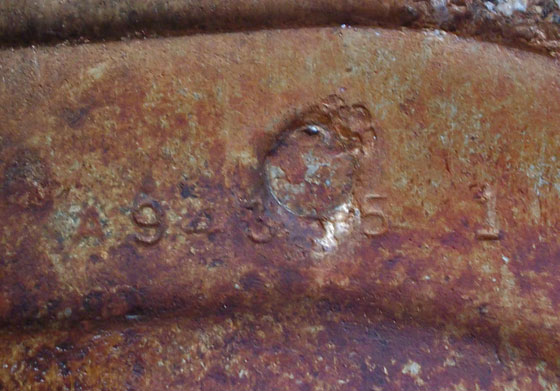
The air scoop at the rear of the cowling and a Hawker part number on the inside of the panel.
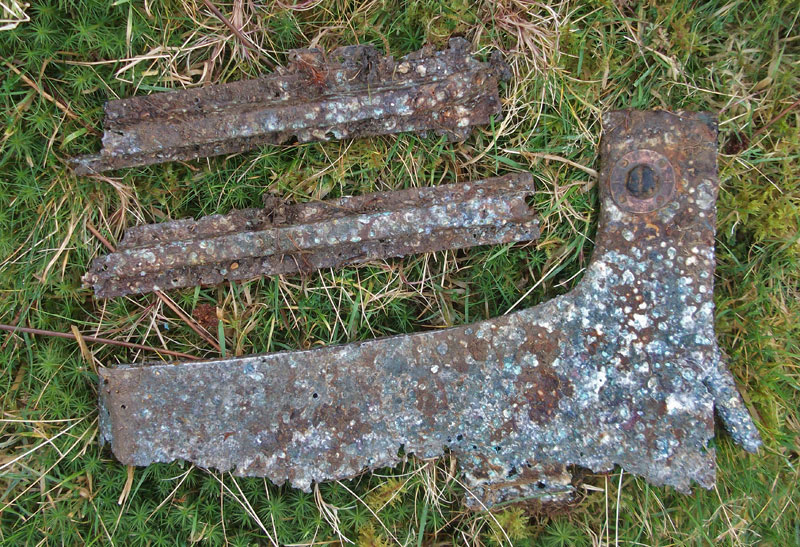
The remains of the second panel Ade Harris located in the stream, this part was located on the aircraft just below and forward of the forward most exhaust stub.

Donald Baker was born at Rye, Sussex in early 1918 and was the son of Leslie and Ellen Eliza Maud (nee James) Baker. He was baptised at Peasmarsh on 24th February 1918 where his father was a butcher. He
married Peggy Ida Alice Irons in 1941, of Stone-in-Oxney, Kent. His widow later re-married Robert Gutsell in 1947. Thanks to CWGC for the credit to me in their biography of this airman.