Meteor F.4 VT263 near Cayton.
On 15th June 1955 the pilot of this No.8 Flying Training School aircraft took off from Driffield at 09.46hrs for a solo flight which was to undertake a high speed training flight and what was to have been the pilot's first solo high speed run. The flight was due to have been carried out at speeds upto Mach 0.78 at 35,000ft. During the flight he was also to practice making steep turns at high altitude, high speed descending to 20,000ft and make a high level controlled descent. The weather was good. At 10.04hrs the aircraft was seen descending at a rough angle of 20' at very high speed flying from the west and on an easterly heading. This angle did not change and many witnesses heard the aircraft's engines screaming as it approached Seamer and Cayton. It struck the ground near Cayton Carr Farm with the starboard wing slightly dropped, bounced back into the air and exploded. The pilot would have stood no chance and would have been killed in the impact. As the aircraft disintergrated parts of it brought down telephone lines and damaged overhead power lines. The crash investigation considered that the cause for the crash could have been due to anoxia on the pilot but this was not in "the usual way" in that the oxygen system was switched on. Another possibility was that the pilot was incapacitated or had blacked out. It was known that he had flown with his straps fairly loose and being a taller than average pilot his seat was unusally high in its setting. During a high speed turn at altitude the pilot may have struck his head on the aircraft which rendered him unconscious. It was felt that this was the most likely cause but owing to the injuries the pilot received in the resulting crash it was not possible to prove this. The aircraft did not fly into cables and then crash, as is claimed elsewhere on the internet.
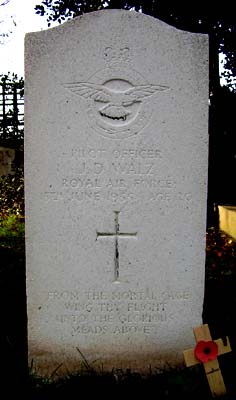
Pilot - P/O Jorn Dietmar Walz RAF (2713560), aged 20. Buried Driffield Cemetery, Yorkshire (grave 3952).
Jorn Walz was born on 14th January 1935 in Heidelberg, Germany. He received a National Service commission in the RAF to the rank of Acting P/O on probation on 21st April 1954 and was re-graded as P/O on 21st April 1955.
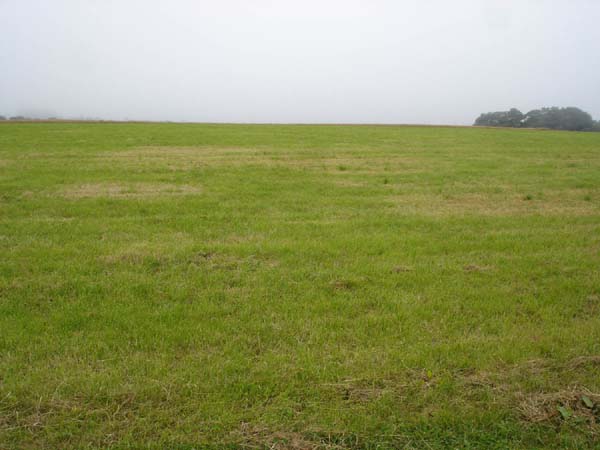
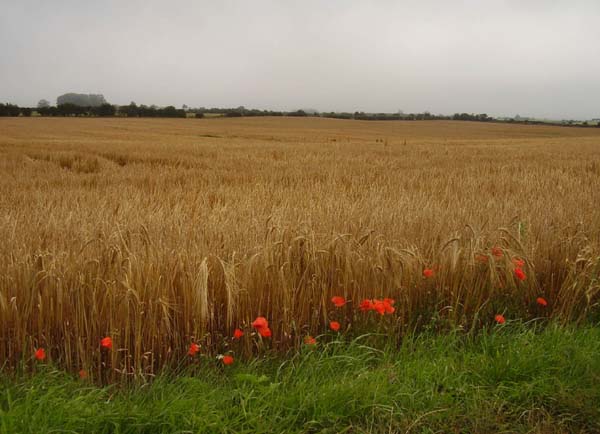
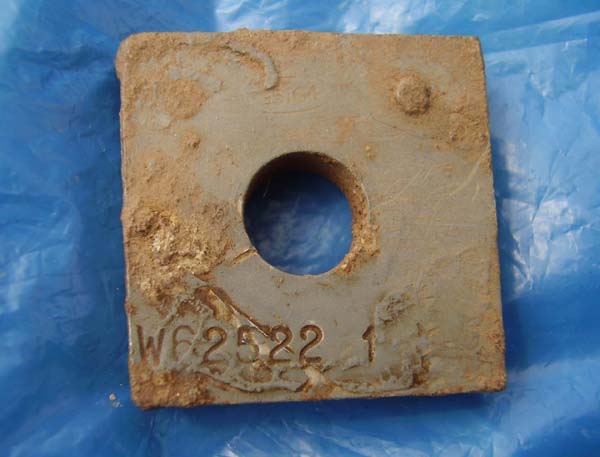
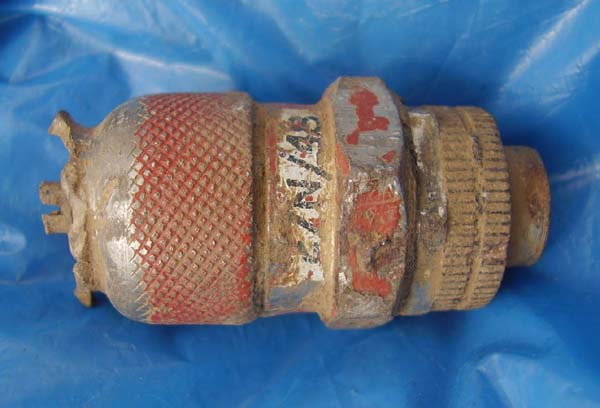
I visited the field where the aircraft first made impact in July 2008 with air historians Ken Reast, Albert Pritchard and Eric Barton after gaining permission from the landowner. Photographs obtained from the crash investigation report held in the National Archives made it possible to pinpoint the exact point of impact (shown in the photograph above) and although few fragments were found in this area there is no doubt that this was location. Upon striking the ground, which is very hard in this field, the aircraft bounced back into the air for a few feet prior to exploding in the air. A scatter of wreckage was located below where this must have occurred and two pieces of interest are shown below. After the explosion the momentum of the aircraft carried the wreckage over a farm road and across a number of fields with engine parts travelling over 1,000 yds. The area where this occurred had standing barley in it in July 2008 so a search of these fields was not possible. After harvest we returned and searched the second field and numerous fragments were located across the whole field.
The fields over which much of the wreckage was scattered.
The only piece with a Gloster part number we found on our visit to the site.
A currently unidentified piece but thought to have been a radio connector.
I express my thanks to the owners of Cayton Carr Farm for allowing our visit and for the help their employees were able to give.