F/Lt Turner who would be killed in this flying accident was from RAF Cranwell and was attending a Qualified Flying Instructors Refresher Course at No.205 Advanced Flying School at the time. At around noon on 4th May 1953 this aircraft took off from Middleton St.George airfield with the pilots detailed to undertaking an instrument flying training exercise. As the aircraft was a two seater aircraft and it was during the day the canopy around the back seat must have been blacked out for this type of exercise to be carried out during the day. The pilot undertaking instrument flying would be able to fly visually otherwise. It appears that the exercise was coming to an end and during which the crew asked for permission to make a low pass of Neasham airfield at high speed. Permission was granted and while flying low over the airfield the aircraft hit a twenty foot high radio mast that was on top of the control tower building. The aircraft then climbed to around 1,200 feet but control must have been lost. The aircraft then begun a descending turn and did not recover level flight from this turn. It flew into the ground just south of the main street at Great Smeaton and disintergrated. Both pilots were killed in the crash. One of the engines went over the main road and demolished a stable building. The crash narrowly missed the village school, which was occupied at the time.
Pilot - F/O Kenneth Belton Bones RAF (607192), aged 22. Buried West Cemetery, Darlington.
Pilot (Pupil) - F/Lt Anthony Turner RAF (579941), aged 24. Buried West Cemetery, Darlington.
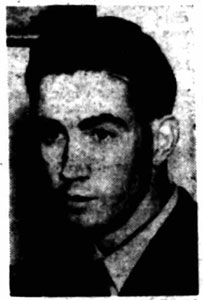
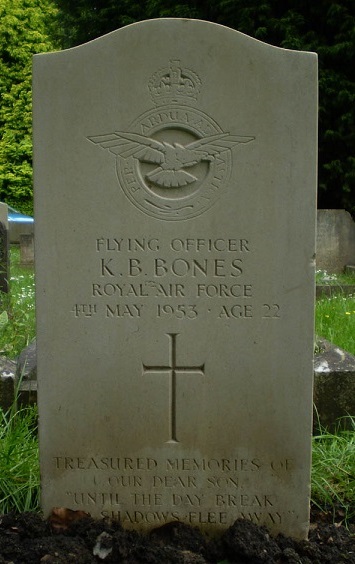
Kenneth Bones was born on 17th October 1930 in Essex but his family appear to have moved to the Leicester area when he was a child. He attended Wyggeston Grammar School where he captained the school rugby team and was a member of the ATC in Leicester as a boy. He was granted a commission in the RAF after training at Cranwell on 12th December 1951. While undertaking training at the Central Flying School in 1952 he was awarded the Brabyn Trophy for the best aerobatic routine flown. He was a qualified flying instructor at the time of his death.
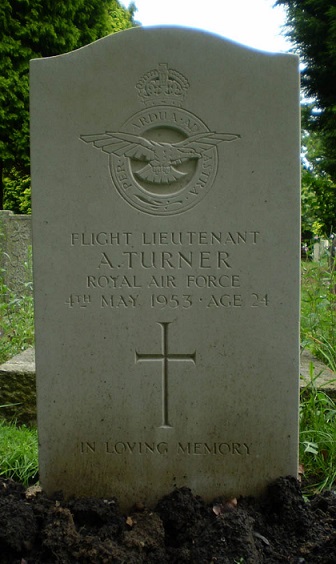
Anthony Turner was born on 29th May 1928 and was granted a commission on 5th April 1950. He also appears to have been a flying instructor at the time of his death.
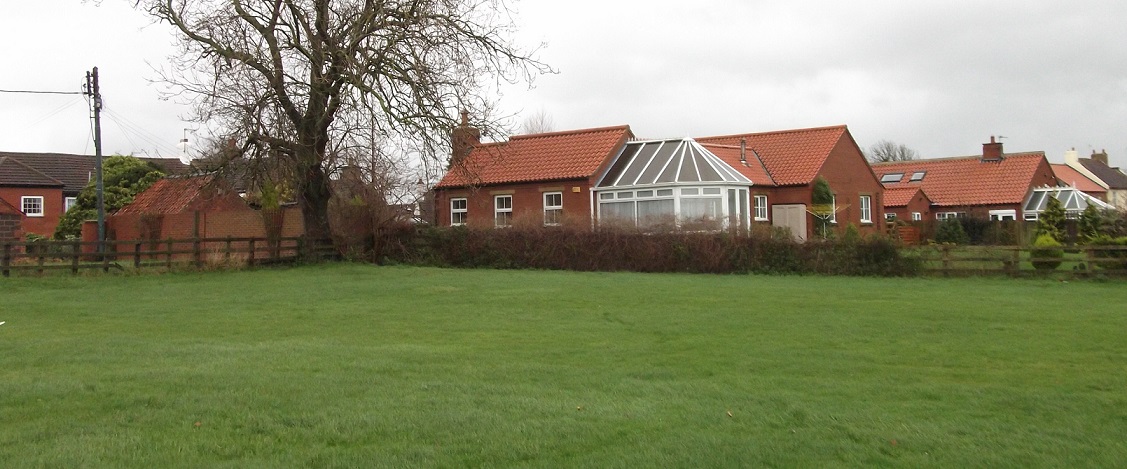
In December 2011 I was able to join Albert Pritchard, Ken Reast and Eric Barton in visiting the general area of this crash at Great Smeaton. Villagers were very accomodating to our search, firstly to allow me to line up a newspaper photograph of the crash site taken at the time with how the area is today. Secondly to allow Eric to run his metal detector over their gardens to plot traces of metal in lawns and to see what could be found in flower beds. The school headteacher also allowed us to run a detector over part of the modern school field nearest to the crash site and while digging holes into lawns and school fields was not undertaken it did allow us to plot any metallic traces to give an indication of what may be there. As it turned out the school field yielded nothing and that the consensus was that the aircraft had crashed onto an area of land where two bungalows were built in more rescent years. Just one small fragment of the aircraft was found during this visit on a very wet day. The photograph above shows where I believe the aircraft crashed. The bungalows are the two shown, the large tree and older outbuilding must have narrowly escaped being hit by the aircraft. Eric, Albert and Ken returned on a later date and I believe that they found a few more fragments in flower beds. We came to the conclusion that the aircraft crashed in a dive approaching from the west side of the village so the wreckage that left the immediate area of the crash was thrown eastward. Despite asking around Ken and Eric were unable to locate anyone local who remembered the incident occurring. I would like to thank the villagers and school staff for allowing us to access their land.
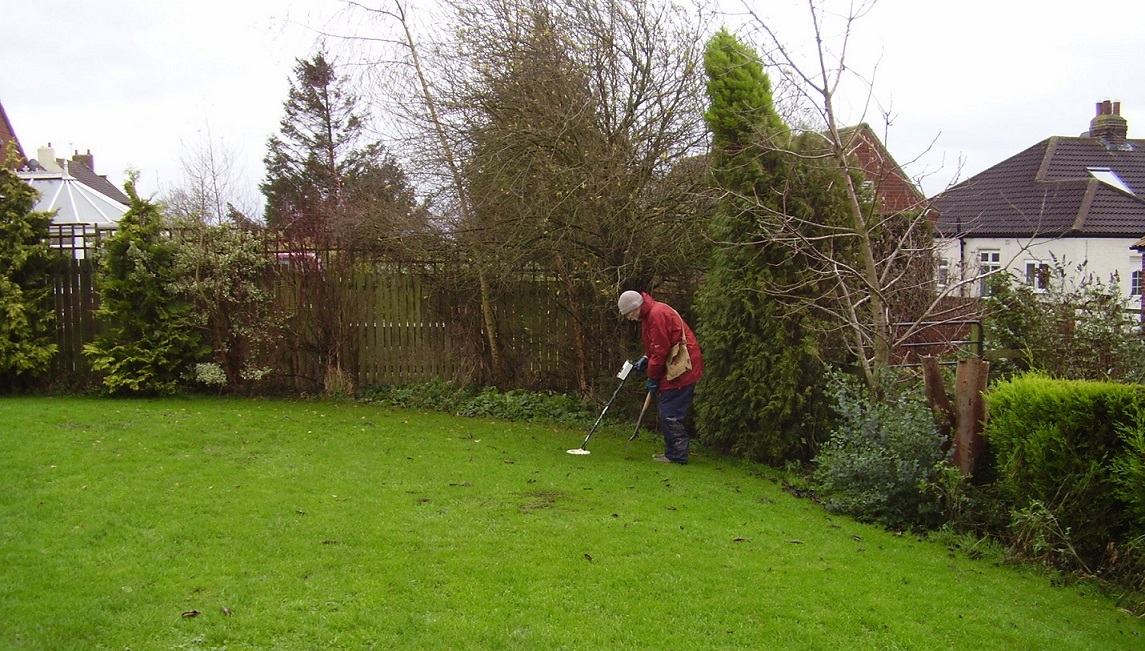
The now late Eric Barton about to run his metal detector over and not his spade through a beautifully manicured lawn.
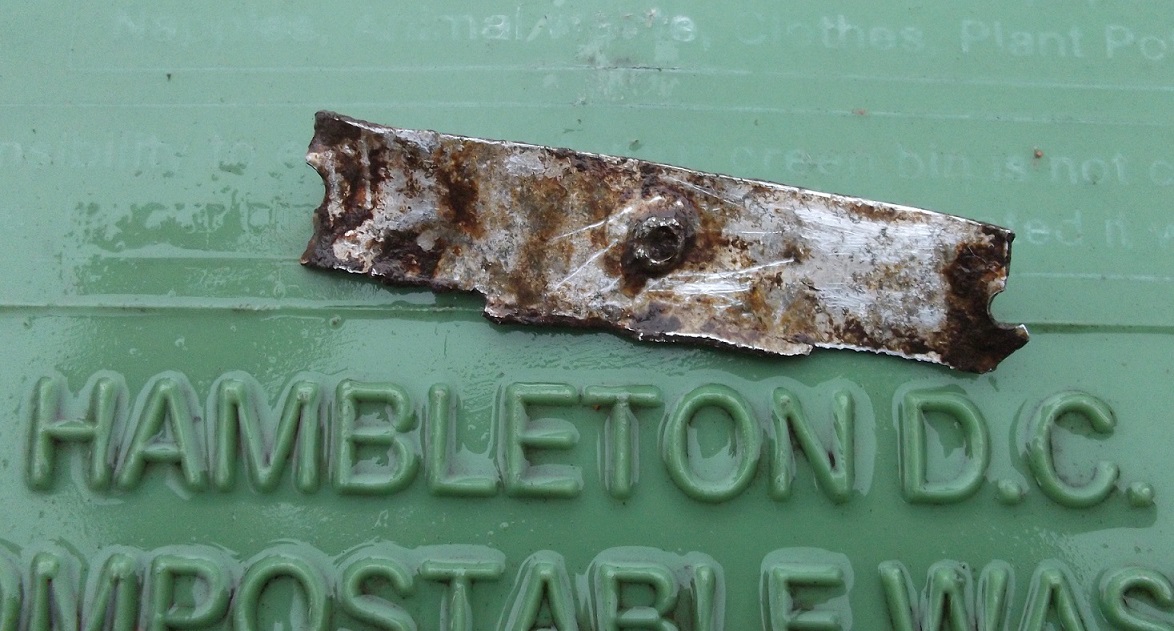
The one and only fragment located.