Wellington T.10 NA827 near Meltonby.
On 5th November 1949 this No.2 Air Navigation School aircraft was flown by three RAF crew and an Iraqi trainee navigator on a cross country training flight. During the flight the crew became lost and appear to have been unable to locate their home airfield of Middleton St.George. Eventually the aircraft ran out of fuel in the area to the east of York. The crew began to bale out at 1,300 feet while flying east. The Iraqi trainee appears to have baled out first and landed somewhere near the York to Pocklington road. The aircraft appears to have been heading roughly west to east and the other RAF crew then left, one landed near Fangfoss, one near Eastfield Farm, Yapham while the pilot landed near Grimthorpe Manor. Once empty the aircraft then swung back west and crashed close to Meltonby Grange, Meltonby, a few miles north of Pocklington. It created a large crater in a field near the farmhouse and a fire burnt for some hours. The wireless operator landed on and appears to have gone through the roof of a farmhouse, sustaining a broken leg.
Pilot - F/Lt Leonard James Otley RAF (164528).
Wireless Operator - Master Sig Norman Alister Cameron MiD RAF (775392). Injured.
Navigator (pupil) - Major Mohammed. Royal Iraqi Air Force.
Navigator (instructor) - Nav IV R Clarke.
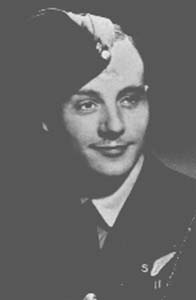
Norman Cameron's daughter kindly emailed me in the early days of this website with additional information about her father's service. He had survived a number of flying accidents during his RAF service. On 2nd August 1936 he was flying in 608 Squadron Hawker Hart K6483 that crashed near Muggleswick, near Consett, Durham and sustained minor injuries. On 11th July 1937 he was on board 608 Squadron Hawker Demon K3768 that crashed at Thornaby airfield and he sustained minor injuries. On 9th January 1941 he was flying in 103 Squadron Wellington R3215 that crashed in Wales. On 10th February 1941 he was in 103 Squadron Wellington T2610 that was damaged by flak and his pilot ditched in the North Sea, he again sustained injuries that saw him taken off operational flying for some time. He was later posted to 276 Squadron. On the evening of 27th April 1944 he was in Walrus W3083 undertaking an ASR flight to rescue a ditched Seafire pilot. The pilot was picked up but owing to heavy seas the Walrus could not take off again so began to taxi back towards Salcombe. After nearly sinking because of the swell, with the radio equipment failed a motor launch located the Walrus at 19.15hrs and towed it back to Salcombe, arriving at 06.40hrs. On 20th March 1945, while based at Knocke, he was in Walrus L2220 undertaking an ASR flight to locate a dinghy reported as being some twenty miles off The Hague. They located the dinghy and landed, the dinghy had a someone in it but the Walrus crew were unable to get to the Dinghy or then take off again owing to a heavy sea. Guns on the shore then opened up on the Walrus and they began to taxi away. They themselves were then rescued by a USAAF Catalina, they set fire to the Walrus but the Catalina was also unable to take off so began to taxi back to the UK. A motor launch was sent to pick up the Walrus crew and took them back to Great Yarmouth. The Catalina later took off. The person in the dinghy was later picked up by a German boat. He received a Mention in Despatches in the New Years Honours List 1946. He later was involved in the crash of an Anson while training in Rhodesia. He died in 1981.