B17 43-37667 on Meltham Moor.
Ron Collier and Roni Wilkinson's book "Dark Peak Aircraft Wrecks 1" has probably the best account of this incident despite it's age. The aircraft carried the name and nose art "Barbara Jane". Prior to this flight this 709th Bombarbment Squadron, 447th Bombardment Group, USAAF aeroplane had had two new engines fitted and on 6th April 1945 it's crew were tasked with undertaking a flight to run in the engines. There was no need to carry air gunners and the crew's regular bomb aimer was called to a meeting so he was also not on board. The remaining five crew took off at around 17.10hrs from Rattlesden airfield, Suffolk and appear to have had no orders on where they were to fly. For some time they flew around the general area of their home airfield in Suffolk but then decided to fly over to Manchester where, it has been suggested in more later years, one of the crew had a girlfriend. As they approached the Pennines the visibility reduced and the crew were unsure of their position. The captain had given control over to the co-pilot by the time they reached the Pennines, he had gone forward to the nose to help the navigator try to obtain a visual fix on the ground. Initially unaware that hills were below them and in trying to fly below low cloud level they had descended but realising that they should fly higher to avoid any high ground they then began to climb. At around the same time as they began to climb the aircraft flew into rising ground ahead of them. At around 18.30hrs the aircraft flew into the ground on Meltham Moor, on the north-eastern side of the Peak District. It flew into ground that was pretty much the same angle the aircraft was climbing at the time of the first impact, this impact removed the bottom turret and some engine cowlings but the aircraft then remained moving, and skidded and jumping across the peat for around a mile and a half, loosing various parts of the aircraft before coming to rest. As it stopped the captain and the navigator, who were still in the nose, were thrown through the perspex nose of the aircraft and both sustained broken spines. The other three crew members escaped with relatively slight injuries, one of which set off to find help. Help eventually came later that evening and both the seriously injured airmen were carried from the crash site on the aircraft's dinghys.
Pilot - 1Lt Winston R Johnson USAAF (O-783775). Serious injuries.
Co-Pilot - 2Lt Raymond W Parks USAAF (O-930094). Minor injuries.
Navigator - 2Lt Walter A Vukelic USAAF (O-2073276). Serious injuries.
Engineer - Sgt Robert J Schnug USAAF (16130634). Minor injuries.
Radio Operator - Sgt Robert J Woodbeck USAAF (35227143). Minor injuries.
Robert Schnug was born on 24th June 1925 and died on 10th July 2017 in Wickliffe, Ohio, USA.
Walter Vukelic was born on 3rd August 1922 and died on 19th December 2008 on Staten Island, New York, USA.
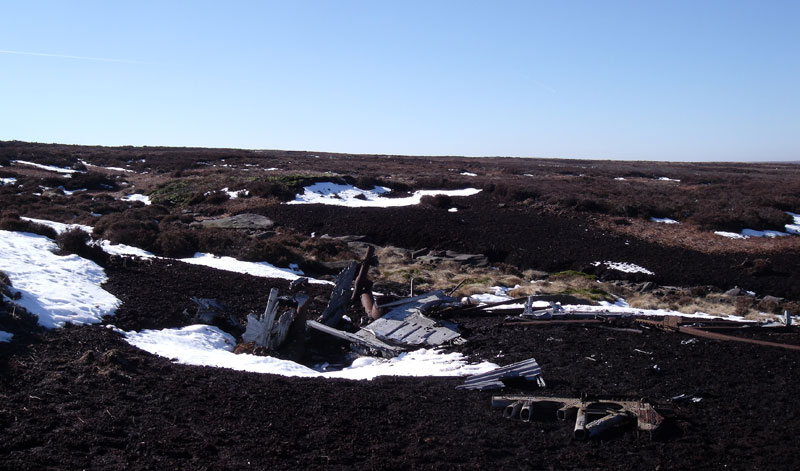
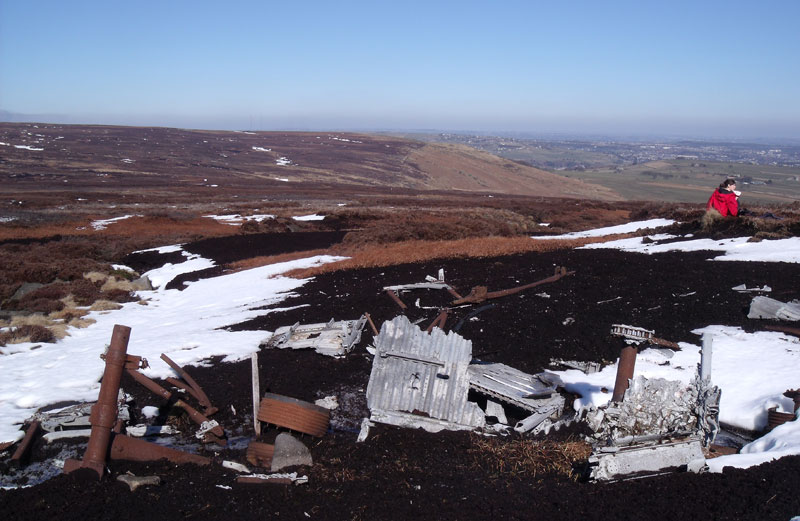
The largest of the aircraft parts at the crash site in 2010 when my wife and I visited the site. The signs of the fire is still evident.
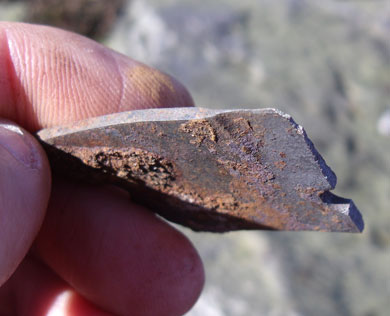
The smaller interesting items that are usually found on the surface at most crash sites are fairly sparse at this site. One item I found was part of a dinghy knife. Of interest here is that the two seriously injured airmen were carried from the site on the dinghys.
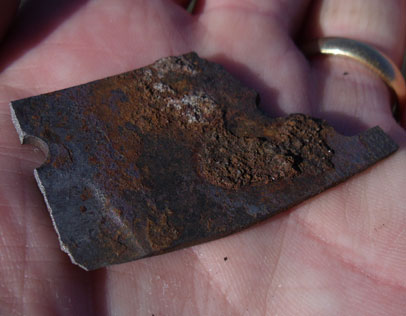
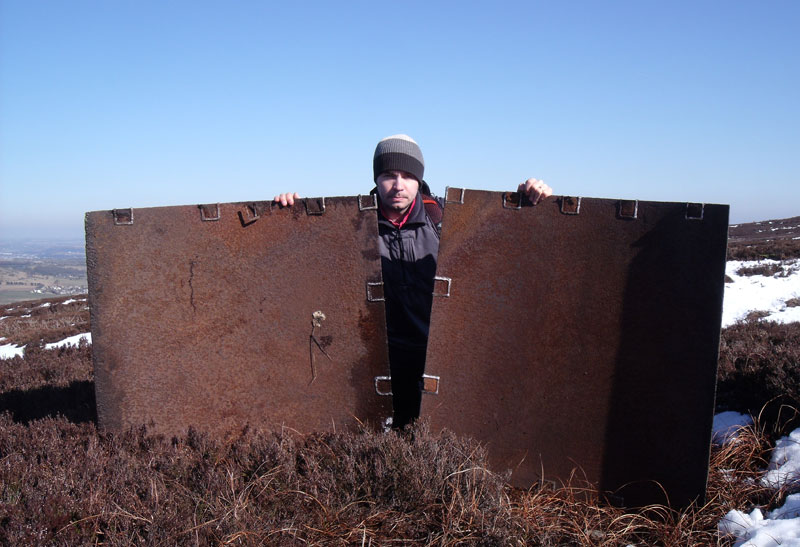
Two identical armour plating panels.
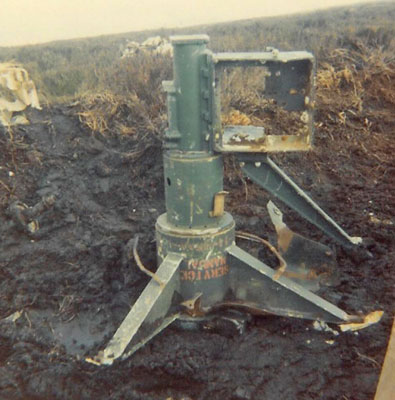
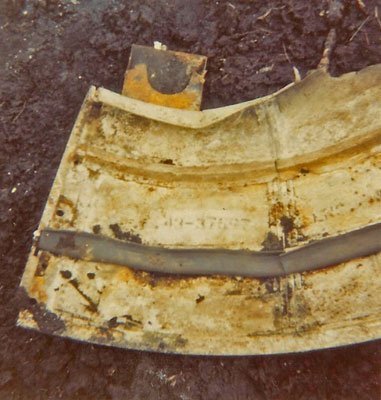
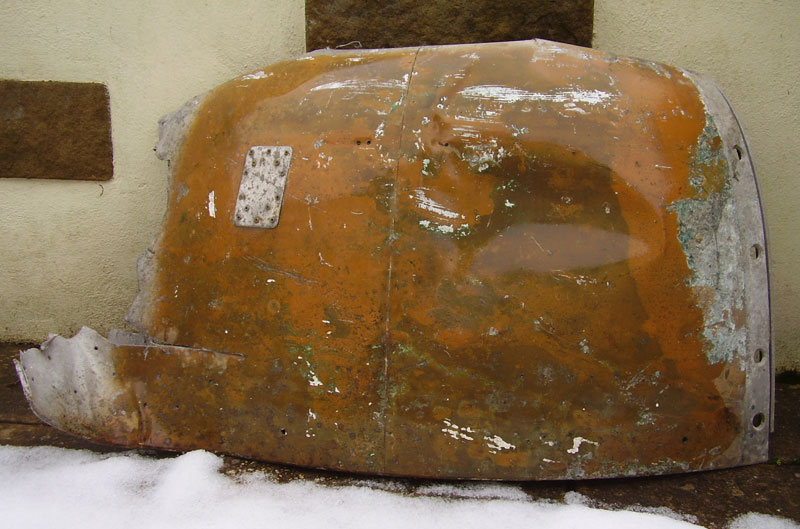
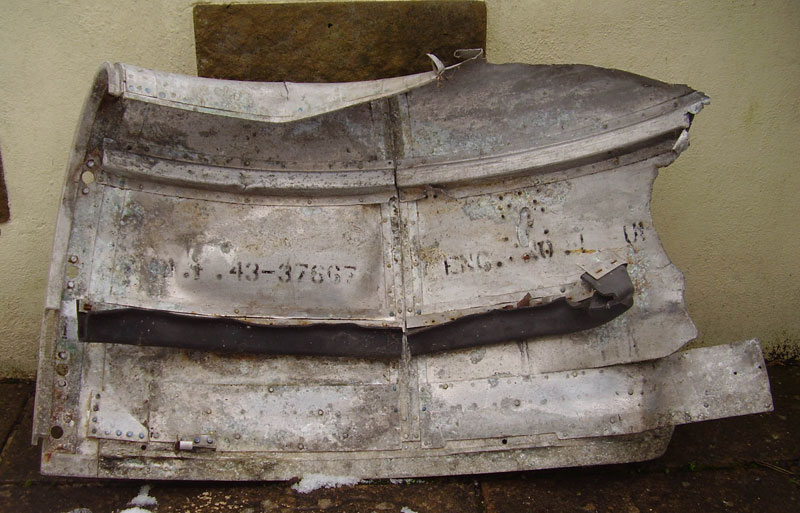
Two interesting items found when Graham Sharpe visited the site in 1975. The item on the left is a mounting for a machine gun while the item on the left is part of an engine cowl. The cowl was recovered by Nick Roberts in 1975. Visible on the photograph is the aircraft's serial number stencilled on the underside if it.
In 2008 Nick was down-sizing his collection so Graham Sharpe and I obtained a number of larger items recovered from high ground crash sites in Yorkshire including this. I cleaned and photographed the obvious stencilling. There is also a battle damage patch which was unpainted (on the left side of the photograph above).
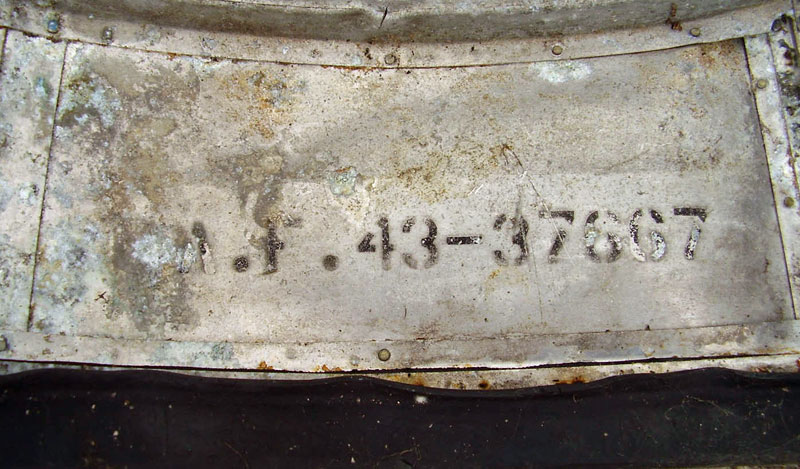
The clear aircraft serial stencilling. The battle damage hole is visible on the right side of the photograph above.
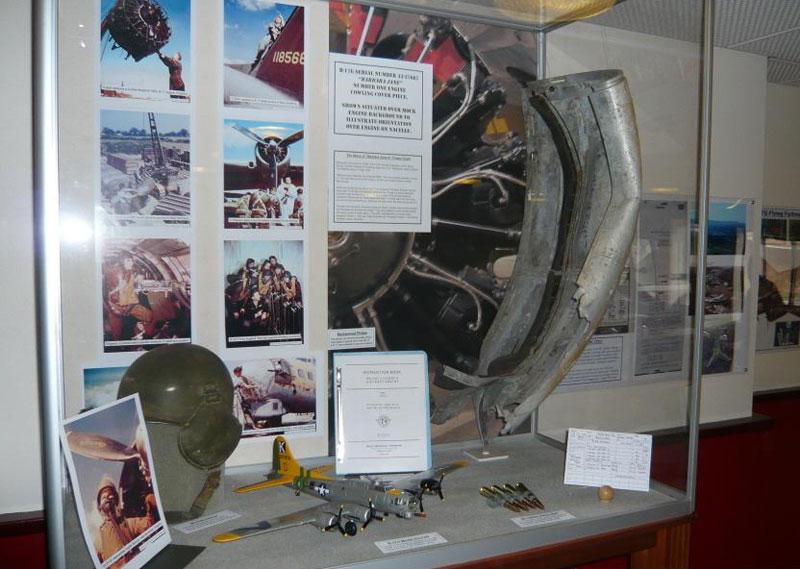
A nice end to the chapter was when Graham Sharpe contacted the USAF at Alconbury in 2009 and this cowl was returned to them. The cowl was placed on display in a heritage centre on the USAF base at Alconbury with a history of the item.
Little is known about the crew. The captain and pilot was possibly Winston Raymond Johnson, who was born in Oakland, Nebraska, USA on 3rd November 1923 and died on 20th November 1961 at Dallas, Texas. He is buried at Laurel Land Memorial Park, Dallas. I have read that his death came about through complications with the injuries he sustained at Meltham Moor in 1945 but have not included his name on the list of fatal flying accidents in Yorkshire because I have not yet had any contact from his family to confirm this or found any original documents that state it.