On 2nd February 1944 the crew of this 432 Squadron aircraft were undertaking a night cross country training flight when the aircraft caught fire in the air. It was seen by flying control at Dishforth airfield to roughly pass over them clearly in trouble, with engines spluttering and loosing height rapidly, so much so that Dishforth airfield's crash tender was made ready prior to the crash actually occurring. Two members of the crew baled out just prior to the crash but were to low for their parachutes to work and were killed. Their bodies were found around a mile from where the aircraft eventually crashed with their parachutes open. The Lancaster continued to loose height until it hit trees then crashed at around 21.34hrs on Studforth Hill near Aldborough (near Ripon). Some events after the crash are documented in the No.6 Group flying control logbook, the crash was heard by Dishforth flying control and also a fire seen to break out. They despatched their crash tender and also an N.F.S. tender from Boroughbridge was also sent to the scene near the village green. It was then subsequently noted that the bodies of the other five were recovered outside of the burning aircraft but with unopened parachutes attached. How they came to be outside the aircraft is not stated and it could be that they had all attempted to jump just before the crash, or they were inside the aircraft and had been pulled clear by civilians before the fire took hold on the fuselage. Some houses in the village received slight damage to their roofs. The following day 432 Squadron received orders to re-equip with Halifax MkIII aircraft with their first aircraft arriving on 7th February 1944.
A memorial to the crew was erected in the village in 1994. In a newspaper report relating to the memorial dedication two local men, Richard Clayton and Loll Helm, are mentioned as being commended for their attempts to rescue the crew. I would like to learn more about this should anyone reading this be able to help.
Pilot - P/O Joseph George Sieben RCAF (J/19846), aged 24, of Cosine, Saskatchewan, Canada. Buried Harrogate Stonefall Cemetery, Yorkshire (C/K/10).
Flight Engineer - Sgt Kenneth Huggins RAFVR (1684923), aged 21, of Bradford. Buried Bradford (Bowling) Cemetery, Yorkshire (D/150).
Navigator - F/O David Simpson Kerr RCAF (J/22198), aged 22, of St.Johns, Newfoundland. Buried Harrogate Stonefall Cemetery, Yorkshire (C/K/13).
Air Bomber - P/O Wilfred Lawrence Wolf RCAF (J/87092), aged 20, of Palmerston, Ontario, Canada. Buried Harrogate Stonefall Cemetery, Yorkshire (C/K/12).
Wireless Operator / Air Gunner - Sgt Ronald Pratt-Robinson RAFVR (1480812), aged 20, of Liverpool. Buried Harrogate Stonefall Cemetery, Yorkshire (C/K/14).
Air Gunner - P/O Paul Joseph Power RCAF (J/86124), aged 24, of Toronto, Ontario, Canada. Buried Harrogate Stonefall Cemetery, Yorkshire (C/K/9).
Air Gunner - P/O Donald Davies Finch RCAF (J/88383), aged 21, of Kingsmill, Ontario, Canada. Buried Harrogate Stonefall Cemetery, Yorkshire (C/K/11).
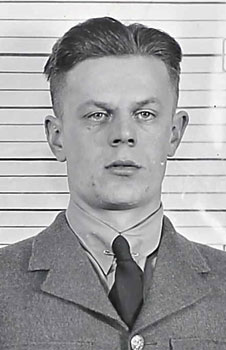
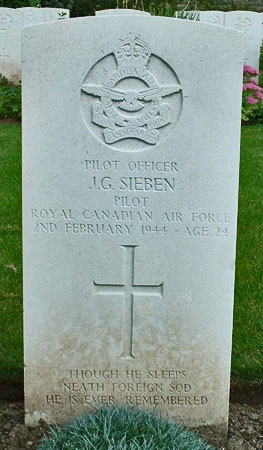
Joseph Sieben was born on 26th July 1918 at Grosswerder, Saskatcehwan, Canada and was one of twelve children of John Henry and Elizabeth (nee Schambaer) Sieben. Both his parents were born and had married in Russia prior to emigrating to Canada. After leaving school in 1937 Joseph worked on the family farm at Cosine, Saskatchewan. He enlisted for RCAF service on 19th November 1941 in Saskatoon for aircrew duties and after training in Canada he was awarded his pilot's flying badge on 4th December 1942. While nearing the end of his training he married Mary Annie Gartner of Macklin, Saskatchewan on 10th December 1942 at Eddmonton, Alberta. On arrival in the UK in early 1943 he trained at 18 (P)AFU, 24 OTU and 1659 HCU before posting to 405 Squadron on 15th October 1943. He was then posted to 432 Squadron on 10th December 1943 (with his regular navigator and bomb aimer and possibly wireless operator and flight engineer). He received a commision on 31st January 1944 which may have been a back dated one after his death to just prior to his death.
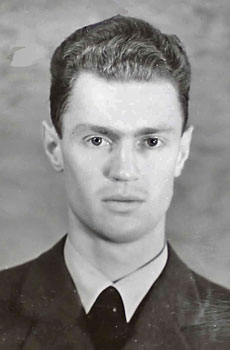
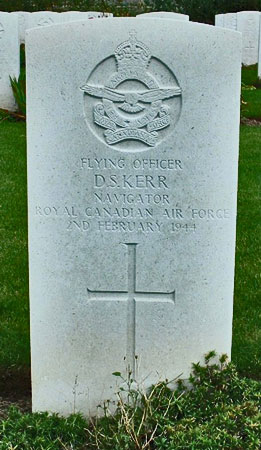
David Kerr was born on 6th July 1922 at St.Johns, Newfoundland and was the son of David Simpson (Snr) and Kate Dorothy (nee Wall) Kerr. As a young man he originally left college in 1938 and worked as a surveyor and for the Newfoundland Railways but left opting to go to university college in 1938 to studying engineering. He completed the course in 1941 and briefly worked as a surveyor again. He enlisted for RCAF service in Halifax, Nova Scotia on 23rd October 1941 for aircrew duties and after training in Canada was awarded his air observer's flying badge and also a commission on 3rd August 1942. He arrived in the UK in late-1942 and over the coming months trained at 10 (O)AFU, 24 OTU and 1659 HCU before posting to 405 Squadron on 20th October 1943. He (along with other members of Sieben's crew) were posted to 432 Squadron on 10th December 1943.
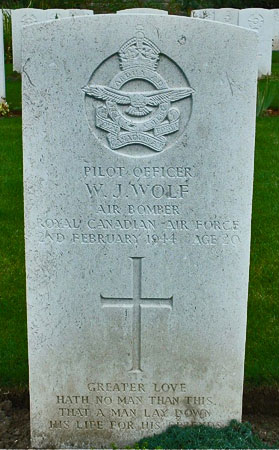
Wilfred Wolf was born on 3rd October 1923 at Stoney Plain, Alberta, Canada and was the son of Jacob and Margaret Louise (nee Best) Wolf. He lived in Alberta for just three months before the family moved to Palmerston, Ontario. As a young man he left high school in 1940 and then worked as a machinst for the Clyde Aircraft Manufacturing company at Collingwood, Ontario. Clyde Aircraft made parts for aircraft including the Mosquito. He enlisted for RCAF service on 16th January 1942 in Toronto for aircrew duties. After training in Canada he was awarded his air observer (air bomber) badge on 22nd January 1943. On arrival in the UK in early 1943 he trained at 3 (O)AFU, 24 OTU and 1659 HCU before posting to 405 Squadron on 15th October 1943. He was then posted to 432 Squadron on 10th December 1943 with other members of the Sieben crew. He appears to have been awarded a commission after his death, back dated to 1st February 1944. I have yet to locate a photograph of him.
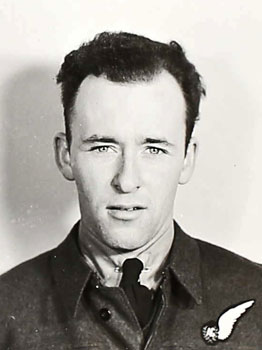
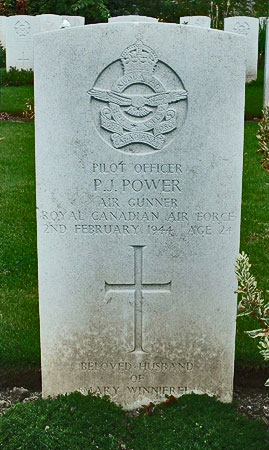
Paul Power was born on 20th February 1919 in Toronto, Ontario, Canada and was a son of Bernard Joseph and Margaret May (nee Pickett) Power. His younger brother John Power also served in the RCAF in WW2. A a young man he worked at various jobs but latterly as a sheet metal worker. He married Mary Neville on 7th January 1942 at Toronto and enlisted for RCAF service just days later on 27th January 1942. After aircrew training in Canada he was awarded his air gunner's flying badge on 30th December 1942. He arrived in the UK in early 1943 and trained at 23 OTU before posting to 432 Squadron on 27th May 1943. He converted to flying four engined bombers with 1679 Conversion Flight in September 1943 before returning to 432 Squadron. He was not part of the early Sieben crew that had formed at 24 OTU earlier in 1943 and whom had served with 405 Squadron prior to posting to 432 Squadron in December 1943.
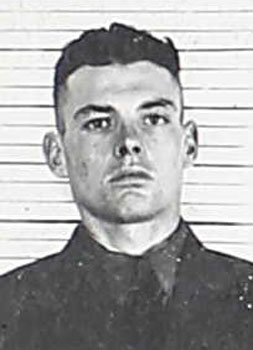
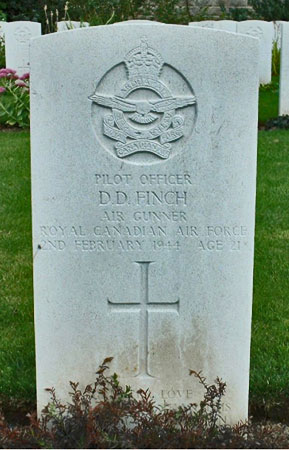
Donald Finch was born on 19th July 1922 at Mapleton, Ontario, Canada and was the son of Eardly Oscar and Anna Margaret (nee Davies) Finch. As a young man he worked on his father's farm at Kingsmill, Ontario. He enlisted for RCAF service on 4th August 1942 in London, Ontario for aircrew duties, training as an air gunner and receiving his air gunner's flying badge on 4th Augsut 1943. He married Robina McNeil in Springfield a week later but was posted overseas shortly afterwards. He arrived in the UK in September 1943 and after training at 22 O.T.U. and 1679 Conversion Flight he was posted to 432 Squadron on 29th November 1943. He appears to have been awarded a commission after his death, back dated to 1st February 1944.
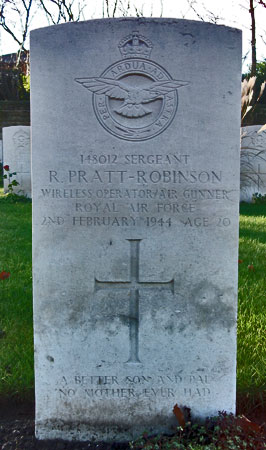
Ronald Pratt-Robinson's gravestone at Harrogate.
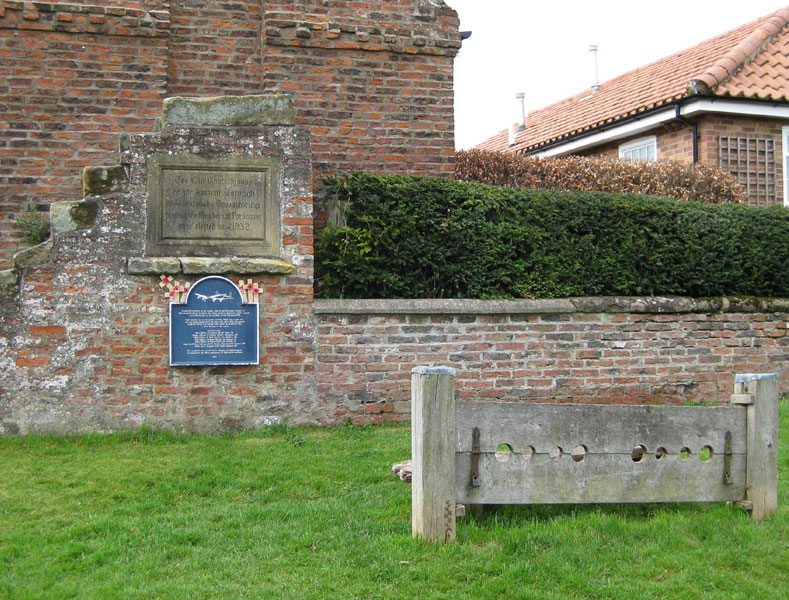
A memorial was dedicated on the village green in 1994.
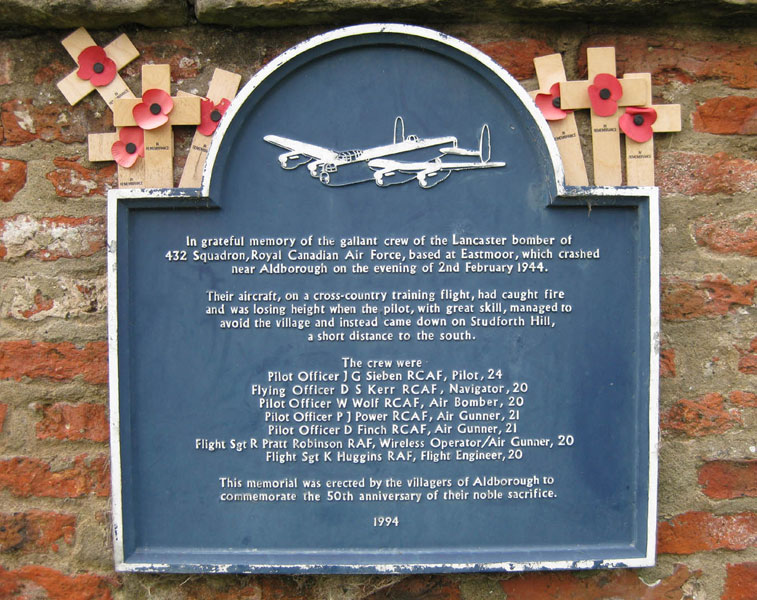
Lancaster LL686 was built by Armstrong Whitworth and was taken on charge as new by 432 Squadron at East Moor on 11th December 1943. As a result of the crash on 2nd February 1944 Cat.E/FA (Burnt) damage was the damage assessment and the aircraft was struck off charge on 15th February 1944.