On Wednesday, 17th December 1944 the crew of this 1666 Heavy Conversion Unit aircraft were tasked with a night-time training "Bullseye" flight, a common type of training flight for crews at the Heavy Conversion Units such as Wombleton which involved navigating their way to a British town or city and undertaking a simulated bombing run on a target there. On taking off from Wombleton at around 18.20hrs the aircraft failed to gain enough height to see it clear the first hill in its path beyond Nunnington. It hit telegraph wires to the south of Nunnington church and shortly after, at 18.23hrs, crashed close to the top of Caulkleys Bank. The pilot reported the aircraft had lost power on take off and that control had been lost. The aircraft was totally wrecked although two engines may have been salvaged with Cat.B damage recorded and re-used. Two airmen sustained injuries which were classed as serious and the other five on board escaped without injury. The full crew list is not yet known, although two names are listed below. The crash investigation found that the pilot had not locked the throttles in place and the reason for power being lost was because they had slipped back on take off reducing power. The flaps were also thought to have been raised just after take off, possibly by mistaking the cockpit lever for that of the undercarriage lever, given the wheels were still down when the crash occurred this seems likely. The undercarriage lever on the Halifax was next to the flaps lever and this was a common mistake to make as the levers were next to each other. Leaving the undercarriage down would cause the aircraft problems in climbing away after take off and similarily raising the flaps would effect the flying. Blame was put on the pilot and flight engineer for this and their log books were endorsed. The aircraft had been in service with 434 Squadron before it was issue to 1666 HCU.
I would like to thank Mr John Stanton for contacting me in November 2008, his father LAC A.G.Stanton RAFVR (597616) was serving at Wombleton when this incident occurred. He kindly informs me that his father and other RAF personnel from Wombleton assisted in the rescue of the crew following the incident and clearing the site.
Pilot - F/O J A Crane RCAF (J/36966).
Navigator - F/O A L Fieldhouse RCAF (J/40788). Injured.
Five other crew - Names unknown.
F/O Crane had a total of 218 hours flying to his name when this incident occurred but with only seventeen hours of these being on the Halifax type.
F/O Fieldhouse was posted from Wombleton to Dalton on 2nd March 1945 so it would seem that he had spent some weeks recovering at Wombleton after that crash near Nunnington.
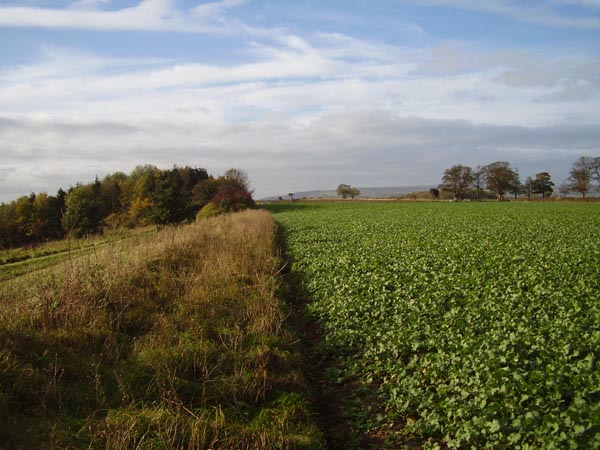
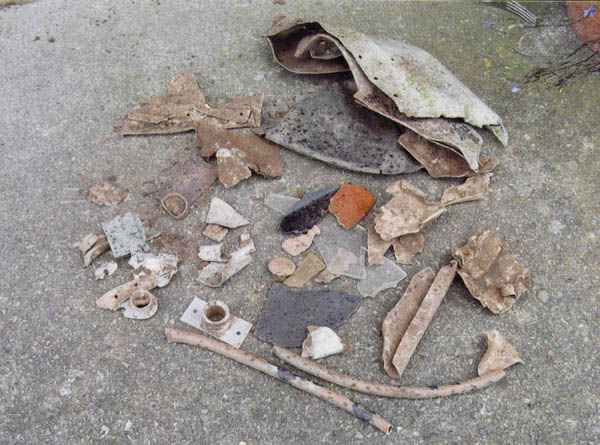
The aircraft crashed into this field at the top of Caulkley's Bank where small fragments of the aircraft were located by historians Ken Reast, Albert Pritchard and Eric Barton in October 2006 following landowner consent.
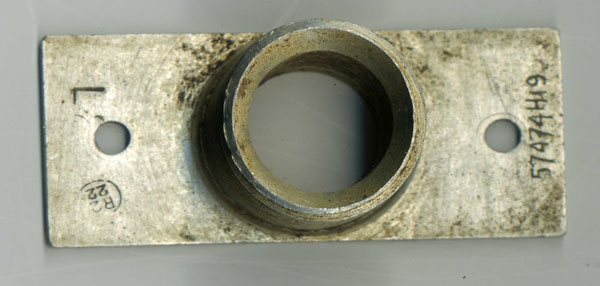
The item shown below was retained by Eric Barton and contains a typical HP.57 Halifax part number.