On 23rd April 1944 the crew on board this 143 Squadron aircraft took off from their base at North Coates at 22.13hrs to undertake an exercise with a fishing vessel in the Bridlington area. The actual reason for the flight is listed on the Form AM1180 as being "co-operation with pinnace"; a pinnace is a small fishing vessel. The crew were to practice locating small ships at night. Whilst flying on instruments the aircraft struck the ground on Folkton Wold at 23.05hrs. On hitting the ground it jumped back into the air briefly before skidding for a short distance and running over a raised track and verge at the edge of the field. This verge turned the aircraft over and after travelling for a short distance further it caught fire and was destroyed. As part of the flight the aircraft would have had to fly low to find the target. The pilot had probably lost his position, drifted back over land and was unaware of the rising ground to which he flew into.
Pilot - F/Lt Robert Agnew RAAF (404816), aged 29, of Mackay, Queensland, Australia. Buried Harrogate Stonefall Cemetery, Yorkshire (B/B/2).
Navigator / Wireless Operator - F/Sgt Harold Benajamin Blackwell RAFVR (1060671), aged 22, of Wrexham. Buried Wrexham Cemetery, Wales.
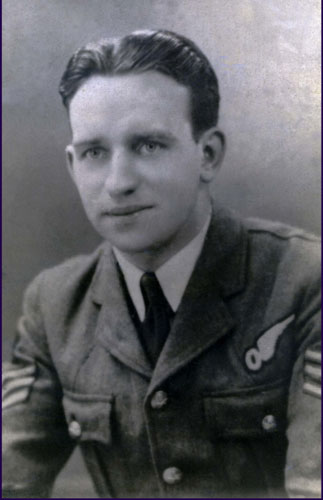
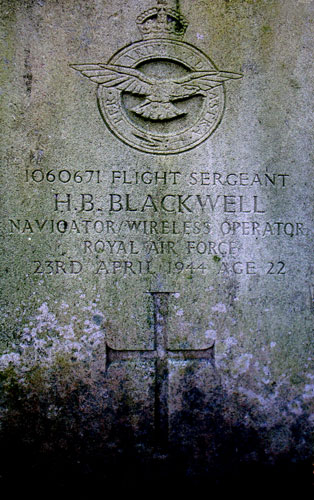
F/Sgt Blackwell was known by his second name Ben. He had played football for Wolverhampton Wanderers in the War League in the early part of the War. My thanks to Mr Owain Blackwell, his nephew for these photographs and for the information he was able to provide in this account.
Robert Agnew was born in December 1914 in Peeramon, Queensland and enlisted into the RAAF on 6th December 1940 in Brisbane. After training he was awarded his pilots' flying badge on 29th May 1941. In the UK he was posted to 4 AOS on 28th October 1941 (possibly to serve as a staff pilot). He was granted a commission on 31st March 1942. On 8th August 1942 he was seriously injured as a result of a car accident between his car and a service M.T. vehicle near Stranraer. Once recovered he trained at 132 OTU and 2 (C)OTU before posting to 143 Squadron on 15th July 1943.
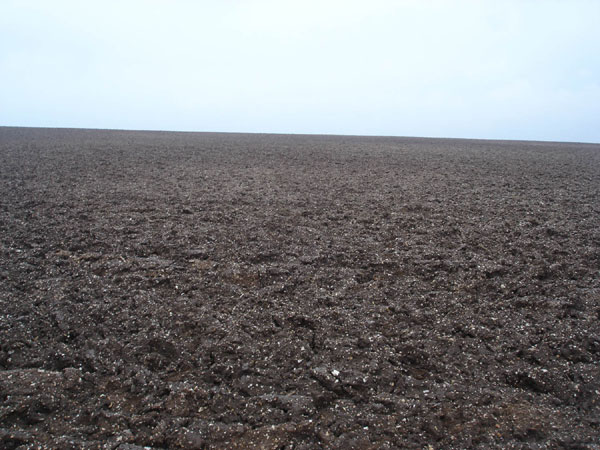
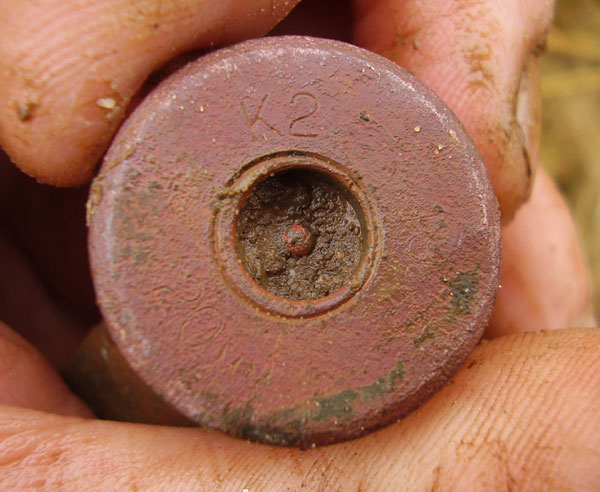
In September 2008 I visited the site with fellow air historians Ken Reast, Albert Pritchard and Eric Barton. The photograph above shows the site. Whilst nothing with a Beaufighter part number was located on the surface there were remains of 20mm cannon shells, the only one identified contained the lettering "K2 20mm, 1943", the "K2" reference refers to the KYNOCH manufacturer, and produced at their Standish factory located near Wigan who only made "K2" rounds during the War years. They were later taken over by ICI. My thanks to the land owner for allowing out visit.
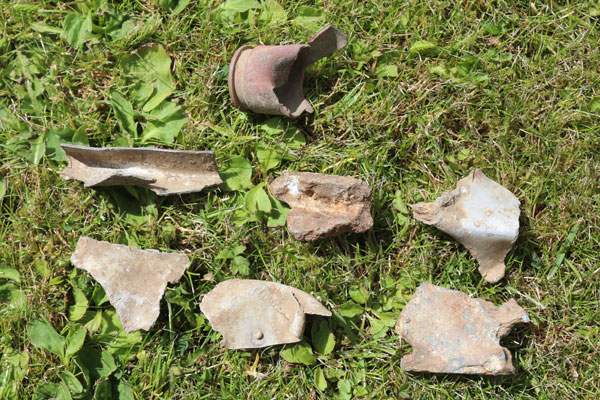
Mr Lee Norgate from Filey has also carried out work under MoD licence at this site in the past and his self-published book records that he found similar items as us at the crash site.