Wellington HE867 near Stonegrave.
On 27th April 1943 this Wellington took off at just after 00.30hrs from Dishforth airfield with nine other aircraft from 426 Squadron for an operational flight.
At the controls of this aircraft was 426 Squadron's Commanding Officer. The target for this night was Duisburg and along with 561 other aircraft they all flew out
over the North Sea. About five minutes before this aircraft was due to reach the target area and twenty miles short of Duisburg at around 02.26hrs over Wesel,
a night-fighter; probably an Me110; attacked the Wellington from below and raked them with gunfire. Damage was sustained to the Wellington's intercom, hydraulic
and electrical systems. One aileron and half the port tail-plane were shot away and the sighting gear in the rear turret was badly damaged. The pilot put the
aircraft in a dive to port to attempt to avoid further damage and to shake off the attacker and the rear gunner returned fire, it was not clear whether he had
hit the enemy aircraft however but the bomber escaped. It was found that the Wellington had lost all the fabric from the port tailplane, three feet of trailing
edge from the port mainplane was also gone from near the fuselage and damage was also sustained to the port aileron and centre bomb door. Soon after being
attacked the Wellington's port engine began to overheat. The pilot still continued with the run on the target but when it was found the bombs could not to be
released the attack was abandoned. An attempt to pour any available liquid into the emergency hydraulic system failed - coffee from Thermos flasks and oil
from the rear turret were tried but the attempts failed. The wireless operator tried for over an hour to fix the system without result, had this been successful
this would have enabled the hand-operated undercarriage hydraulic pump to be used because the undercarriage could not be lowered or the bomb doors opened.
On their return to Yorkshire they informed Dishforth Flying Control of their situation, with bombs on board and with no undercarriage the pilot gave the order
to his crew to abandon the aircraft soon after the Yorkshire Coast was crossed. This was done at 05.50hrs and the aircraft crashed near Manor Farm, Stonegrave
causing no damage to any property. Two of the crew were injured in their landings. Three of the crew would later be decorated for their actions on this night.
The raid in general was a partial failure due to inaccurate marking of the target area and a strong tail wind gusting upto 100mph.
Wellington HE867 was built to contract B124362/40 by Vickers Armstrong's Ltd at Chester and was delivered directly to 426 Squadron at Dishforth on 2nd April 1943. It was destroyed on 27th April 1943 with Cat.E2/FB damage being the damage assessment which saw it struck off charge.
Pilot - W/Co Leslie Crooks DFC RAF (44054). Sustained a slight back injury.
Second Pilot - Sgt James Austin Thomson RCAF (R/121044). Uninjured.
Navigator - F/O Donald Wallace Simpson RCAF (J/11110). Uninjured.
Bomb Aimer - P/O Laurence Henry Power RCAF (J/20163). Broke bone in foot.
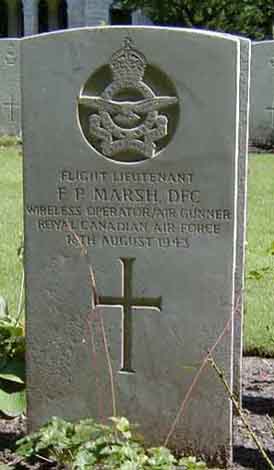
Wireless Operator / Air Gunner - F/Lt Francis Peter Marsh RCAF (J/15643). Uninjured.
Rear Gunner - Sgt Thomas Ferguson How RCAF (R/132630). Uninjured.
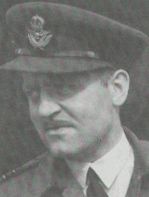
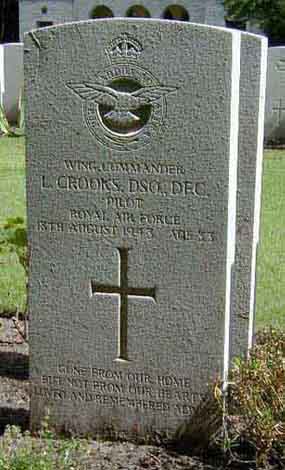
Leslie Crooks trained at Halton and had served with 166 Squadron in 1939. On 25th March 1939 he was the pilot of Heyford K6890 which was taxiing at Leconfield airfield when the brakes failed, the aircraft collided with a hanger and was badly damaged. He was granted a commission to the rank of P/O on probation on 20th June 1940, but back dated to 25th April 1940. He rose to F/O on 20th June 1941, F/Lt on 13th February 1941 and S/Ldr on 15th May 1943. For service in completing a Tour with 58 Squadron he was awarded the DFC, Gazetted on 11th February 1941 with his rank as Acting F/Lt at the time, no citation for his DFC has been found when this webpage was last updated. For his efforts in the incident detailed above and for bringing the aircraft back to the UK the Wing Commander Crooks was awarded the DSO, Gazetted on 28th May 1943. The citation for this reads.. "This officer is an ideal leader, whose ability and untiring efforts have been reflected in the high standard of efficiency of his squadron. His courage and skill were admirably demonstrated during a recent attack on Duisburg. When approaching the target his aircraft was raked by cannon fire from an enemy fighter. Wing Commander Crooks skilfully evaded the attacker but his aircraft had sustained much damage. Although one aileron and half the port tail plane had been shot away, while the hydraulic and electrical systems were rendered inoperative, Wing Commander Crooks flew the bomber back to this country. Unfortunately, it was impossible to effect a safe landing but, when the crew were forced to abandon aircraft, all descended safely. In the face of heavy odds, Wing Commander Crooks set an example worthy of high praise." Part of the citation also reads "an ideal leader whose ability and untiring efforts were reflected in the high standard of efficiency of his squadron". Only months after the above incident W/Co Crooks and F/Lt Marsh were to be killed on the night of 17th / 18th August 1943 when Lancaster DS681 crashed near Greifswald in Germany after a secret mission to bomb an experimental science station at Peenemunde in the Baltic - used in the V2 rocket development. They are buried in Berlin War Cemetery. At his death W/C Crooks had already completed one tour of operations (with 58 Squadron) and was on the ninth flight of his second tour. Marsh was also on his second tour and was on the sixth operation when he was killed. He was killed on his first operational flight in a Lancaster and had only flown it at night for the first time the night before his death.
F/Lt Francis Marsh RCAF was born on 11th June 1918 in Toronto and lived there prior to enlisting into the RCAF on 1st July 1940. He had served with 420 Squadron in 1942 and was posted to the newly formed 426 Squadron in October 1942. He has also
received a commission in 1942. For his efforts in getting Wellington HE867 and crew back to the UK F/Lt Marsh was awarded the DFC, the citation was a joint one with F/O Simpson (Gazetted on 1st June 1943) it reads.. "One night in April 1943, these officers were wireless operator and navigator, respectively, of an aircraft detailed to attack Duisburg. When nearing the target area the bomber was engaged by an enemy fighter and sustained severe damage. On the return flight F/O Simpson displayed exceptional navigational ability in most difficult circumstances, and F/Lt Marsh, who skilfully obtained bearing, rendered him valuable assistance. Both these members of aircraft crew displayed great coolness and skill in a perilous situation." As stated in W/Co Crooks biog above F/Lt Marsh was killed weeks after this incident at Stonegrave, when on 18th August 1943 Lancaster DS861 crashed in Germany. His DFC was presented to his next-of-kin.
He is listed as being treated for facial injuries at East Grinstead Hospital from 28th December 1944 with his injuries being sustained some months prior to admission as the result of a flying accident while serving at Skipton on Swale airfield on 1st March 1943. I cannot link him to a known flying accident and would welcome information to pin him to a known incident. He was therefore one of the famous Guinea Pig patients.
Thomas How was the son of Dickson Drummond and Grace Ritchie (nee Johnston) How, he was born on 14th November 1917 in Toronto, Ontario, Canada. the family moved to Lake Field, Quebec in 1929 and later to Riviere-du-Loup, Quebec where he worked as bank clerk. His father was a stock broker; probably working in Toronto and probably retired to Quebec where Thomas' mother was from. He enlisted for RCAF service in Montreal on 18th September 1941 and was awarded his air gunner's badge on 8th June 1942. He arrived in the UK in July 1942 then spent some months at 2 AGS and 7 AGS before posting to 23 OTU and to 426 Squadron on 23rd March 1943.
James Thomson was the son of John James and Harriet Estella Thomson; and husband of Nora Thomson, of Midland Vale, Alberta and was born on 13th November 1922.
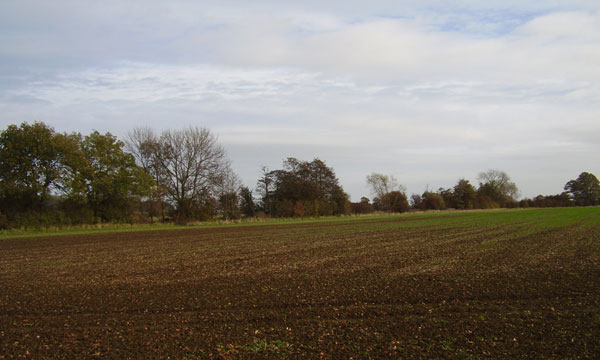
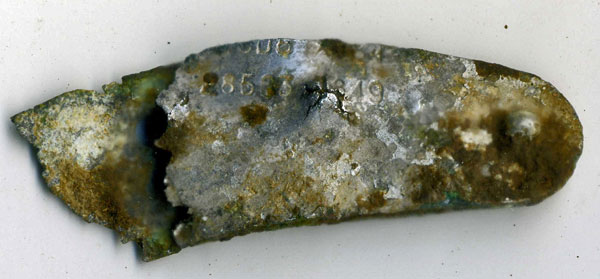
Wellington HE867 crashed in the region shown on this photograph, whether it came down on this side of the hedge row or the far side (off camera) is still to be determined but small fragments were located on both sides of the hedge / ditch by historians Eric Barton, Albert Pritchard and Ken Reast in August 2006 with permission from the landowners. The item shown below is a part retained by Eric Barton and shows a typical Wellington part number with the "285.." part number sequence. Eric's son passed me his father's collection of items to find a new home for in 2022 and this has allowed me to photograph the items.
Donald Simpson was born in Stratford, Ontario in 1912 and made his home in Islington. He enlisted for RCAF service in Toronto on 12th February 1941 and received a commission in 1942. He was the regular navigator in W/O P C Maries' crew at 426 Squadron around this date. For his efforts in getting Wellington HE867 and crew back to the UK Donald Simpson was awarded the DFC, the citation was a joint one with F/Lt Marsh (Gazetted on 1st June 1943) it reads.. "One night in April 1943, these officers were wireless operator and navigator, respectively, of an aircraft detailed to attack Duisburg. When nearing the target area the bomber was engaged by an enemy fighter and sustained severe damage. On the return flight F/O Simpson displayed exceptional navigational ability in most difficult circumstances, and F/Lt Marsh, who skilfully obtained bearing, rendered him valuable assistance. Both these members of aircraft crew displayed great coolness and skill in a perilous situation." On 14th August 1943 he was flying in Lancaster DS633 when it crashed at Linton on Ouse. He was invested with his DFC by King George VI on 1st February 1944 and survived the War.
Only weeks after the above incident F/Sgt Thomson and F/Sgt How were killed on 14th May 1943 when Wellington HE697 was shot down by a night-fighter on Ops to Bochum and crashed in Holland. They are buried in Armersfoort General Cemetery, Holland.
P/O Power was promoted to F/O during the next year and was still with 426 Squadron after they had converted to Lancasters. He was on board Lancaster LL721 on Ops to Berlin on 27th/28th January 1944 and was taken prisoner when the aircraft was shot down by night-fighters, he and two other members of the crew survived and became PoW's.