Lancaster DS649 near Wiganthorpe, Terrington.
Just before 16.55hrs on 6th November 1943 the crew of this aircraft took off from East Moor airfield, they were undertaking a series of circuits and landings as part of
a training flight with 1679 Heavy Conversion Flight and had completed around four of these take-offs already. This form of training was a basic training flight used by crews who were converting to fly heavy bombers. Their training unit, 1679 Heavy Conversion Flight, were not based at a specific airfield at this stage in the War but on paper it was officially based at Wombleton airfield, however they used East Moor for some of their training. The exercise had begun around two hours earlier and had taken place in good weather. The airmen on board
were 432 Squadron personnel retraining on the Lancaster type as 432 Squadron were exchanging their Wellingtons for Lancasters. Five minutes later during one of these short
flights the aircraft's nose and starboard wing struck a tree damaging the aircraft and propellers, it then crashed in a small field close to Rose Cottage Farm, between
Terrington and Wiganthorpe at 17.00hrs, it was completely wrecked and was burnt out and the crew of six killed instantly. The reason for it flying so low was not determined,
but the crew had not reported any trouble prior to the accident. It appears there was no navigator on board at the time of the crash but for this exercise none would be required.
One local man contacted during my research stated that he believed there was an engine was on fire prior to the crash, as yet no evidence of this has been found in official
reports but if so it could explain why the aircraft flying so low, and it could be that the pilot was attempting to find somewhere to put the aircraft down. The Court of
Enquiry sourced in Canadian records stated that all engines were operating correctly prior to striking the tree.
There are a number of modern texts that try to detail this incident but many make an incorrect suggestion that there was one survivor (with him
being the "missing" navigator). All the official reports compiled at the time do not list a survivor and local people who remember the crash all speak of there being
no survivors and with the damage to the aircraft it seems unlikely that anyone could survive it. A police report does however refer to five being killed and one sustaining
serious injuries; this survivor was Sgt R L Green, he was rushed to York Military Hospital but died an hour after admission.
Another reference to this incident is to be found in Brian Shields' book "East Moor Experience", he makes the same (probable) error in suggesting the navigator survived
the crash. He does however include a piece of vital information though in the form of an extract of the Flying Control Officer, East Moor. This states that aircraft "E"
(this Lancaster, DS649) began its circuits and bumps training flights at 14.18hrs and on this day were using three aircraft, "A", "E" and "F". Aircraft "E" made what
would be its last take off at around 16.46hrs and and 17.05hrs East Moor's crash crew sighted smoke in the distance, about ten miles away. Radio contact with "E" had
failed to get a response from the aircraft so "F" was sent up to investigate. They reported back that it was an aircraft that had crashed and was burning at Rose Cottage Farm; East Moor then
sent their crash team to the site along with medical and ambulance personnel. An RAF Regiment guard was also arranged and the crash tender put out the fire. Shields'
book also quotes the M.E.T. weather report as being fine, wind as being a light northerly with visibility being 25-30 miles. Shields also gives the pilots regular
navigator as being a Sgt J. Burns and his long term fate is not yet known but he was not on DS649 when it crashed. There is also a suggestion that the aircraft was
actually flying from East Moor to Wombleton practicing night-landings and take-offs. Whilst not exactly a night landings practice it could have been getting dark
when the exercise was in its later stages given the time of year but it was not undertaking a night exercise.
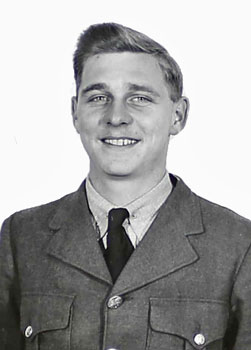
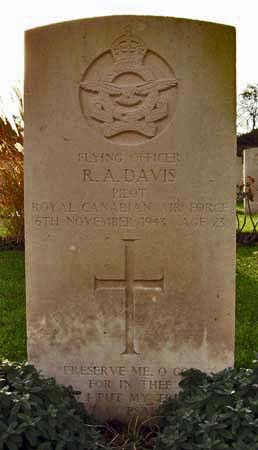
Pilot - F/O Russell Alfred Davis RCAF (J/17308), aged 23, of Toronto, Ontario, Canada. Buried Harrogate Stonefall Cemetery, Yorkshire.
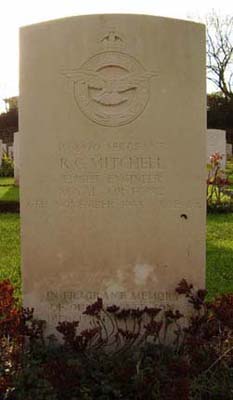
Flight Engineer - Sgt Robert Charles Mitchell RAFVR (1568420), aged 20, of Glasgow. Buried Harrogate Stonefall Cemetery, Yorkshire.
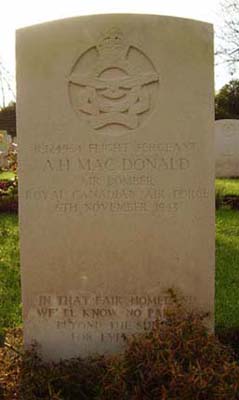
Bomb Aimer - WO2 Alexander Hugh MacDonald RCAF (R/124964), aged 28, of Bridgeport, Nova Scotia, Canada. Buried Harrogate Stonefall Cemetery, Yorkshire.
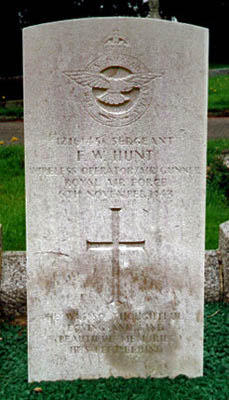
Wireless Operator / Air Gunner - Sgt Frederick William Hunt RAFVR (1216145), aged 22, of Leicester. Buried Anstey Cemetery, Leicestershire (Grave 599).
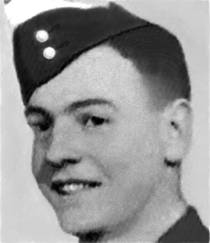
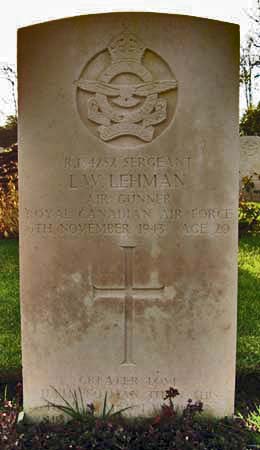
Air Gunner - Sgt Leonard Wilfred Lehman RCAF (R/184282), aged 20, of Toronto, Ontario, Canada. Buried Harrogate Stonefall Cemetery, Yorkshire.
Air Gunner - Sgt Roy Leslie Green RCAF (R/168797), aged 19, of Brant, Alberta, Canada. Buried Harrogate Stonefall Cemetery, Yorkshire.
F/O Davis RCAF and his headstone at Harrogate Stonefall Cemetery. He was born on 12th July 1920 to Frederick Charles and Elizabeth Mary Fowler Davis, of Toronto, Ontario, Canada. Prior to enlisting into the RCAF he had worked in Malton, Ontario in aircraft manuafacturing, he enlisted in March 1941 in Toronto and after initial training gained his Wings on 5th May 1941. He arrived in the UK in January 1942 to continue his training with 1511 Beam Approach Training Flight and later with 17 OTU. His first operational posting was to 18 Squadron in June 1942 flying Blenheims. It would appear that he sustained some form of injury or sickness in July 1942 and his time with 18 Squadron ended. In October 1942 he was posted to 1482 Bombing and Gunnery Flight where he was engaged in piloting target tug Martinet aircraft. He received his commission on 27th February 1943 to the rank of P/O. On
10th June 1943 he was posted to 22 OTU to train to fly Wellingtons and after completing this training he was
posted to 432 Squadron initially based at Skipton on Swale though they soon moved to East Moor. He his first operational
flight with 432 Squadron on 23rd August 1943 as second pilot, he flew a second operational flight as a second pilot on
30th August 1943 and a third as second pilot on 3rd September 1943. On 22nd September 1943 he flew his one and only operational flight as Captain with 432 Squadron in Wellington HZ485 on Ops to Hannover. He then left 432 Squadron on posting to 11 OTU on 26th September 1943 probably in preparation for conversion to his Heavy Conversion training which begun on 16th October 1943 at 1679 Heavy Conversion Flight. At this date in the War all 432 Squadron crews were being training at 1679 HCFlt in small groups.
At the time of the accident at Terrington he had a flown a total of 366 hours though only four hours were in a Lancaster.
Through contact with his niece Mrs E Kutzner, she was able to add further details regarding his family. He was from a large family; their were six brothers (of which four were in active service at this time in the War) and a sister. I thank Mrs Kutzner for her contact and information, I also thank historian Mr David Fuller for his input.
Leonard Lehman and his headstone. He was born on 27th October 1923 in Toronto, Ontario, Canada and was the son of Frank Burtlyn and Mary Irene Lehman (nee Stewart). He was working as a tourist guide when he enlisted for RCAF service in North Bay, Ontario on 28th September 1942. He had married Gladys Lola on 2nd January 1943.
After basic training he was awarded his Air Gunner's badge on 25th June 1943 and was posted to the UK the following month, training at 22 OTU and 1664 HCU before posting to 1679 Conversion Flight on 18th October 1943. The photograph of him shown above appeared in an issue of The Manitoulin (Island) Expositor in 1994.
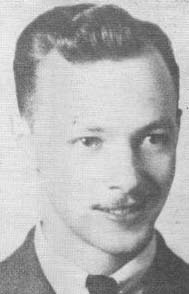
Alexander MacDonald and his headstone at Harrogate. Alexander was born on 14th June 1915 in Glace Bay, Nova Scotia and was the son of Hugh and Rose Lily MacDonald (nee Rennie) and was working as a grocer's clerk when he enlisted for RCAF service on 9th October 1941 in Halifax, Nova Scotia. After basic training in Canada he was awarded his Air Observer's badge on 23rd October 1942. He then left for the UK in November 1942 and then trained at 23 OTU before posting to 420 Squadron on 26th March 1943. On 11th April 1943 he was forced to bale out of Wellington HE422 on return from Ops to Frankfurt over the Pembrokeshire coast; his then pilot, P/O C W Jackson RCAF was sadly drowned but the aircraft continued to fly on its own for 140 miles before crashing in Warwickshire. On 29th May 1943 he was posted to 22 OTU and then on to 432 Squadron on 21st August 1943. At the time of the fatal accident near Terrington on 6th November 1943 he was in the process of converting from Wellington to Lancasters. The photograph of him shown above was found on the "www.vac-acc.gc.ca" website.
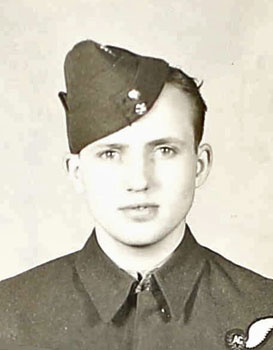
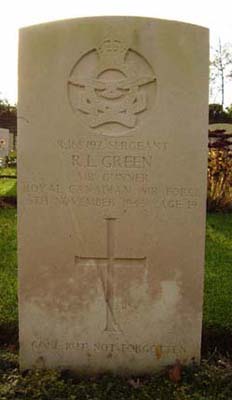
Roy Green was born on 15th January 1924 in High River, Alberta, Canada and was the son of Harry Ernest and Alice Irene Green (nee Miller). He was still studying at Brant High School when he enlisted for RCAF service on 15th June 1942 in Calgary. After basic training he was awarded his Air Gunner's badge on 19th March 1943 and was then posted to the UK in April 1943 to continue his training. He then trained at 22 OTU from 27th April 1943 before posting to 432 Squadron on 21st August 1943. He was converting to flying Lancasters with Russell Davies and his crew at 1679 HCFlt in November 1943.
The other two airmen's headstones.
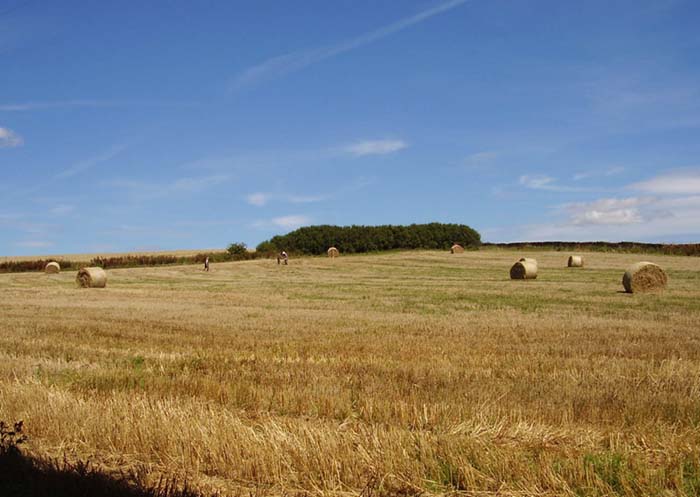
Locating the site general area of the crash site was initially down to speaking to Mr John Henley of Wiganthorpe who was able to speak to elderly residents of Terrington which had greatly assisted in locating the correct landowner. Local historian, Mr Tony Wright's interviewing of further residents also was of great help to the cause. I visited the crash site in July 2007 with air historians Ken Reast, Albert Pritchard and Eric Barton. Permission to visit the site was given by Mrs Howard to whom we thank. Small fragments of the aircraft remain at the crash site although many were burnt bits showing the sign of the post-crash fire.
Part of an instrument face.
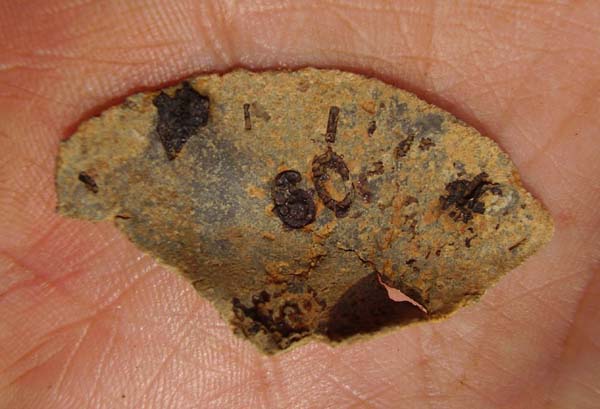
One of the few pieces we located was has a readable part number on it.
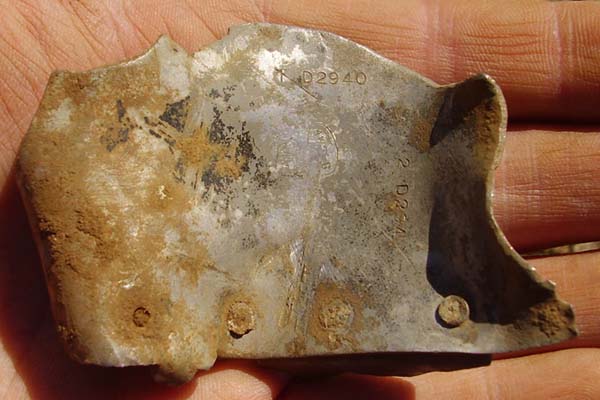
Lancaster DS649 was built to contract ACFT/239 by Armstrong Whitworth Ltd at Baginton. It was taken on charge by 426 Squadron at Linton on Ouse on 3rd June 1942 when the unit re-equipped with Lancaster MkII's. The aircraft saw little service with 426 Squadron who were not operational on Lancaster MkII's so the aircraft was used by 1679 H.C.Flt. at East Moor to convert 426 Squadron crews. It appears to have been loaned to 1679 Heavy Conversion Flight. It suffered a Cat.Ac/FA mishap on 4th October 1943 damage at East Moor when it was taxied off the airfield into a ditch. The aircraft's AM Form 78 states that it was still with 426 Squadron at this date but it was being used by 1679 H.C.Flight. The aircraft was repaired and was servicable on 23rd October 1943 so was returned to 426 Squadron (loaned to 1679 H.C.Flight). It was still with 1679 H.C.Flight when it was destroyed on 6th November 1943 in a crash at Rose Cottage Farm, Terrington. Cat.E2/FA damage was the assessment following this serious accident. It was struck off charge on 15th November 1943.