Wellington BJ786 near Sawley, Fountains Abbey area.
Although this aircraft and it's crew were on the books of 23 Operational Training Unit which was based at Pershore airfield though the unit also used Stratford / (Atherstone) airfield to ease the pressure of the number of aircraft and training being required at their home airfield at Pershore. On 11th April 1943 the crew of this aircraft took off from Stratford airfield near Worcester at 21.15hrs to undertake a night-navigation training exercise. The route the crew were instructed to fly would include navigating to various towns in England and use them as turning points before returning to base, the turning points to be used were, from take off at Stratford to navigate to Wallingford (near Newbury), then Peterborough, Hexham, Pocklington, Leighton Buzzard, Hereford and then return to base. In total five aircraft and crews of 23 OTU undertook the same navigation exercise on this night flying the same route. On their route north the crew of BJ786 successfully reached Peterborough and headed north towards Hexham, flying slightly west of their intended track by the time they reached the Ripon area. The aircraft was heard to be flying normally just before it entered a steep dive without warning and struck the ground at 01.30hrs in Fountains Park, near the villages of Sawley and Markington. The aircraft struck a fairly substantial tree just prior to hitting the ground and then exploded and all those on the aircraft died as a result the crash. The cause was never discovered.
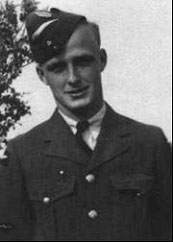
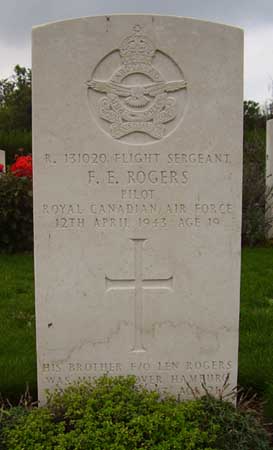
Pilot - F/Sgt Frank Edward Rogers RCAF (R/131020), aged 19, of Port Colborne, Ontario, Canada. Buried Dishforth Cemetery, Yorkshire.
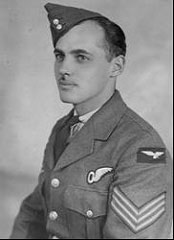
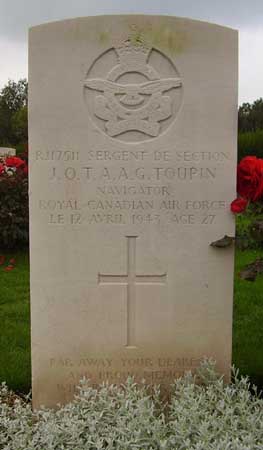
Navigator - F/Sgt Joseph Onesime Thomas Ange Albert Gerard Toupin RCAF (R/117511), aged 27, of Montreal, Province of Quebec, Canada. Buried Dishforth Cemetery, Yorkshire.
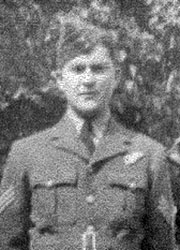
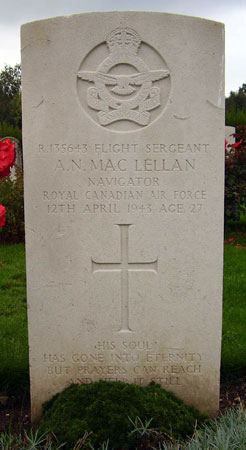
Navigator - F/Sgt Alexander Neil MacLellan RCAF (R/135643), aged 27, late of New York City, U.S.A. Buried Dishforth Cemetery, Yorkshire.
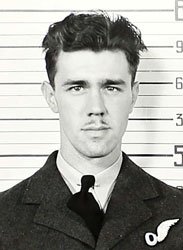
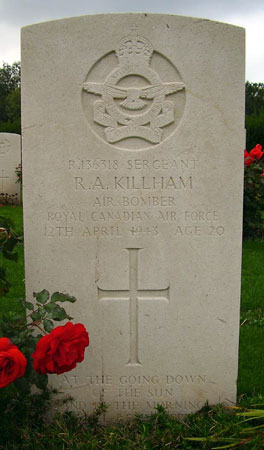
Bomb Aimer - Sgt Richard Archibald Killham RCAF (R/136318), aged 20, of Toronto, Ontario, Canada. Buried Dishforth Cemetery, Yorkshire.
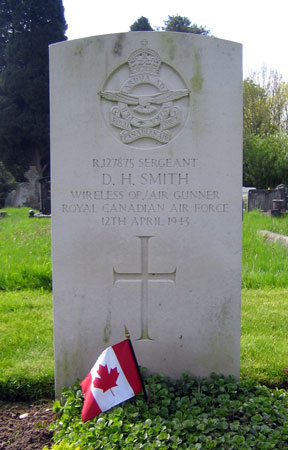
Wireless Operator / Air Gunner - Sgt Donald Henry Smith RCAF (R/127875), aged 20, of Elfros, Saskatchewan, Canada. Buried Warwick Cemetery (Sec 104, grave 10).
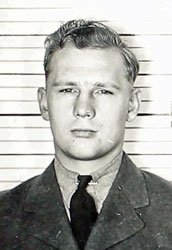
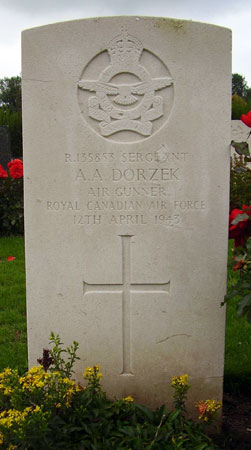
Air Gunner - F/Sgt Anthony Alloysius Dorzek RCAF (R/135853), aged 27, of Renfrew, Ontario, Canada. Buried Dishforth Cemetery, Yorkshire.
F/Sgt Frank Rogers and his gravestone at Dishforth Cemetery. He was the son of Edward and Ethel Rogers of Port Colbourne, Ontario and was born on 1st June 1923. His brother F/O Frederick Lennox Rogers was killed some weeks later on 3rd August 1943 while serving with 428 Squadron RCAF when he failed to return from a raid on Hamburg in Halifax EB274.
F/Sgt Joseph Toupin and his gravestone at Dishforth Cemetery. He was the son of Thomas and Flore Toupin of Montreal and was born on 14th December 1915.
Alexander MacLellan was born on 17th August 1914 at Inverness, Nova Scotia was the son of Ronald and Mary Isabelle (nee McKinnon) MacLellan. His father died when he was young. At the age of 21 he moved to New York with his mother and studied at the St.Francis Xavier High School in New York City where he had studied engineering. He then moved to Chicago in 1936 where he worked until 1940 when he started work as a clerk for the British Purchasing Commission in New York. He was living in Montclair, New Jersey, USA when he enlisted and was working as a munition's inspector for the US Ordnance Inc. He enlisted for RCAF service on 8th October 1941 in Ottawa and trained as an air observer, receiving his flying badge on 28th August 1942. On arrival in the UK in November 1942 he trained at 10 (O)AFU before posting to 23 OTU on 9th February 1943. He had a brother, Neil A Maclellan, who served in the RCMP.
Richard Killham was born on 21st October 1922 in Toronto, Ontario, Canada and was the son of Henry George and Annie Mickie (nee Strang) Killham. Both his parents were both in the UK but had emigrated to Canada before they married. Richard was working as a clerk for a grocer and later a clothing company in Toronto having studied art at college. He enlisted for RCAF service on 24th October 1941 in Toronto and initially started training as a pilot but then remustered as an air bomber in 1942. He was awarded his Air Bomber's badge on 23rd October 1942. He arrived in the UK in late November 1942 before posting to 23 OTU on 19th January 1943.
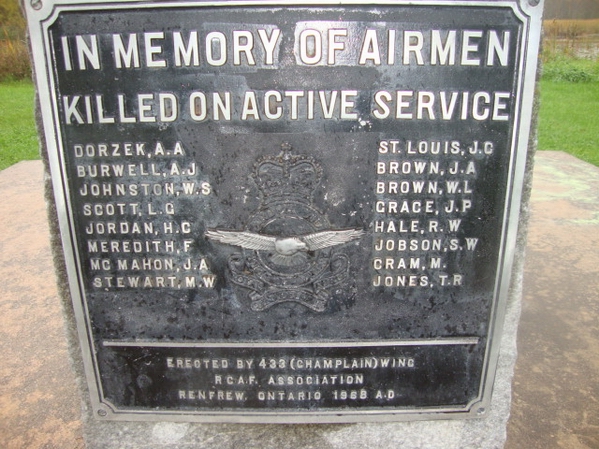
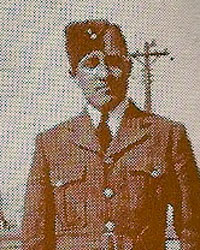
Anthony Dorzek was born on 2nd December 1920 in Otter Lake, Quebec, Canada and was the son of John and Clementine (nee Kluke) Dorzek. He lived with his family in Quebec until he was six years old and they then all moved to Renfrew, Ontario. He was still a student when he enlisted for RCAF service on 31st October 1941 in Ottawa and trained as an air gunner in Canada, receiving his air gunner's badge on 31st July 1942. He remained in Canada until November 1942. On arrival in the UK he then trained at 7 AGS before posting to 23 OTU on 9th March 1943. He is commemorated on a memorial in a memorial park his home town of Renfrew, Ontario (pictured below with the photograph found uncredited on the internet).
Donald Smith was born on 3rd February 1913 in Swansea, Wales. He and his parents moved to Elfros when he was young and after school he began working at a hardware store there at fourteen years old. When the store's owner died he bought the business and worked it into a successful business, he enlisted into the RCAF on 21st August 1941 in Toronto. Smith Lake in Saskatchewan is named in his honour. I credit Jack FitzSimons with the gravestone photograph.
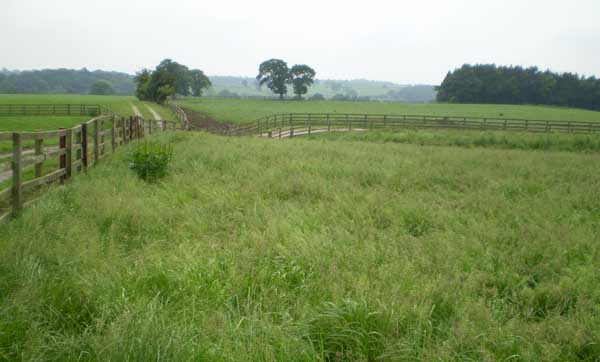
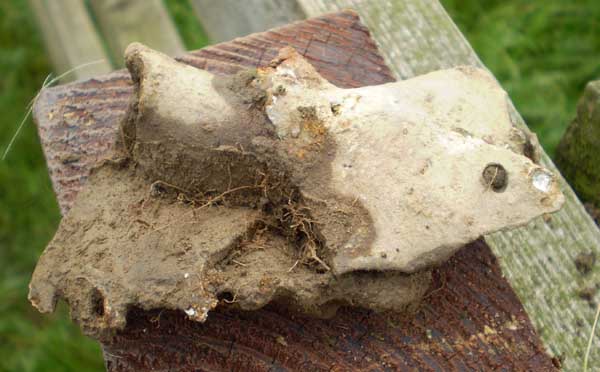
In June 2007 historian Ken Reast showed me the site of where this aircraft crashed, nothing remains on the surface today. He, Eric Barton and Albert Pritchard had located small fragments on the surface with permission from the landowner in May 2004 when the stump of the tree still existed. A new fence had just been erected around the field when I was shown the location and I found a piece of the aircraft in a heap of soil next to one of the new posts which was good evidence that location was accurate.
Wellington BJ786 was built to contract B.124362/40 by Vickers Armstrong's Ltd. at Hawarden and was flown to 33 MU at Lyneham on 11th August 1942. It was immediately taken on charge by 23 OTU at Pershore on the same day. On 15th September 1942 it sustained unspecified Cat.Ac/FA damage in a flying accident but no details of what happened is yet known. The aircraft was repaired on site by a team from Vickers at Weybridge. On 19th September 1942 it was returned to 23 OTU charge. On 22nd January 1943 it was deemed in need of a major repair by Vickers with the repair on site commencing on 28th January 1943. On 6th February 1943 it was returned to 23 OTU charge. As a result of the crash at Sawley on 12th April 1943 Cat.E2/FA was the damage assessment, it was struck off charge on 22nd April 1943 having clocked up a total of 362 flying hours from new.