On the night of 21st / 22nd July 1942 the crew of this 460 Squadron aircraft were tasked with flying an operational flight to bomb Duisburg and left Breighton at 23.38hrs. The crew dropped their bombload on the west banks of the River Rhine after being un-able to identify the target area. A landing at base was made at 04.41hrs where flak damage to the fuselage was discovered and soon repaired.
Pilot - P/O Albert George Grand RAAF (402948), of Casino, New South Wales, Australia.
Bomb Aimer/Navigator - Sgt Athole Douglas Macleod RAAF (405274), of Bundaberg, Queensland, Australia.
Navigator - Sgt Albert William Howard RAAF (405273), of Taringa/Bundaberg, Queensland, Australia.
Wireless Operator / Air Gunner - Sgt Thomas Cunnah Hobgen RAAF (404313), of Toowoomba, Queensland, Australia.
Air Gunner - Sgt Colin Roderick Donald Lowis RAAF (405277), of Ipswich, Queensland, Australia.
Wellington Z1482 was built to contract B.97887/40 by Vickers Armstrong's Ltd. at Hawarden, Chester and was awaiting collection in February 1942. It was initially flown to storage at 12 MU at Kirkbride on 15th February 1942 and was then taken on charge by 460 Squadron at Breighton on 10th June 1942, believed as being a replacement for Wellington Z1394 lost a week earlier. As a result of minor flak damage on 22nd July 1942 Cat.A/FB damage was the result of the assessment and it was repaired on site. It sustained flak damage on the 1st August 1942 on Ops to Dusseldorf and then sustained battle damage on 28th August 1942 when it was attacked by a Junkers Ju88 on Ops to Kassel. In both cases the probably minor damage assessment of Cat.A/FB damage was deemed as severe as the damage got. None of the incidents appear directly on the aircraft's AM Form 78. On 2nd September 1942 a repair on site was begun by a team from Fairfields for some form of damage and probably relates to the repair following the 28th August 1942 incident. Once repaired it was returned to 460 Squadron on 12th September 1942. It was transferred to 142 Squadron at Grimsby on 17th September 1942 but this was only for a week. On 25th September 1942 it was transferred to 18 O.T.U. at Bramcote. On 15th October 1942 it was lost on a night navigation training flight, Cat.E(m) damage was recorded on the paperwork but it was later found to have crashed in France with then crew of five being killed. The Polish crew were carrying a live bomb and had probably opted to head to Germany to drop it instead of a practice bombing range.
The crew listed above were all flying together on 4th August 1942 flying in Wellington Z1422 on a mine laying flight off the French coast. Their aircraft was believed to have been lost over the sea and no trace of three of the crew was ever found. They are commemorated on the Runnymede Memorial. Sgt Hobgen's body was washed ashore and he is now buried in Quiberon Communal Cemetery, France. Another unidentifiable airman was washed ashore and he is listed as an unknown and buried with Sgt Hobgen.
Albert Grand was born on 30th July 1920 in Brisbane but enlisted on 11th November 1940 in Sydney. He was awarded his Wings on 3rd July 1941. On arrival in the UK he was posted to 27 OTU on 23rd August 1941 and later to 20 OTU on 16th September 1941. He was posted to 460 Squadron on 29th December 1941. He received a commission to the rank of P/O on 1st July 1942. P/O Grand was twenty two years old.
Athole Macleod was born on 9th August 1922 in Bundaburg, Queensland and enlisted on 2nd March 1941 in Brisbane. On arrival in the UK he trained at 9 AOS from 21st March 1942 and 27 OTU from 28th April 1942 before posting to 460 Squadron on 17th July 1942 (exactly the same as Albert Howard's postings in the UK). Sgt Macleod was only nineteen years old.
Albert Howard was born on 9th September 1912 in Bundaburg, Queensland and enlisted on 2nd March 1941 in Brisbane and was working as as a school teacher at the time. On arrival in the UK he trained at 9 AOS from 21st March 1942 and 27 OTU from 28th April 1942 before posting to 460 Squadron on 17th July 1942 (exactly the same as Athole Macleod's postings in the UK). His wife Jean was working for Nestle's in Brisbane when he enlisted. Sgt Howard was twenty nine years old and his and Sgt Macleod's service numbers are consecutive numbers suggesting they enlisted together and given they were both Bundaberg boys it is possible that they knew each other.
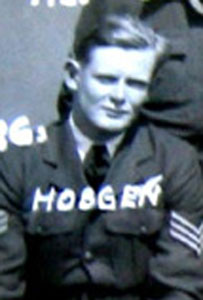
Thomas Hobgen was born on 29th December 1920 in Toowoomba, Queensland and enlisted on 16th August 1940 in Brisbane. As with many would-be 460 Squadron airmen he was posted to 27 OTU on 29th April 1942 after initial training on his arrival in the UK with No.1 Signal School begining 11th March 1942. He was later posted to 460 Squadron on 17th July 1942. Sgt Hogden was twenty one years old. His family had just lost one son to RAAF service only weeks earlier on 9th May 1942. Sgt John Hobgen RAAF (404621) is buried in Kirkeby, Denmark and was twenty years old, he was flying in Wellington Z5574 with 12 Squadron on Ops to Warnemunde when it crashed into the sea on the return flight.
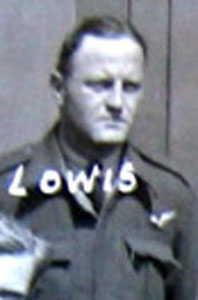
Colin Lowis was born on 10th August 1911 in Ipswich, Queensland (an area hit by huge floods in January 2011). He enlisted on 2nd March 1941 in Brisbane and after initial training he arrived in the UK, the then trained at 7 AGS begining 7th March 1942 and was posted to 27 OTU on 28th April 1942 and later to 460 Squadron on 17th July 1942. Sgt Colin Lowis was thirty years old.