On the night of 2nd / 3rd July 1942 the crew of this 460 Squadron aircraft were tasked with bombing Bremen and had left base of Breighton at 23.36hrs. They dropped their bombs from 14,000 feet at 02.05hrs but the aircraft was hit by flak in the nose and the front turret was holed. Three holes were also found in the bomb aimer's position. They made a safe return to base at 04.43hrs.
Pilot - P/O Vernon Frank Keyser RAAF (406359), of Perth, Western Australia.
Second Pilot - Sgt Noel Henry Knight-Brown RAAF (403348), of Cooinda, Mt.Irvine, New South Wales, Australia.
Navigator(?) - Sgt Robert Marshall Hetherington RAAF (403242), of Sydney, Australia.
Wireless Operator / Air Gunner - P/O Maxwell Alwyn Keddie RAAF (403110), of Enfield, New South Wales, Australia.
Navigator - Sgt John Gordon Lee RAAF (403363), of Burwood, New South Wales, Australia.
Air Gunner - Sgt Ivan Ross Galbraith RAAF (406593), of Katanning, Western Australia.
Wellington Z1392 was built to contract B.97887/40 by Vickers Armstrong's Ltd. at Hawarden, Chester and was awaiting collection in December 1941. It was received by 45 MU at Kinloss on 2rd December 1941 and was taken on charge by 460 Squadron at Breighton on 13th December 1941. The AM Form 78 states that on 13th April 1942 damage caused by some form of flying incident that was then repaired on site. Unfortunately the 460 Squadron records are fairly useless during this monthly period at stating what happened to specific aircraft. On the night of 12th / 13th April 1942 this aircraft was one of a number flown on Ops to Essen and may be an aircraft that is unidentified as being attacked by heavy flak, or also one that landed at Manston for an unstated reason. Once repaired it was returned to 460 Squadron. As a result of minor flak damage on the nights of 18th / 19th June 1942, 2nd / 3rd July 1942 and then on 4th / 5th September 1942 this aircraft received minor damage due to flak. Cat.A/FB damage would have been the damage assessment each time which would have seen it repaired on site each time . None of the three flak incidents are listed on the aircraft's AM Form 78. The aircraft was transferred to 142 Squadron at Grimsby at 17th September 1942. In October 1942 142 Squadron ceased operating Wellington MkIV's, converting to Mk.III's so the aircraft was transferred to 305 Squadron at Hemswell on 6h October 1942. The aircraft was lost on 4th February 1943, with Cat.E(m) damage recorded when it failed to return from Ops to Hamburg and would crash in Holland. It was struck off charge on 28th February 1943.
Vernon Keyser was born on 9th December 1917 in Yalgoo, Western Australia and enlisted in Perth. Having risen to (Acting?) F/Lt he was killed on 27th July 1942 flying Wellington Z1335 on Ops to Hamburg, the aircraft crashed near Wesermunde and he was initially buried there. In the immediate Post-war period the war graves investigation unit exhumed his body and he was later re-buried in Becklingen War Cemetery. He was twenty four years old.
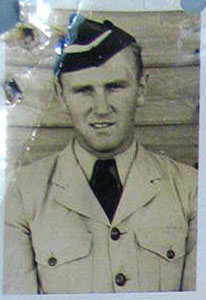
Noel Knight-Brown was born on 30th December 1917 near Sydney and enlisted on 6th January 1941 in Sydney, he was a farmer at the time at Mount Irvine in the Blue Mountains National Park. He trained as a pilot gaining his Wings on 25th September 1941. Having done his initial training in Canada he arrived in the UK and was posted to 27 OTU on 18th November 1941 and then to 26 OTU on 28th May 1942 before arriving at 460 Squadron on 7th June 1942. He received his commission to P/O on 28th July 1942 and rose to F/O on 28th January 1943. Having converted to flying four-engined heavy bombers at 1656 CU begining 20th August 1942 he had returned to 460 Squadron on 10th November 1942 and completed his Tour. He was posted to 1481 B.A.T. Flight on 16th September 1943. On 26th October 1943 F/O Knight-Brown was flying in Martinet HP322 on a meteorological flight off the Lincolnshire coast to check on the weather conditions over the ranges in foggy conditions. The aircraft failed to return to base and wreckage was later seen floating on the surface of the North Sea off Skegness and it was believed that the aircraft had crashed into the sea. No trace of either of the crew was ever found and F/O Knight-Brown is commemorated on the Runnymede Memorial. He was twenty three years old.
Robert Hetherington was born on 10th September 1916 in Barrow in Furness, England but had moved to Australia when he was young and enlisted in Sydney. After initial training he was eventually posted to England and flew two operational flights with 26 OTU (on 30th May 1942, and 1st June 1942), these would have been the thousand-bomber raids when maximum effort was called for and trainee crews were instructed to form part of the force. He was posted to 460 Squadron soon after and flew his first operational flight with them on 29th June 1942. His second was to Bremen and the flak incident recorded above. After converting to Lancasters with 1656 CU at Lindholme he continued his Tour with 460 Squadron and flew his last Op with them on 10th April 1943. He was awarded the DFC for his service with 460 Squadron, Gazetted on 15th June 1943, the citation reads.. "P/O Hetherington has been flying on operations continuously since May 1942. He has participated in attacks on some of the most heavily defended targets in Germany, Italy and occupied France, including the Ruhr and Berlin. He also took part in the "1,000 bomber" raid on Cologne." Post-War he served in the Government of Hong Hong and rose to become Commissioner of Labour. He was awarded the CBE on 1st January 1972.
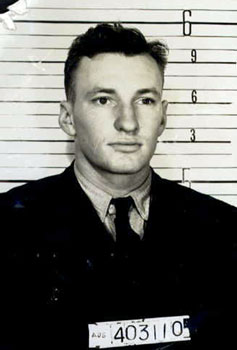
Maxwell Keddie was born on 9th May 1941 in Ashfield, Sydney, New South Wales and was working as a bank clerk when he enlisted on 9th December 1940 in Sydney. He was granted a commission on 22nd December 1941 to the rank of P/O and was awarded his Air Gunner's Badge on the same day. He would later rise to F/O on 22nd June 1942, F/Lt on 22nd December 1943. On arrival in the UK he was posted to 27 OTU on 21st April 1942 and later to 460 Squadron on 28th June 1942 and flew his first operational flight the following night. The Bremen flak incident (detailed above) was on his second operational flight with 460 Squadron. He converted to flying Lancasters at 1656 CU and was posted back 460 Squadron where he completed his Tour by May 1943. He was awarded the DFC for service with 460 Squadron, Gazetted on 16th June 1943. The citation reads.. "F/O Keddie has taken part in a large number of sorties against targets in Germany and Italy including heavily defended areas of the Ruhr and Berlin. He has always performed his duties with ability showing utter disregard for his personal safety. This officer's keenness and devotion to duty have consistantly been of the highest order."
In May 1943 he was posted to 1481 Bomber Gunnery Flight until March 1944 where it is likely that he was an instructor. He later took a posting to the Pacific Theatre of War and left the UK returning to Australia via New York. In September 1944 he was posted to 7 OTU to train on Liberators. On 3rd Decemeber 1944 he was posted to Heavy Bomber Replacement Training Unit and later to 12 RAAF Squadron on 8th February 1945 but on 23rd February 1945 he was posted to No.27 Gunnery Leaders Course until 5th April 1945. He was de-mobbed in December 1945. Post-War he joined the RAAF Reserve and was granted a commission in September 1950. At this time he was living in Homebush, New South Wales.
John Lee was born on 14th April 1921 in Burwood, New South Wales. He enlisted on 6th January 1941 in Sydney, he was a university student at the time. He had trained as an Observer and received his Air Observer Badge on 6th December 1941. On arrival in the UK he was posted to 1 AFU as an Observer on 21st March 1942 and then to 27 OTU on 21st April 1942 before arriving at 460 Squadron with the rest of his crew on 28th June 1942. He later converted to heavy bombers at 460 Conversion Flight begining 20th August 1942 returning to his parent unit on 29th September 1942 but was posted to 1656 Conversion Unit on 21st October 1942 and again returned to 460 Squadron on 10th November 1942. He received his commission on 17th February 1943 to the rank of P/O. He was sadly killed on 4th April 1943 flying in Lancaster W4310 on Ops to Kiel, the aircraft crashed in Germany with the loss of the whole crew. He was twenty one years old and is buried in Kiel War Cemetery, Germany.;
Ivan Galbraith was born on 11th May 1913 in Katanning, Western Australia. He enlisted in Perth. He was awarded the DFC for service with 460 Squadron, Gazetted on 17th August 1943 and presented at Buckingham Palace on 2nd February 1945. Nothing more is known of his operational career.