On 15th May 1942 the captain of this 460 Squadron aircraft was giving two lesser experienced pilots instruction on dual and single engine flying. The "instructor" had feathered one of the propellers for single engine flying. With the revs decreasing he struggled to keep the height and had no time to lower the undercarriage by hand - one assumes the engine shut down was linked to the automatic undercarriage system. With the aircraft over the airfield he then opened up on the the starboard throttle to try and avoid belly landing on the airfield and blocking the runway. The aircraft entered a swing and headed towards some trees on the airfield, the starboard wing tip then struck a tree. What happened next is not known, the aircraft either belly landed on the edge of the airfield near the trees or it remained in the air and after the pilot was able to lower the undercarriage properly a full landing was made. Rarely 460 Squadron's ORB fails to record the aircraft's identity or give full details. It was almost certainly one of a batch of Vickers Armstrong's Ltd., Hawarden built aircraft, to contract B.97887/40.
Pilot - F/O William Lloyd Brill RAAF (402933), of Grong Grong, New South Wales, Australia.
Passenger/Pilot - Sgt William Murray Wendon RAAF (403389), of Bronte, New South Wales, Australia.
Passenger/Pilot - Sgt Anthony Vincent Willis RAAF (402940), of Inverell, New South Wales, Australia.
Air Gunner - Sgt Robert Thomas Hood RAAF (403268), of Maroubra/Stratfield, New South Wales, Australia.
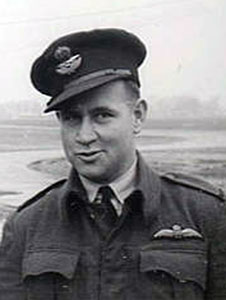
William Brill (pictured above) and Arthur Doubleday were two of the early 460 Squadron pilots, they would become two of the great pilots and leaders of the RAAF. They became known as 'The Heavenly Twins'. Brill was best man at Doubleday's wedding. William Brill was born in 17th May 1916 in Ganmain, New South Wales and enlisted on 11th November 1940. He received his commission on 28th July 1941 and received the following promotions during his Wartime career; to F/O on 28th January 1942. Acting F/Lt on 26th July 1942, Acting S/Ldr on 17th April 1943. F/Lt on 27th October 1943 and later rising to Acting W/Co. He was posted to 460 Squadron in January 1942 just after its formation. For his actions on 29th/30th May 1942 he was awarded the DFC, the first awarded to a 460 Squadron airman. He was the pilot of Wellington Z1328 tasked with Ops to Gennevilliers. Having left Breighton at 23.45hrs they were about to bomb the target area when the aircraft was hit by flak. The crew went around and made a second successful bombing run and released all but one of their bombs. One 1,000lb bomb had hung-up in the bomb bay because the bomb release unit had been damaged by flak. The aircraft has been seriously damaged in other areas and on their return to the UK they landed at White Waltham airfield at 05.45hrs. The citation for his DFC was published in the London Gazette on 26th June 1942 and presented at Buckingham Palace on 17th November 1942, the citation reads.."One night in May 1942, this officer was captain of an aircraft, detailed to attack the Gnome Rhone works at Gennevilliers. Bad weather was encountered throughout the journey and fine determination was shown in flying through heavy rain squalls. P/O Brill's aircraft was caught min searchlights, and anti-aircraft fire damaged the hydraulic system and put the rear turret out of action. After making a circuit at 1,500 feet P/O Brill carried out an attack at 2,000 feet, and hit the target. The hydraulic pipes, operating the bomb doors, were subsequently damaged and the bomb doors could not be closed. The return journey was made in bad waather. P/O Brill, thinking that he would probably have to make a crash landing, decided to descend away from his base, and he succeeded in making a good landing without flaps and with one wheel damaged. This officer showed splendid courage and determination and has proved to be a resourceful pilot at all times."
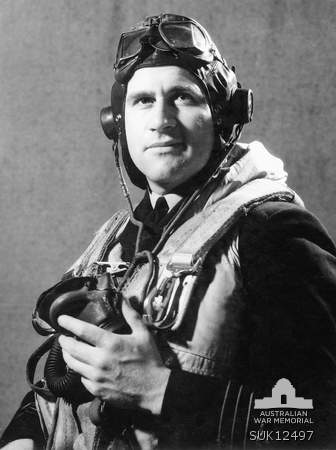
He was posted to 463 Squadron in late-1942 and while serving with them he was awarded the DSO, published in the London Gazette on 19th May 1944 while an Acting S/Ldr and presented at Buckingham Palace on 10th October 1944. The citation reads.."This officer has completed a very large number of sorties and throughout has displayed leadership, skill and gallantry of the highest order, whilst his determination to make every sortie a success has been notable. On one occasion, whilst over Berlin, his aircraft sustained damage when fires started in one of the wings and in the fuselage. Although the rudder controls were affected and the compass was unserviceable, Squadron Leader Brill flew the damaged aircraft to base. On another occasion, more recently, his aircraft was hit by shrapnel whilst over the target. One engine was put out of action, some navigational equipment was rendered useless and other damage was sustained. In spite of this and in the face of adverse weather, Squadron Leader Brill flew the aircraft safely home. His record is worthy of the highest praise." He later commanded 467 Squadron from 12th May 1944 to 12th October 1944 and awarded the Bar to the DFC for service with 467 Squadron as Acting W/Co, Gazetted on 16th January 1945 though no citation for this has been located. He returned to Australia in January 1945 and remained in the RAAF rising to the rank of Group Captain. He sadly died on 12th October 1964.
William Wendon was born in Brighton, England on 22nd December 1921 but had moved to the Sydney area when he enlisted. On 17th / 18th January 1943 he was the pilot of Lancaster W4816 on Ops to Berlin, on their return to the UK they flew too far north and ran out of fuel near the Yorkshire Coast. The crew abandoned the aircraft over Flamborough Head, Sgt Wendon landed safely but unfortunately his wireless operator died. This incident will be covered on this website in due course. In the next months he and many of his crew were posted to 156 Squadron PFF have received his commission. On 13th May 1943 he was the pilot of Lancaster ED357 on Ops to Duisburg and the aircraft failed to return. He is buried Reichswald Forest War Cemetery and was still only twenty one years old. There was one survivor in his aircraft who was able to give a statement as to why the aircraft had crashed, he stated that their aircraft had collided over the target with another aircraft and dropped out of the sky.
Anthony Willis was born on 15th August 1815 in Toorak, Victoria. He enlisted in Sydney on 11th November 1940 and after training was awarded his Wings on 1st September 1941. On arrival in the UK he was posted to 27 OTU on 21st October 1941 and after completing his training received a posting to 460 Squadron on 13th May 1942 (two days before the minor accident at Breighton on 15th May 1942). He later converted to flying the Lancaster type with 460 Squadron Conversion Flight which became 1656 Heavy Conversion Unit before returning to the squadron proper. He was later posted to 1662 HCU on 1st February 1943. For his service with 460 Squadron he was awarded the DFM, Gazetted on 20th April 1943. The citation reads.."This airman has cheerfully and efficiently completed his duties as pilot. He has taken part in many operational flights during which his resourcefulness and skilful airmanship have inspired great confidence in his crew. F/Sgt Willis has displayed exemplary courage and ability on operations." He received his commission to P/O on 13th December 1942 and rose to F/O on 13th June 1943 and F/Lt on 12th December 1944. He would later return to 460 Squadron after a period of instructing with 1662 HCU on 8th March 1944. For service with 460 Squadron on his second Tour he was awarded the DFC, Gazetted on 8th December 1944. Both his DFM and DFC were presented to him at Buckingham Palace on 27th November 1945, the citation for his DFC reads.."S/Ldr Willis has taken part in numerous operational sorties against importany and heavily defended targets in Germany and enemy occupied territory. In April 1944 he was detailed to attack Dusseldorf. When still some distance from the target, the aircraft was attacked by an enemy night fighter which caused severe damage but, undaunted, he pressed on and bombed the target. By superb piloting, he flew the crippled aircraft back safely to base. By his keenness and devotion to duty, this officer is an outstanding example to all in the Squadron." He took the rank of Acting S/Ldr on 1st April 1944 and Acting W/Co on 6th February 1945. After completing his second Tour he received warm words from A/Comm Sir Hughie Edwards who wrote "..he has all the qualities of a gentleman.." and A/Comm A M Wray MC, DFC, AFC also wrote.. "As a man, an asset to the service, shows promise of becoming a fine type of senior officer." He served at Bomber Command HQ before returning to Australia and being de-mobbed in 1946. He rejoined the RAAF Reserve in 1951. He died in June 1974. Sadly no photograph has been located of him.
Robert Hood was awarded the DFM for service with 460 Squadron and Gazetted on 20th April 1943, the main part of his service being before receiving his commission. Having risen to F/O he was posted to 156 Squadron PFF with his new crew on 9th July 1943, he was killed on 3rd September 1943 flying in Lancaster JA915 which crashed on an air to air firing exercise near Diss, Norfolk. He is buried Cambridge City Cemetery and was twenty three years old. A memorial was erected in Kenninghall Church in September 2009 near to the crash site.