Whitley K9026 near Dishforth airfield.
On 1st March 1940 this 10 Squadron aircraft took off from Dishforth at 17.30hrs with the crew were briefed to carry out a leaflet dropping operation over Berlin. On their return they ran low on fuel and one of the aircraft's engines cut out on approach to land at Dishforth. The aircraft undershot and hit the ground some 400 yards east of the base at 03.10hrs on 2nd March 1940. Damage was sustained to the aircraft's inner fuel tanks, leading edge of the port wing and the starboard undercarriage and undersurfaces were damaged but it was repaired. The records suggest that for this operational flight this aircraft had been borrowed from 78 Squadron by 10 Squadron and flown by a 10 Squadron crew. The 10 Squadron ORB appendix however does suggest otherwise and it being fully on the books with 10 Squadron as they were using it from the begining of 1940 right up
to this incident. No record of being used again by 10 Squadron has been found after 2nd March 1940 which does perhaps suggest it was transferred away after repair
after this date. At this time in the War however 78 Squadron were No.4 Group's reserve squadron and are believed to have acted as a group pool supplying newly trained crews.
Pilot - Sgt Arthur Stanley Johnson RAF (580263).
Second Pilot - F/Lt Philip John Hunter Harrington RAF (37352).
Observer - Sgt Herbert Brian Felix Lymna RAF (580907).
Wireless Operator - LAC Francis Patrick McQuade RAF (526737).
Air Gunner - AC George Alexander Chalmers RAF (552201).
George Chalmers was born in February 1921 in Peterhead, Scotland. He entered the RAF as a boy entrant in early 1938 and trained as a wireless operator / air gunner.
He was posted to 10 Squadron on 18th May 1939 and flew with this unit until being posted to 7 Squadron in August 1940 to fly Stirlings. He later received a posting to
35 Squadron and survived a close shave during an attack on the Scharnhorst ship at La Rochelle after his then skipper sustained serious injuries. He was selected to
join 617 Squadron and flew in the Dams Raid as part of Bill Townsend's crew for which he was awarded the DFM. He received a commission on 27th June 1943 to the rank
of P/O on probation (emergency)(52692). Post-War he remained in the RAF and continued his service with 617 Squadron and later 12 Squadron. In 1950 he flew with 38
Squadron. He left the RAF in 1961 but then served in the MoD until 1984. He died in August 2002 having lived in Harrogate, North Yorkshire. It is likely that he is
buried in Harrogate Stonefall Cemetery.
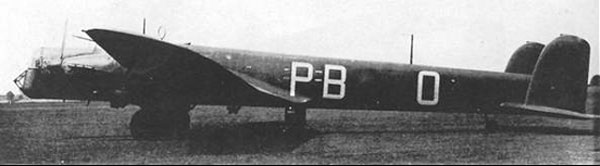
Whitley K9026 was built to contract 522438/36 by Armstrong Whitworth at Baginton and was delivered to 10 Squadron at Dishforth on 31st May 1939 and coded "PB-O", on
the outbreak of WW2 it became coded "ZA-O". The photograph shown above of the aircraft shows it in it's pre-War code of "PB-O", my thanks to air historian Jim Rutland
for this photograph. It was later re-coded ZA-O. The paperwork says it was placed on charge with 32 MU at St.Athan on 29th December 1939 but the next day appeared on
charge with 78 Squadron at Linton-on-Ouse, in reality it probably never left 10 Squadron charge as they were using it on 1st January 1940 and on occasions in January
and February 1940. It was still being used by 10 Squadron when the incident near Dishforth occured in the early hours of 2nd March 1940, and following this incident
Cat.R(b)/FB damage was recorded. From here it was dismantled and moved to Airwork, Gatwick for repair on 5th March 1940. Repair does not appear to have been a priority
as the aircraft does not appear on charge again until 8th February 1941 when 27 MU Shawbury accepted it. It was later issued to 19 OTU based at Kinloss on 18th April
1941 but was damaged in a heavy landing at Kinloss on 2nd May 1941 before being repaired on site and again damaged at Kinloss when the undercarriage collapsed on
landing on 26th August 1941. Again it was repaired on site and was returned to its unit on 5th September 1942. It suffered an engine failure on take off on 10th
September 1942 and was force landed hitting a wall at Bervie, Morayshire. It never flew on the front line again and it was transferred to Marshall's at Cambridge
on 15th April 1943 and then placed in storage with 20 MU at Aston Down where it was struck off charge on 21st November 1943.
Arthur Johnson was awarded the DFM on 20th February 1940 though the citation has yet to be located (if indeed there was one). His name may became familiar to these pages.
He was awarded the Bar to the DFM soon after, Gazetted on 30th July 1940 and was screened from Operation flying soon after that. He was clearly a very able pilot. He
received a commission on 17th September 1940 (with seniority of 30th August 1940); service number being 44606 thereafter and rose through the ranks. In 1944 he was
awarded the DSO for service with 83 Squadron as Acting W/Co, the citation reads.."This officer has completed a very large number of sorties, including attacks on most of the enemy's strongly defended targets in Germany. He has proved himself to be a skilful and courageous captain whose determination to attack his targets with accuracy has been a prominent feature throughout his long tour. He is a most inspiring leader and his achievements have been worthy of the greatest praise."
Philip Harrington was probably born in Newport, Shropshire in 1911. He was confirmed as P/O on probation in the Reserve of Air Force Officers on 12th March 1934
and made P/O from P/O on probation on 12th March 1935. He was then granted a short service commission in the RAF as Acting P/O on probation on 7th October 1935 and
relinquished this commission in the Reserve on the same date. Later in October 1935 he was posted to 6 FTS at Netheravon. On completion of this course he was awarded
a Special Distinction. He was then confirmed as P/O exactly a year later. He was made F/O on 7th September 1937 and then rose to F/Lt on 6th September 1939. He was
later promoted to S/Ldr (temp) on 1st September 1941 and W/Co (temp) on 1st July 1944. Post-War he remained in the Reserve of Air Force Officers until resigning his
commission on 22nd April 1949, retaining the rank of W/Co.
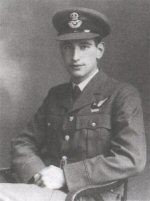
Herbert Lymna was born in the New Forest in 1920. As F/Sgt he was awarded the DFM for service with 35 Squadron, Gazetted on 12th January 1943. The citation
reads.."F/Sgt Lymna has given evidence of steadfast skill and courage while flying as navigator on many sorties against enemy targets. On one occasion, after a
successful attack on Cologne, he displayed commendable coolness, when his aircraft was damaged by anti-aircraft fire, and three members of the crew seriously
wounded. After assisting the injured, he successfully navigated the damaged aircraft back to this country." He received a commission on 17th December 1942 to the rank of P/O on probation (emergency)(51511) and was promoted to F/O on probation (war subs) on 17th June 1943. He was posted to 7 Squadron for a second Tour, as Acting F/Lt he was awarded the DFC, Gazetted on 15th September 1944. He was later promoted to F/Lt (war subs) on 17th December 1944. He was also awarded the DSO and the citation for which reads.. "Acting S/Ldr Lymna has taken part in more than ninety sorties against various enemy targets, most of them heavily defended. He has consistently displayed a high standard of gallantry, and his strong sense of discipline and devotion to duty at all times have set a very fine example. In January 1945, S/Ldr Lymna was the bomb aimer in an aircraft detailed to attack Munich. On the outward flight some of the navigational equipment became partially unserviceable. S/Ldr Lymna skilfully effected repairs. When nearing the target the aircraft came under heavy anti aircraft fire and was repeatedly hit. For the second time the same equipment became unserviceable. Nevertheless, S/Ldr Lymna again effected repairs and was able to give his captain directions for an accurate bombing run. His cool and skilful work contributed materially to the success of the sortie. This officer has rendered much loyal and devoted service in air operations against the enemy." He almost certainly married twice and possibly three times; once in Abingdon in 1942 (possibly as a result of being an RAF instructor in the area), again in London in 1949 and possibly again Kings Lynn, Norfolk in 1956. He died in the Wayland area of Norfolk in 1995.
Francis McQuade later received a commission on 31st July 1942 (49654) to the rank of P/O on probation (emergency), he transferred to the Admin and Special Duties Branch on 8th July 1943 and was promoted to F/O on probation (war subs) on the same date. He survived the War but remained in the RAF before finally relinquishing his commission on 22nd October 1957, retaining the rank of F/O.