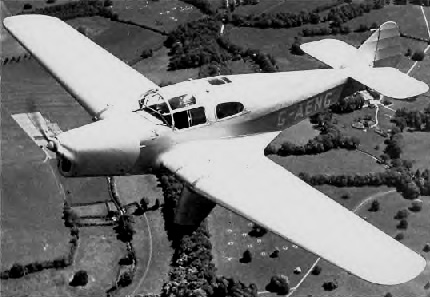
Miles M3A Falcon Major G-AENG at Scarborough Castle.
Mile Falcon G-AENG (photo via Jim Rudland).
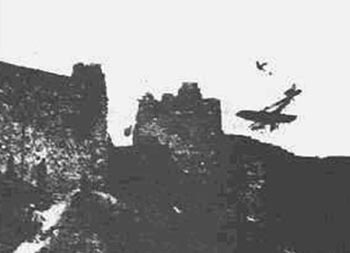
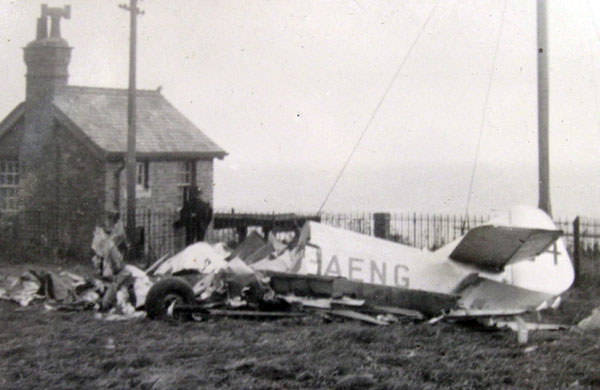
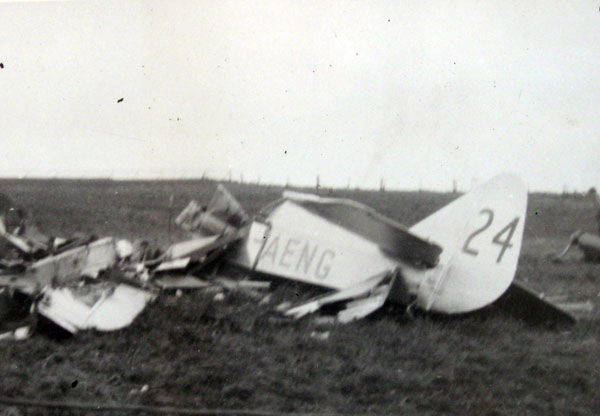
On 10th September 1937 this Miles Falcon took off from Hatfield airfield for the 1442 mile air-race around the Great Britain and Ireland called the "Kings Cup Air Race". The race would have taken two days to complete. Of the twenty seven aircraft taking part this year this Falcon was one of the last to take off at number twenty four in the queue. The aircraft eventually flew north and made for Scarborough Castle as this was one the registration points it had to pass over. The aircraft was seen to fly out wider than the other aircraft had previously done that day over the headland, and at a height of 150 feet the aircraft suddenly became caught in severe turbulance. It was seen to roll badly and rise about fifty feet, it then failed to level out and then lost height. The aircraft then crashed next to Scarborough Castle Walls. One of the two on board was thrown out of the aircraft just before impact, he was killed with this impact with the ground but his body then rolled off the cliff top and landed near a cafe on Marine Drive, 300 feet below. The other pilot was found in the wreckage and he also had been killed instantly. The aircraft had struck the ground nose/belly first and the engine broke off and had continued for another twenty five feet, the aircraft was destroyed in the crash though the number "24" was still visible in the wreckage. The Coroner recorded a verdict of accidental death on both men. It was reported that five other aircraft made forced landings during the race.
As a sequel to this accident in Lightning XP753 was flying over Scarborough on 26th August 1983 when it crashed into the North Bay, it was believed that a similar wind effect over the Castle headland was one of the factors that caused perhaps the best RAF display pilot of the time to loose control and crash.
This Miles Falcon was built by Phillips & Powis Ltd at Woodley and registered to them on 10th September 1936. It was written off soon after this crash at Scarborough.
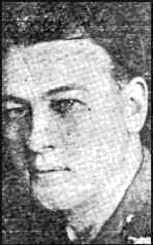
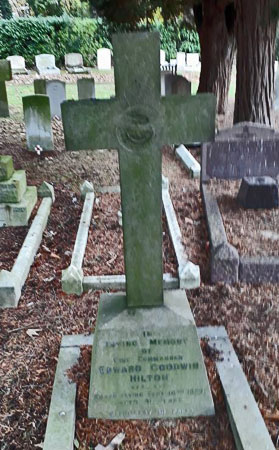
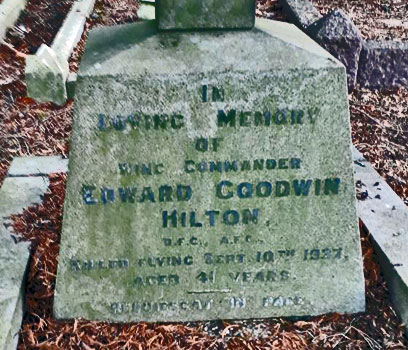
Pilot - W/Cdr Edward Goodwin Hilton AFC DFC, aged 41, of Felixstowe, England. Buried Ipswich New Cemetery, Suffolk.
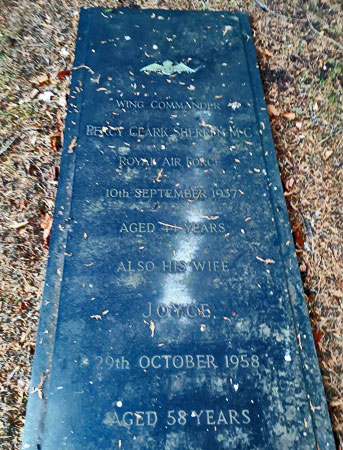
Passenger - W/Cdr Percy Clark Sherren, MC and Bar, aged 44, of Crapaud, Prince of Wales Island, Canada. Buried Ipswich New Cemetery, Suffolk.
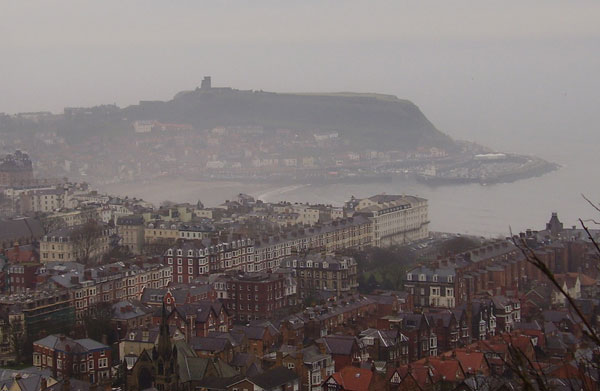
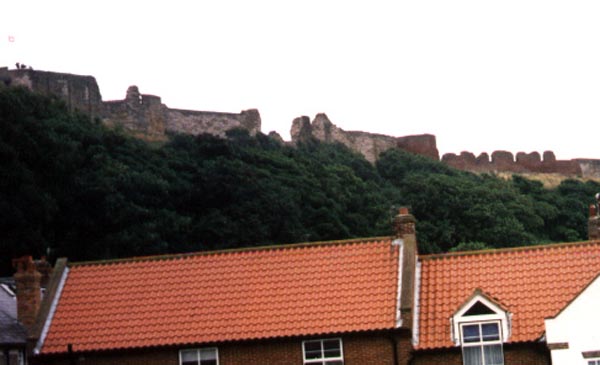
A general photograph of Scarborough with the castle on the headland in the centre in the photograph above.
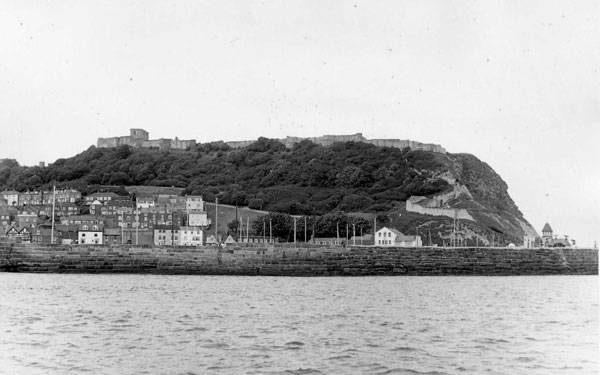
The castle headland shown from the lighthouse.
The aircraft moments before impact.
The colour photo above shows the same bit of wall shown in the old photo above, although taken from a slightly different angle it is clearly the same bit of wall.
The aircraft after the crash. These two photographs were kindly loaned to me by Mr A.N.Spink and remain his property and cannot be used elsewhere without permission. Please respect his wishes. I also thank Mr Paul Martin for his input (of www.bvror.uk) in creating this webpage.
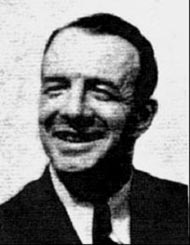
Percy Sherren was born in Crapaud, Prince Edward Island, Canada on 26th July 1893 and was known to his family as "Clark". He begun a military career in 1914 and originally served with the Canadian Infantry in France before being wounded in France in 1915. After recovering in England he was seconded to the RFC in 1916 and trained to be a pilot at the military flying school at Catterick Bridge, Yorkshire being awarded a Royal Aero Club aviator's certificate on 6th July 1916 (Cert.No.3281). He later won the Military Cross (Gazetted on 25th November 1916) and the Bar to the Military Cross (Gazetted on 4th June 1917). After The Great War he was granted a permanent commission in the RAF and gained the India General Service Medal with Clasp for serving in Waziristan between 1921 and 1924. While in England he married Joyce Tilden-Smith and settled England but returned to Canada occasionally, they had four children together. In 1930 he was promoted to Wing Commander and later commanded 10 Squadron for three years. In November 1934 he was appointed a desk job at the Home Aircraft Depot at Henlow, months after commanding No.1 Armament Training Camp based at Catfoss, Yorkshire. He retired from the RAF in June 1936 but continued to fly. He was forty four years old when he died and was living in the Felixstowe area. I thank his brother's grandson for kindly contacting me in November 2012 and for supplying extra information regarding his great-uncle's life. Today his the medals are on display at the Queen Charlotte Armories in Charlottetown, Prince Edward Island.
Edward Hilton was only a month from his forty second birthday. He was born in London and was educated at Malvern and at University College, London. During the First World War he served with the 14th Battalion London Regiment before receiving commision into the East Yorkshire Regiment. He joined the RFC in France in 1917 as an Observer. He graduated as a pilot in 1918 and transferred to the RAF and served in Egypt and Iraq between 1919 and 1923, he was decorated in 1923 for services in Kurdistan. He returned to the UK to Martlesham and then returned to Egypt in 1929 for five years with 216 Squadron. He returned to Martlesham five years later and flew as a pilot on experimental aircraft. He was described as a "brilliant pilot". Just prior to his death he was appointed into the Air Minstry's Dept of Research and Development. He had over 5000 hours flying to his name. He left a widow and a son, he was forty one years old.