On 17th March 1917 this RNAS aeroplane overturned on landing at Redcar aerodrome on the delivery flight from RNAS Cranwell, while the aeroplane was badly damaged but the pilot appears to have escaped injury. Had the landing been successful it would have joined the RNAS Flying School. The pilot was an officer at Cranwell at the time and was flying it north. The aircraft is listed within "AIR1/312/15/226/198" on 1st April 1917 in a daily report as being recommended for deletion on this date.
Bristol Scout 8984 was built by Bristol's at Filton and was delivered to C.S.D. White City in September 1916. After sitting there for some time it was transferred to RNAS Cranwell for assembly, testing and acceptance on 8th December 1916. It was being transferred to RNAS Redcar on 17th March 1917 but crashed on arrival following the flight north. It was deleted a few days later when the assessor was at Redcar on 3rd April 1917.
Pilot - Squadron Commander Peregrine Forbes Morant Fellowes RNAS.
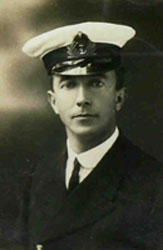
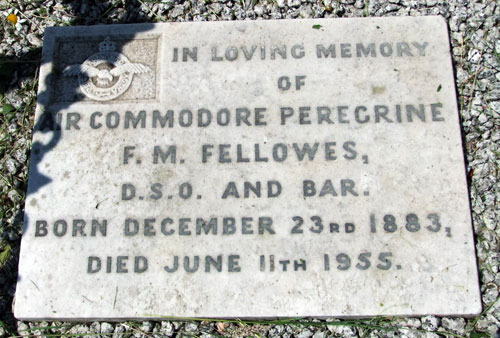
Peregrine Fellowes was born on 23rd December 1883 in South Yarra, Melbourne, Australia. He was the son of Captain Peregrine Henry Thomas Fellowes who was in the Melbourne area as Deputy Assistant Adjutant General in the Victorian Military Forces, Australia at the same time. He attended Britannia Naval College joining the Royal Navy as a Mid-Shipman in 1898, on 30th August 1903 he received a commission, then rose to Sub-Lt on 10th April 1905. He then retired from the Royal Navy on 26th October 1910 under the terms of his commission.
He re-joined the Royal Navy in 1914 but transferred to the RNAS in 1915, being awarded a Royal Aero Club Aviators' Certificate (Cert.No.1697) following traing at RNAS Chingford on 5th September 1915. In March 1917 he was the commanding officer of RNAS Cranwell training officers. On 1st April 1917 he was Commanding Officer of No.2 Squadron RNAS, he later commanded No.1 Wing RNAS and No.61 Wing RNAS. He transferred to the RAF on its formation in April 1918 but on 28th May 1918 he was made a Prisoner of War when Airco DH-4 A8065 failed to return from a bombing raid. He was awarded the DSO on 1st January 1918, the Bar the DSO on 8th February 1919 and was Mentioned in Despatches on 16th December 1919.
Post-WW1 he remained in the RAF and was awarded a permanent commission on 1st August 1919. By 1929 he had risen to the rank of Air Commodore. He retired from the RAF on 17th July 1933. In 1933 he was selected to lead the 1933 Everest Air Expedition, which successfully made the first flight over the world's highest mountain using specially adapted Westland Wallaces. Although he did not fly over Everest himself, his organisational skills and diplomacy were a major factor in the success of this venture. The day after the successful attempt he flew over Kangchenjunga, the world’s third highest mountain. He was awarded The Mount Everest Flight Expedition Medal for this and would later write a book "First Over Everest" about the event. Air Commodore Fellowes DSO died at Pietermaritzburg on 11th June 1955 but is buried Westhill Cemetery, Winchester, Hampshire. His father and mother and his son S/Ldr A P Fellowes DSO DFC, amongst others, are buried in the same family plot.