On 21st November 1916 this RNAS Flying School aeroplane was involved in a taxying accident at Redcar aerodrome. It sustained damage to the top wing and propeller.
Pilot - Acting F/Lt Louis Marcus Basil Weil RNAS.
Pilot - FSL Harold L'Estrange Tyndale-Biscoe RNAS.
Longhorn N5037 was built to contract 114826/16 by Brush E.E. Co. Ltd at Loughborough and was delivered to RNAS Redcar on 4th November 1916 where it was used by the Flying School. It was tested at Redcar on 10th November 1916 and accepted by them. It suffered four accidents at Redcar and received repairs on site each time, the dates being 21st November 1916, 21st December 1916, 6th January 1917, and 22nd August 1917 from which the official records say it was not repaired. However, correspondance with a relation of an RNAS pilot, FSL Eric H P Bailey, Mr Jon Bailey gives much more information as Bailey's logbook is in the family and he flew N5037 twice on 18th October 1917 and once on 19th October 1917. It was possibly damaged again after this date because it was surveyed on 7th December 1917 and deleted for use as spares on 14th December 1917.
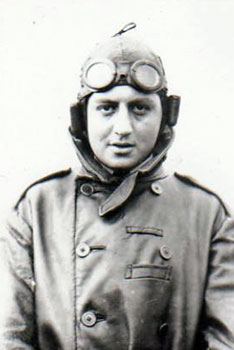
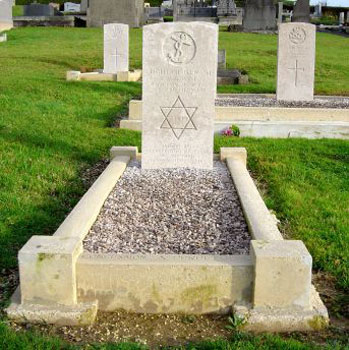
Louis Marcus Basil Weil was born on 13th October 1898 in Port Elizabeth, South Africa. He later came to England when his parents returned to the UK from South Africa and he was educated at Clifton School. He enlisted into the RNAS on 11th October 1915 and received a commission to the rank of Probationary Flight Sub-Lieut. He began his flying at Chingford on 14th October 1915 before posting to RNAS Redcar to train at the Flying School on 2nd December 1915. He gained his Royal Aero Club aviator's certificate there on 27th January 1916 (Cert. No.2336). He was posted to Eastchurch on 26th March 1916 and to Dover the following month but was listed as "sick" by June 1916. On 19th June 1916 he was posted back to RNAS Redcar as an Assistant Instructor. His service record states he was still in this role when a flying accident occurred at Scarborough on 3rd August 1916 to Avro 504 8600 and he was still serving at RNAS Redcar Flying School on 21st November 1916 when he was involved in a taxying accident to Longhorn N5037 there. On 17th January 1917 he was posted to Dover and it seems likely that he crossed the Channel and went into France shortly after. He was promoted to F/Lt also on 17th January 1917 and served in France with No.1 Naval Squadron.
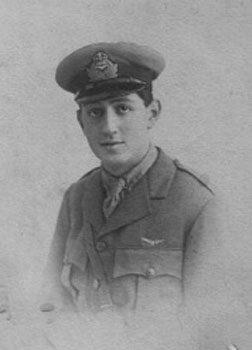
Louis Weil was killed on 6th April 1917 following combat over Northern France while flying Sopwith Triplane N5448 which was attacked by Hauptmann Paul Von Osterroht. Weil's aeroplane crashed near Malakow / Malakoff Station and this is reported as being the first Sopwith Triplane to have been brought down by a German pilot. He was probably involved in the Battle of Hargicourt at the time. F/Lt Louis Weil is buried in Sauchy-Lestree Communal Cemetery, France and was only eighteen years old. The portrait photograph shown above was kindly supplied to this account by Rev Rupert Charkham.
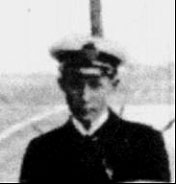
Harold Tyndale-Biscoe was born on 21st October 1892 in Srinager, India where his father, Canon Cecil Earle Tyndale-Biscoe was a British missionary at the time. He was educated at Jesus College, Cambridge gaining an MA. he enlisted for RNAS service on 11th July 1915 and was taught to fly at the Grahame-White flying school at Hendon, London gaining his Aviator's Certificate on 15th October 1915 (Cert.No.1881). His service file states he was serving in the Dardanelles between January and September 1916 though gives no indication of which unit this was with. He arrived at RNAS Redcar in September 1916. On 21st November 1916 he was in Longhorn N5037 when it crashed at Redcar and on 9th December 1917 he was in DH-6 B2699 when it crashed at Redcar (and was injured). He served as a flying instructor at the RNAS Flying School at Redcar until May 1918, transferring to the RAF on it's formation in April 1918. He married in Redcar Church on 25th May 1918. He was transferred to the Unemployed List on 14th April 1919. Little is known about him in the immediate post-WW1 period but given his Indian connections it is likely that he return to India. In April 1934 he was a flying instructor with the Madras Flying School and on 1st October 1934 he flew an Avro Commodore from Heston to Madras, India for use by the Rajah of Vizianagram. Flight Magazine of the day states that he was about to join the flying staff of Tata, India at that time. Two websites list him as living in Burma and working with the Forest Department there, and also living in New York. He died in 1969 but where?