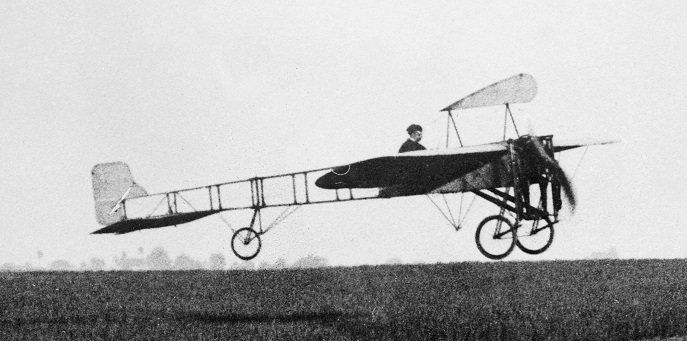
Bleriot XI at Doncaster racecourse.
During mid-October 1909 the first aviation race meeting took place at Doncaster racecourse that saw various flying events and races take place on a course roughly above the horse race course involving distance flying and timed races, this must have been something to behold given powered flight was very much in its infancy and many tens of thousands of people visited during the course of the event. Unfortunately the Aero Club of the United Kingdom would not sanction the event and another sanctioned aviation meeting was held at Blackpool at the same time that saw most of the British pilots of the day attend Blackpool rather than Doncaster. It begun on 15th October 1909 with wind effecting flying for part of just about every day, the last day was 26th October 1909 when fog and freezing conditions were a change of problem for the pilots. There were a number of aircraft damaged during the event over the course of ten days at Doncaster.
On 23rd October 1909 was another day of flying that was effected by wind and bad weather. Thomas Lovelace had earlier in the week been allowed to use William Ballin Hinde's Bleriot XI and had only previously succeeded in making a few hops of the ground. During the morning on this date he managed to get it airborne but after a few hundred metres in the air a gust of wind pushed it into the ground and it damaged the propeller and undercarriage. Newspapers were less than kind to the pilot, describing as his flying as "grass cutting expeditions", stating the "once or twice he rose a foot or two but did not remain in the air".
Pilot - Captain Thomas Turpin Lovelace.
Born in June 1873 in Missouri, USA Thomas Lovelace was more known for his airship exploits. He was to have displayed his own design of man-carrying hydrogen filled airship for the Franco-British Exhibition at Shepherd's Bush, London in 1908 and he proposed to fly around the exhibition in it. While assembling it he fell inside it through a rip while trying to repair it and was very lucky to have been rescued by his manager who cut another hole in it to free him. He repaired it and it was included in the exhibition but unfortunately on 14th August 1908 it exploded killing two people and injuring at least two others. It was found an electric fan had ignited the escaping hydrogen gas (not a lit match as Wikipedia claimed). He died April 1964 in Missouri, USA.