In the evening of the 13th March 1951 this Lancaster set out from RAF Kinloss for a training flight. The aircraft was on the final leg of a night-time navigation exercise between the Faroes and Rockall and was heading home when it collided with the mountain, Beinn Eighe, at around 02.00hrs on the 14th of March. It was only thirty minutes from landing back at base.
The nav-ex had been flown in horrendous weather conditions, when they took off from Kinloss seven hours prior to the crash, a deep low pressure was developing further south, this effect caused a strong north easterly airflow north of this depression which the crew would have been battling with prior to the crash and which almost certainly caused them to have flown too far south of their intended course.
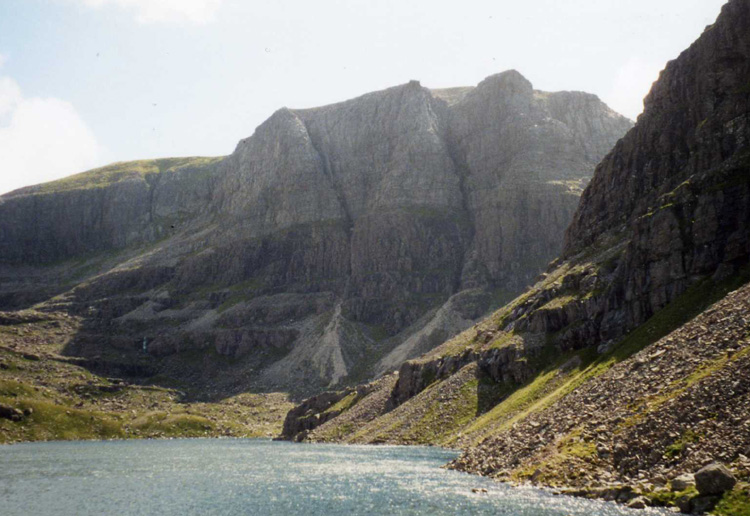
The last radio message picked up reported the aircraft to be “sixty miles north of Cape Wrath”. Nothing more was heard. The aircraft was later found to have crashed and had struck just fifteen feet from the summit of that part of the mountain range and at the top of a very inaccessable gully known at Far West Gully at the western side of Triple Buttress, above Loch Coire Mhic Fhearchair in the Beinn Eighe group.
The crew would have been flying in pitch darkness, poor visibility and freezing conditions, it was thought the crew pressumed they were descending over the relatively flat area of Caithness towards their let-down over the Moray Firth. In actual case they over the Torridon mountains, which are above 3000 feet. All eight airmen were almost certainly killed in the impact with the mountain, they were:
Pilot - F/Lt Harry Smith Reid DFC RAF (159582), aged 29, of Aberdeen. Buried Groves Cemetery, Aberdeen.
Co-Pilot - Sgt Ralph Clucas RAF (3044661), aged 23, of Liverpool. Buried Kinloss Abbey, Moray.
Nav - F/Lt Robert Strong RAF (203610), aged 27, of Billesley, Warwickshire. Buried Bramwood End Cemetery, Birmingham.
Air Sig - F/Lt Peter Tennison RAF (176527), aged 26, of Goole, Yorkshire. Buried Kinloss Abbey, Moray.
Air Sig - F/Sgt James Naismith RAF (575007), aged 28, of Glasgow. Buried Kinloss Abbey, Moray.
Air Sig - Sgt Wilfred Davie Beck RAF (3504773), aged 19, of Ealing, London. Buried Kinloss Abbey, Moray.
Air Sig - Sgt James Warren Bell RAF (1822719), aged 25, of Lockerbie, Dumphrieshire. Buried Kinloss Abbey, Moray.
F Eng - F/Sgt George Farquhar RAF (632957), aged 29, of Rathven, Banffshire. Buried Buckie Cemetery, Banff.
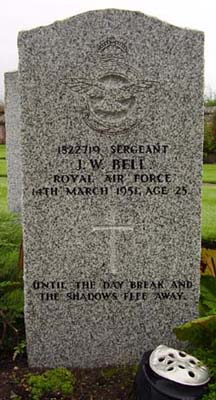
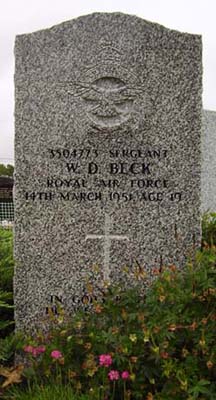
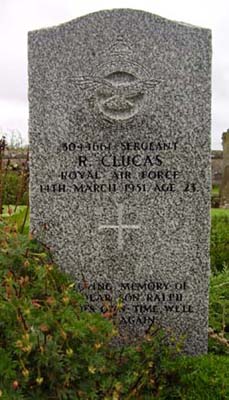
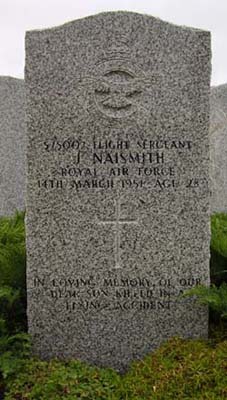
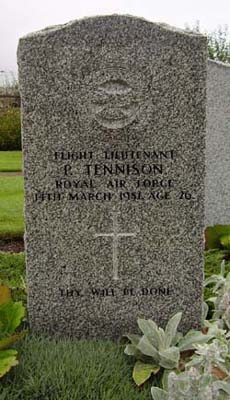
Five of the crew were buried at Kinloss Abbey Burial Ground.
By the time Harry Smith died he was a very experienced pilot, he had received a commission on 30th September 1943 to the rank of P/O on probation (emergency) and then rose to F/O (war subs) on 30th March 1944 and F/Lt (war subs) on 30th September 1945. For his wartime service he was awarded the DFC jointly with his navigator at the time for service flying Beaufighters with 144 Squadron on 13th June 1944 for his actions on an operational flight earlier in the year. This was possibly around the D-Day landings which 144 Squadron was tasked with protecting the invasion fleet. The citation for their DFC's reads.."As pilot and navigator respectively these officers have completed very many sorties and have displayed commendable skill and determination throughout. Recently they took part in an attack on enemy shipping off the French coast. Considerable anti-aircraft fire was encountered and Flying Officer Reid's aircraft was struck. Although he was wounded by flying fragments, which caused severe lacerations to one of his arms and minor injuries to his legs, Flying Officer Reid pressed home his attack and afterwards flew the aircraft to base where he effected a safe-landing with the undercarriage retracted. He displayed great courage and tenacity. Throughout the sortie, Pilot Officer Cooper displayed great resolution and co-operated splendidly with his pilot to whom he rendered valuable aid. He set a fine example of devotion to duty."
Harry Reid was born on 20th April 1921. He reliquished his war substantive rank of F/Lt on 1st January 1948 but was then appointed to a permanent commission in the RAF as F/Lt on 4th October 1948.
Robert Strong was born on 16th April 1923. He was appointed to a short service Commission in the RAF Regiment as P/O on probation on 25th September 1946 and was confirmed as P/O on 7th June 1948 (but with seniority back dated to 25th September 1946). He rose to F/O in the Regiment on 25th September 1948 but later transferred to the RAF, he was again promoted to F/Lt on 4th January 1951.
Peter Tennison was born on 21st November 1924, he was initially commissioned to P/O on probation (emergency) in the RAFVR on 18th February 1944. He rose to F/O (war subs) on 18th August 1944 and to F/Lt before transferring to the RAF and extending his period of service twice.
After some period of time the crash site was located and the nearest RAF Mountain Rescue team were sent to the area, this team however would be from the same base as where the aircraft had come from, Kinloss. The Team would no doubt have known the aircrew involved in the operation. The problems began here, the site being in the Western Highlands in the depths of a severe winter caused problems before the site could even be accessed, this was also serious climbing country at the best of times. The recovery operation is well discussed on other websites on the internet, the following is taken from some other websites :
""The team members, keen and conscientious though they were, had neither the equipment nor the training for the job. Their leaders initially spurned offers of help from local mountaineers, and the upshot was that it was August before the last body was recovered. By then, the local criticism had risen to a clamour, and the RAF decided that mountaineering expertise should be injected into the service. Until then, the tendency of senior officers had been to believe that what was needed for mountain rescue was fit stretcher-bearers, not mountaineers.""
""The incident control point was Kinlochewe Old Village Hall which still exists as an Outdoor shop and information/resource centre, due to the adverse weather conditions at the time this was the closest access point to the crash site. Modern day equipment such as helicopters and all terrain vehicles were not available and as such all rescue gear had to be backpacked into the site, a distance of some nine miles over unforgiving terrain with the added problem of deep snow."" The consequence of this was that the RAF Mountain Rescue Teams as we know them today were formed.
Four bodies were recovered in a relatively short time, the other four would prove harder to find and take down the mountain. It would be four months after the crash, in August 1951, when the final body was removed. The wreckage was the dynamited to blow it out of where it had embedded itself high up on the mountain. During the rescue operation two RAF servicemen were given galantry awards for their efforts, F/Lt Peter Dawes was made an MBE and SenAC Malcolm Brown was awarded a BEM.
The RAF hold an annual memorial event at the Torridon hostel where the current Mountain Rescue Team is based.
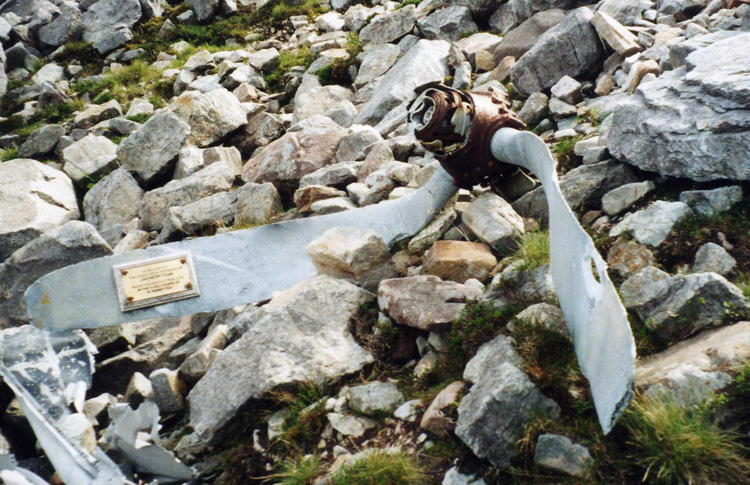
A memorial is fixed to a propeller at the foot of the Triple Buttress.
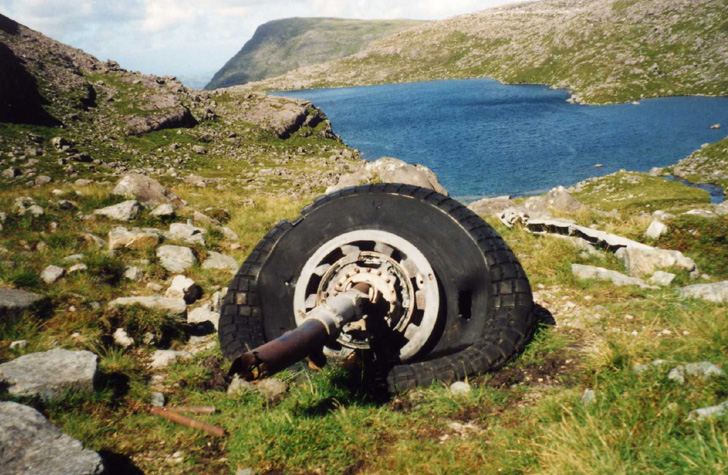
Will and I visited the site in August 2005. Following the wreckage being blown up it was scattered for some distance down the mountainside. A memorial plaque has been placed at the site and is located on one of the propellers. All four engines are still at the site, in varying degrees of condition. Another propeller is still high up on the mountain and I think I located one other propeller boss in scree in what is known as "Fuselage Gully" or Far West Gully. Will and myself climbed the gully, not alot of wreckage remains on the surface here although scree probably covers much of it. Higher up, a large piece of fuselage and the propeller are jammed which makes climbing past it hard without a rope. Both the aircraft's main wheels and a large wing section lie near the bottom of the scree. This jammed propeller saved the lives of two winter climbers in 2009 when they fell down the gulley but became wedged on the propeller.
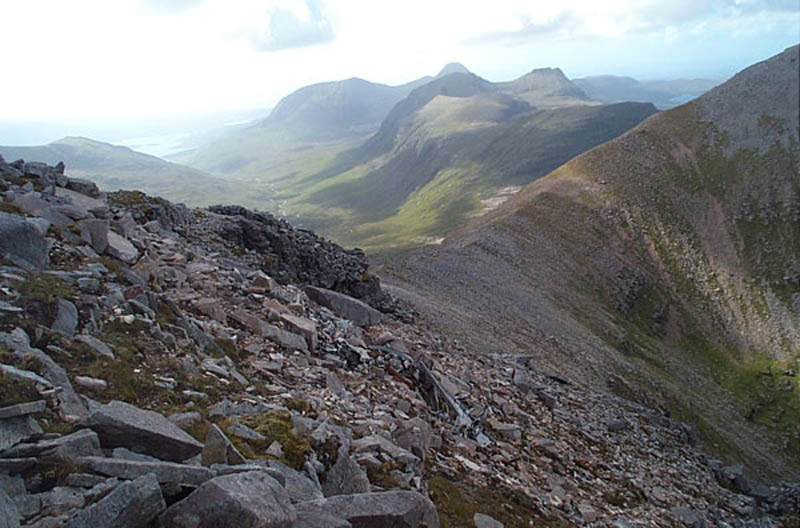
The area of the actual impact for the crash.