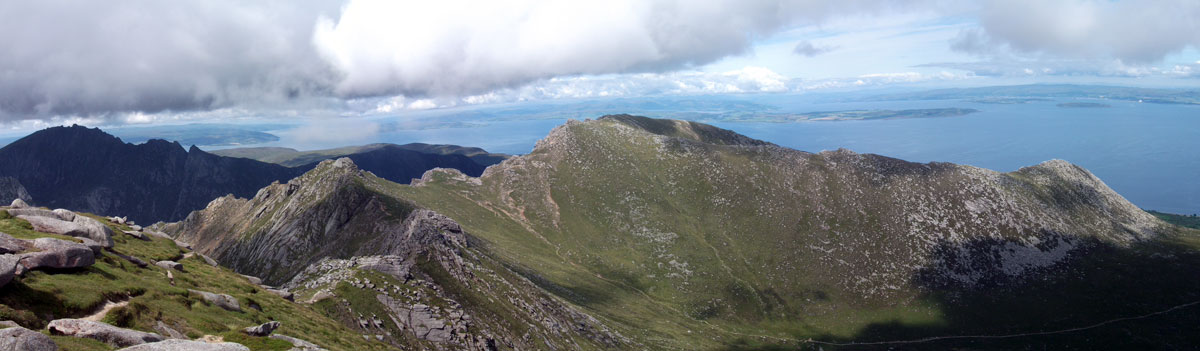
Liberator AM261 on Mullach Buidhe, Isle of Arran.
On 10th August 1941 this aircraft took off from Ayr airfield at 20.20hrs to be flown across the Atlantic to Gander in Newfoundland with a total of twenty two personnel on board. This aircraft had belonged to the Atlantic Return Ferry Organisation (ATFERO) and was flying aircrew to Canada who would collect new aircraft that were to be ferried to the UK. This aircraft had been used to ferry HRH the Duke of Kent across the Atlantic just weeks earlier. On the date of this accident after taking off from Ayr a course was set taking them roughly north-west and on their way, this was the common track for such flights and would have taken the aircraft close to the Isle of Arran. In bad weather with poor visibility the aircraft was heard to fly over the eastern side of Arran and head inland, not long after at 20.40hrs it flew into the ground on Mullach Buidhe at the head of Coire Lan and exploded. Sadly all twenty two on board were killed in the crash. With poor visibility effecting flying on this night the RAF's crash card (the AM1180) stated that the investigators believed that the aircraft was 4.5 miles north of the intended track when it crashed, one would assume the investigators knew that a common route was over the south of Arran and having found the aircraft had crashed off this route made this assumption. People more local to Arran than myself have carried out detailed research into this incident more recently and have published their work on the internet, one suggestion is the crew realised that the visibility was too poor to safely fly over the south of Arran so had opted for a track that would take them over the north-east of Arran but due to an error in reading the compass or because the compass was faulty they did not turn onto the correct baring. The error resulted in the aircraft flying towards the hills which lay in front of the aircraft and were higher than they were flying at. The wreckage was found during the afternoon of 11th August 1941 and all but one of those killed were buried locally on Arran. This incident appears to have hit the news across the world and various press report detailing the incident are on the internet, one states that six of those killed were British, eight were Canadians, one was Australian and seven were US citizens though CWGC does not list all the homes of those involved. Other press reports give basic details on some of the casualties and some of the information is compiled below. The aircraft would probably have had at least one radio operator at work on the flight but their names have not yet been found amongst the list of passengers.
Just four days later Liberator AM260 was about to fly the same route to Gander, Newfoundland but crashed on take off at Ayr with the loss of a further twenty two Ferry Command personnel, this must have been the worst week in Ayr airfield's history. The crew of Liberator AM261 is listed below, I wanted to show basic biogs for all involved but as yet nothing is really known about some of those killed.
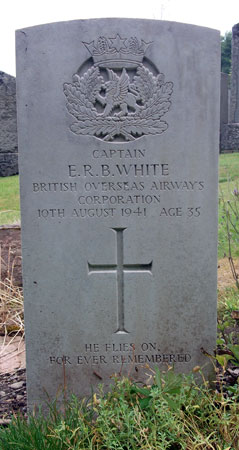
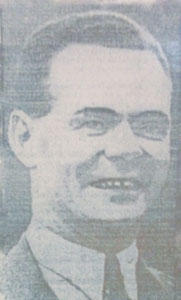
Pilot - Captain Ernest Robert Bristow White BOAC, aged 35. Wife of Bristol, Somerset. Buried Kilbride Old Churchyard, Isle of Arran.
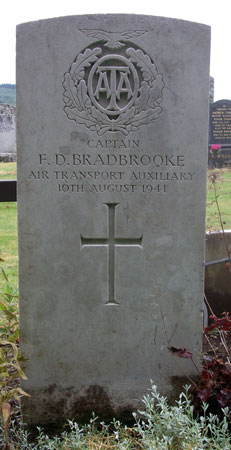
Co-Pilot - Captain Francis Delaforce Bradbrooke ATA. Buried Kilbride Old Churchyard, Isle of Arran.
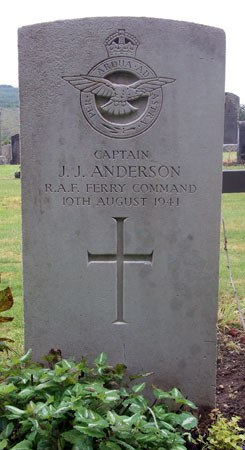
Passenger (Pilot) - Captain James Josiah Anderson RAFFC, aged c29, of Sackville, New Brunswick, Canada. Buried Kilbride Old Churchyard, Isle of Arran.
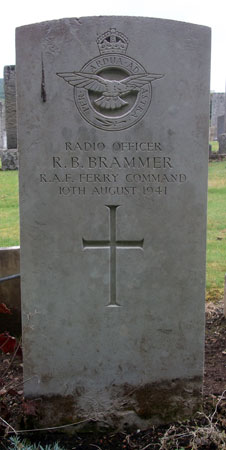
Passenger - Radio Officer Ralph Bruce Brammer RAFFC, of Toronto, Ontario, Canada. Buried Kilbride Old Churchyard, Isle of Arran.
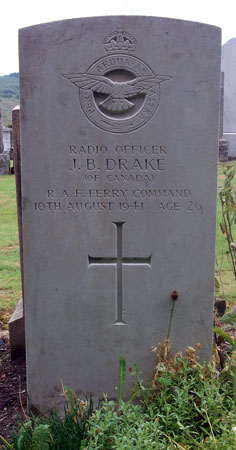
Passenger - Radio Officer John Beatty Drake RAFFC, aged 26, of New Westminster, British Columbia, Canada. Buried Kilbride Old Churchyard, Isle of Arran.
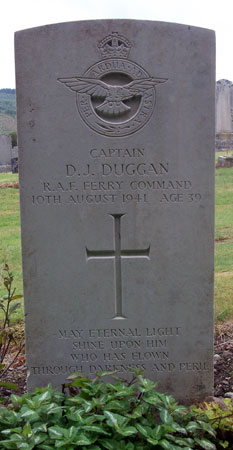
Passenger (Pilot) - Captain Daniel Joseph Duggan RAFFC, aged 39, of Winthrop, Massachusetts, USA. Buried Kilbride Old Churchyard, Isle of Arran.
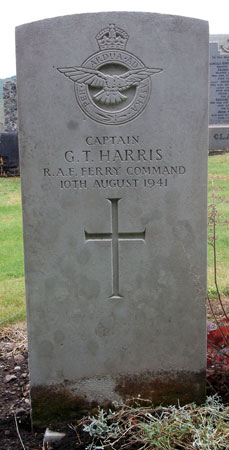
Passenger (Pilot) - Captain George Thomas Harris RAFFC, of Lawrence, Kansas, USA. Buried Kilbride Old Churchyard, Isle of Arran.
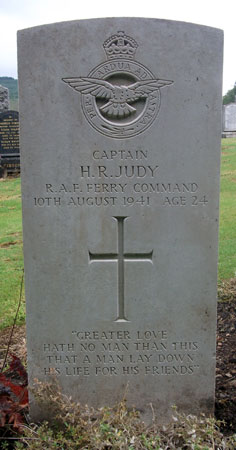
Passenger (Pilot) - Captain Hoyt Ralph Judy RAFFC, aged 24. of Dallas, Texas, USA. Buried Kilbride Old Churchyard, Isle of Arran.
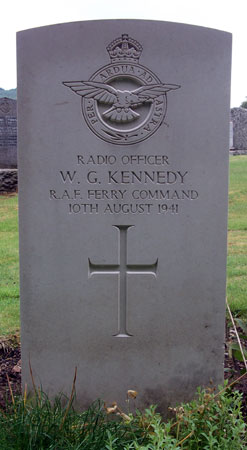
Passenger - Radio Officer Wilfred Groves Kennedy RAFFC. Buried Kilbride Old Churchyard, Isle of Arran.
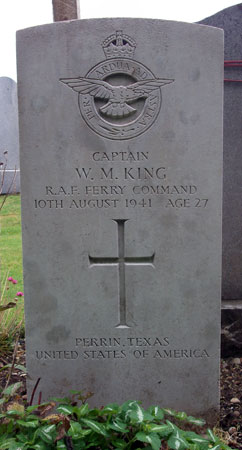
Passenger (Pilot) - Captain Watt Miller King RAFFC, aged 27, of Little Rock, Arkansas, USA. Buried Kilbride Old Churchyard, Isle of Arran.
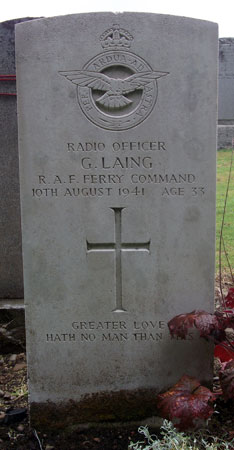
Passenger - Radio Officer George Laing RAFFC, aged 33, wife of Montreal, Province of Quebec, Canada. Buried Kilbride Old Churchyard, Isle of Arran.
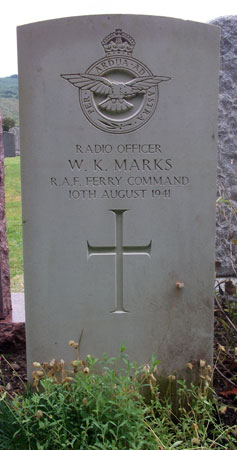
Passenger - Radio Officer William Kenneth Marks RAFFC. Buried Kilbride Old Churchyard, Isle of Arran.
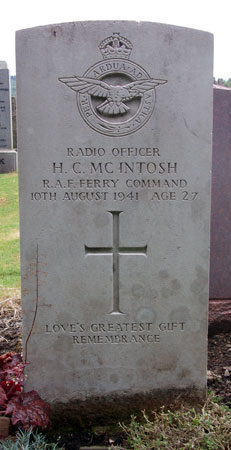
Passenger - Radio Officer Hugh Cameron McIntosh RAFFC, aged 27, wife of Markham, Ontario, Canada. Buried Kilbride Old Churchyard, Isle of Arran.
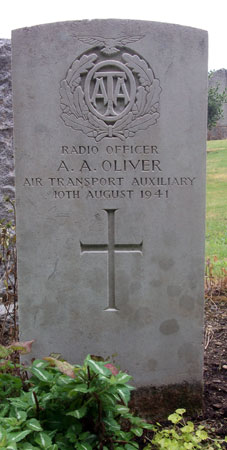
Passenger - Radio Officer Albert Alexander Oliver ATA. Buried Kilbride Old Churchyard, Isle of Arran.
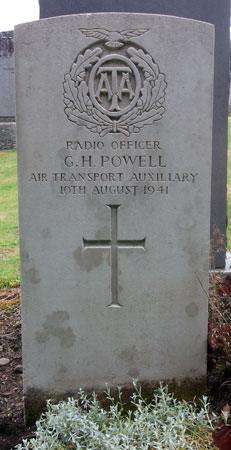
Passenger - Radio Officer George Herburt Powell ATA. Buried Kilbride Old Churchyard, Isle of Arran.
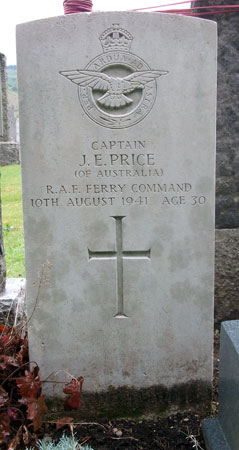
Passenger (Pilot) - Captain John Evan Price RAFFC, aged 30, of Geelong, Victoria, Australia. Buried Kilbride Old Churchyard, Isle of Arran.
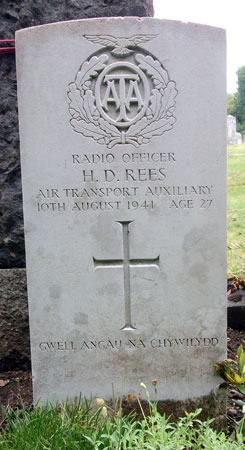
Passenger - Radio Officer Herbert David Rees ATA, aged 27, of Felinfoel, Llanelly, Carmarthenshire. Buried Kilbride Old Churchyard, Isle of Arran.
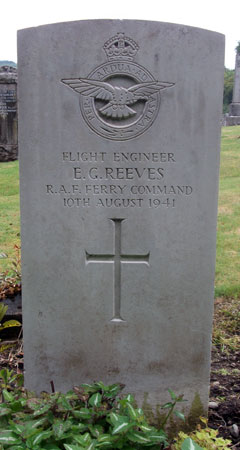
Flight Engineer Ernest George Reeves RAFFC, aged c26, of Roslyn Heights, New York, USA. Buried Kilbride Old Churchyard, Isle of Arran.
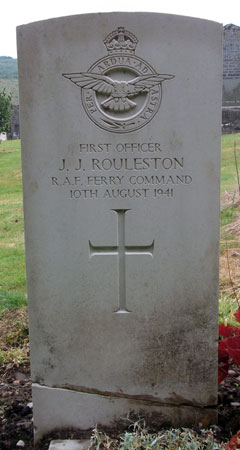
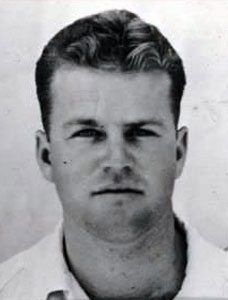
Passenger - 1st Officer John James Rouleston RAFFC, of Long Beach, California, USA. Buried Kilbride Old Churchyard, Isle of Arran.
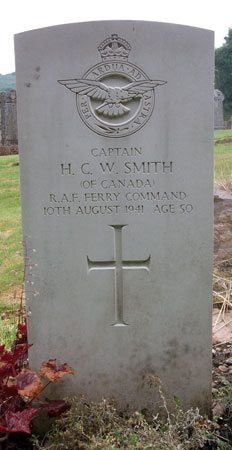
Passenger (Pilot) - Captain Harold Clifford Wesley Smith RAFFC, aged 50, wife of Hamilton, Ontario, Canada. Buried Kilbride Old Churchyard, Isle of Arran.
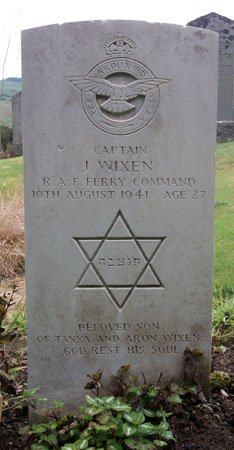
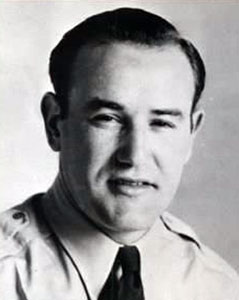
Passenger (Pilot) - Captain Jack Wixen RAFFC, aged 27, of Los Angeles, California, USA. Buried Kilbride Old Churchyard, Isle of Arran.
Passenger? - Radio Officer Henry Samuel Green BOAC, aged 20. Wife of Earl's Court, London. Buried Brookwood Military Cemetery, Surrey.
Photographs of four of those killed in this incident, left to right, White, Bradbrooke, Wixen and Rouleston.
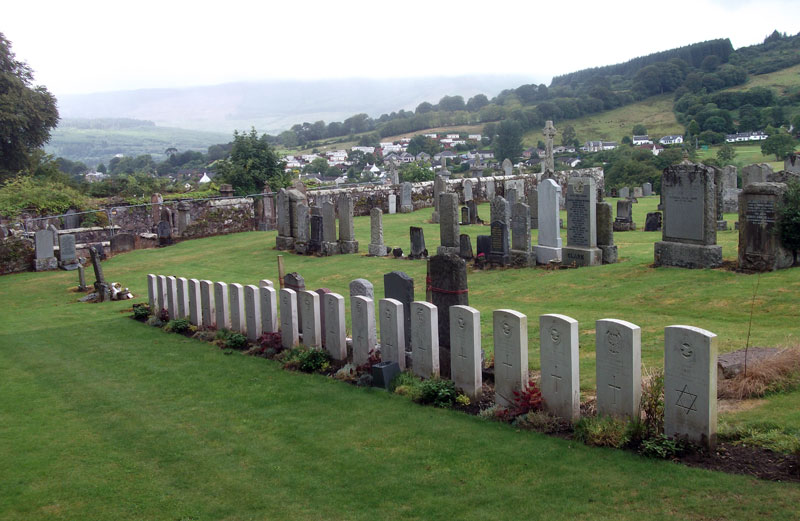
The grave of twenty one of the twenty two ferry personnel killed in this accident at Kilbride Old Churchyard, Lamlash, Isle of Arran.
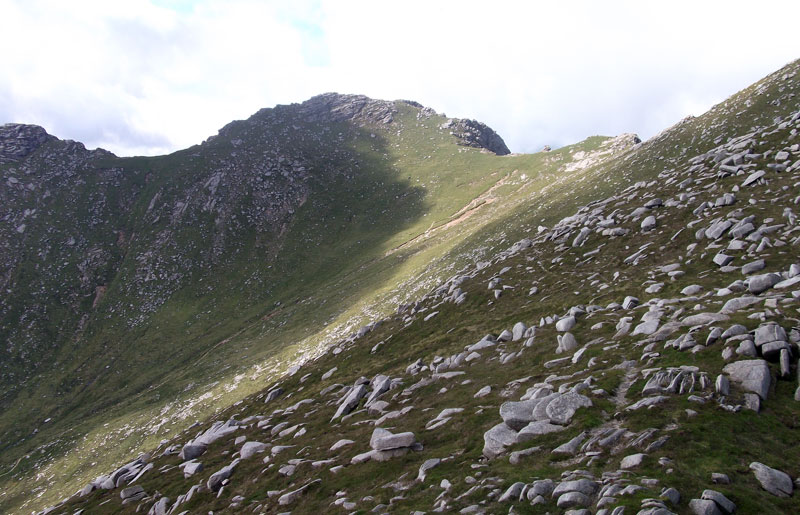
Mullach Buidhe and the crash site is in the centre of this panoramic photograph taken in August 2014.
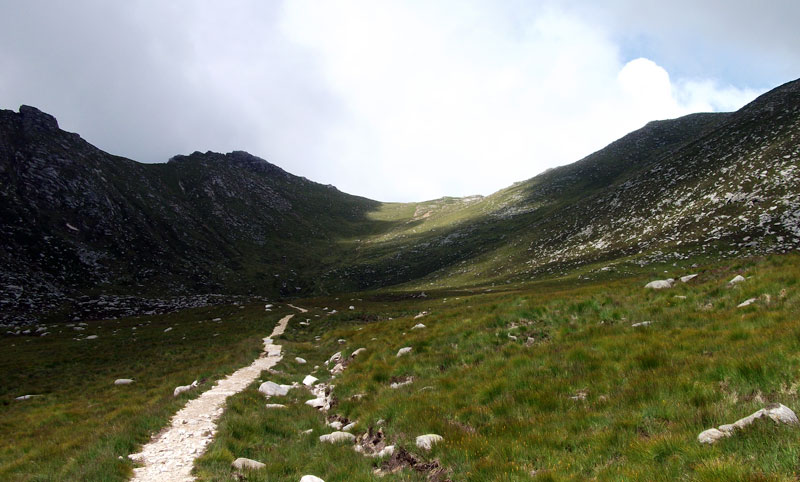
Looking up Coire Lan towards the crash site (above) and across the hillside (below).
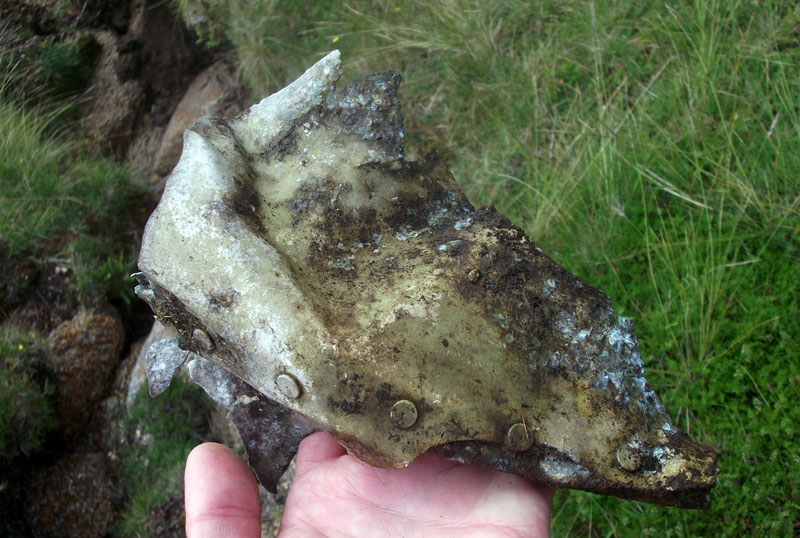
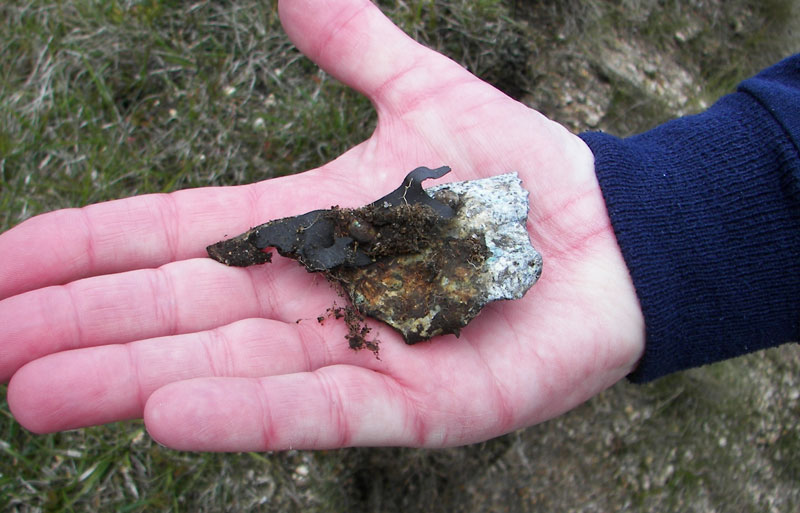
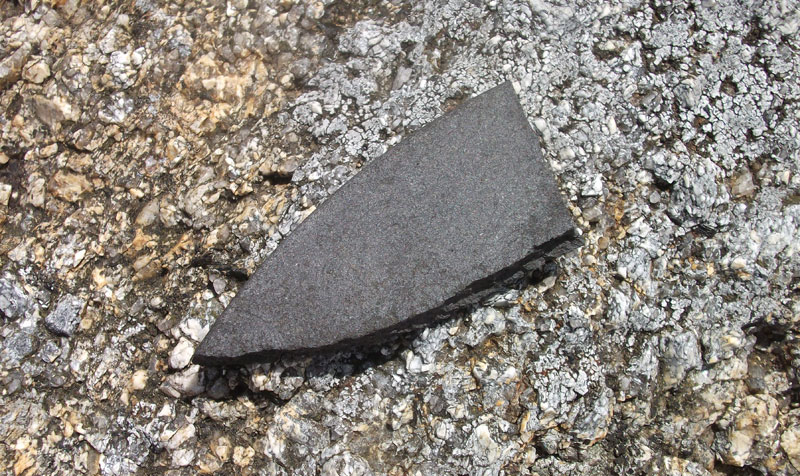
This webpage is more about attempting to document the large number of casualties sustained rather than the crash site, the location of the site is widely known and publicized across Arran and on various webpages but none really show the human loss sustained in the incident. Small fragments of the aircraft remain at the crash site which confirm the location.
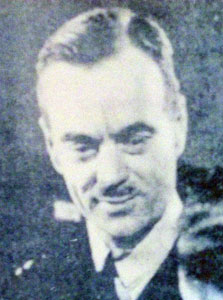
Francis Bradbrooke was born in Worcestershire, possibly on 14th March 1895 at Morton-under-Hill, Inkberrow but had spent many years in Canada during his early life graduating from Winnipeg University in 1924. He worked for a local Winnipeg newspaper in 1926-27 and learnt to fly at the Winnipeg Flying Club, Manitoba, Canada in 1928 but appears to have been prevented from obtaining a professional pilot's licence due to colour blindness. He moved to the UK and later joined the staff of The Aeroplane magazine rising to assistant editor and became one of the leading people in civilian flying in the UK in the 1930s. He wrote the book "The Light Aeroplane Manual" and was elected to the Committee of the Royal Aero Club in December 1931, he flew civilian registered aircraft (owning Miles Hawk G-ACHL) and gliders in the 1930s, taking part various races including taking second place in a blind flying competition at Hamble in 1932 and the King's Cup Race in 1935 (but force landed his Hawk Major G-ADNK near Blackpool after suffering engine failure). In 1935 he became Honary Secretary of The British Gliding Association. In 1937 he was taken part in an air race piloting a Dart Kitten when he force landed near Bicester, in trying to turn the propeller by hand to re-start the engine the propeller kicked and his hand was badly damaged, it later had to be amputated. In 1940 he assisted Gerard d'Erlanger in the early stages of the ATA's organization and was the Commanding Officer of it's first ferry pool, later he became the ATA's chief ferry officer, and was in this role in 1941 when he volunteered for and was accepted into BOAC. His wife Joan later took his position at The Aeroplane after his death on Arran and was later on the staff of the Royal Aeronutical Society.
Ernest White was one of the most experienced pilots flying with the BOAC, he was born in India and joined the RAF as a boy mechanic in 1921 but left in 1930 in the rank of Sgt as a pilot. In 1931 he joined Imperial Airways and initially flew as a co-pilot on European routes. On 8th August 1931 he was the co-pilot of Handley Page HP42 G-AAGX "Hannibal" which was flying between Croyden and Paris, soon after taking off two of the engines failed so the captain force landed the aircraft near Tonbridge, Kent without injury to anyone on board although the aircraft was extensively damaged. In 1933 he was seconded to the Iraq Petroleum Company. In 1935 he was back with the Europe Division of Imperial Airways flying to various locations in Europe from Croyden. In 1936 in eighteen hours he flew a record distance from London to Brindisi via Marseilles and back which was some 2970 miles. In 1938 when Imperial Airways gained the use of the De Havilland Flamingo he became one of their Trans-Atlantic pilots. He was also Chairman of the British Airline Pilots' Association for some time during the 1930s. Imperial Airways became part of BOAC in 1940 and he transferred to them and later that year he acted as navigator on their first Trans-Atlantic flight, in Spring 1941 he was seconded to the ATFERO. Press reports detailing his life after his death on Arran stated that he has probably flown more than a million air miles. He is commemorated on a memorial in the church at St.Day, Cornwall and on the village war memorial there. A press report on the incident displayed in the museum on Arran stated that he was from or had lived in Ayr for a number of years. The National Archives file Air76/542/51 is for someone with this same name but may or may not be the same person.
Flight Magazine was one publication that printed an account of this loss in August 1941 and gave basic details about some of those involved. It stated that Green had served at sea before transferring to Imperial Airways (later BOAC) and for some time was stationed on the company yacht "Imperia" off Crete. He returned to the UK in 1940 and transferred to ATFERO. Flight Magazine stated that BOAC regarded him as being one of the best radio operators in aviation. He may also have been born in India.
Ralph "Bruce" Brammer had a brother called Stuart Brammer, both brothers had attended Northern Vocational School and then gone through radio school together qualifying on the same date. Bruce Brammer begun aircraft ferry flying in April 1941. Stuart had joined the staff of the CKCL two and a half years before the accident which had killed his brother on Arran but following Bruce Brammer's death his brother Stuart immediately volunteered as a wireless operator for the RAF ferry service and was accepted in this role. Bruce had been a Scout Leader of 58th Toronto Group, Ontario.
Jack Wixen was born in Batum, Georgia, Russia in September 1913 but moved to Palestine as a child and then moved to Newark, New Jersey, USA in 1923. He had served as a pilot and instructor for the Transcontinental and Western Air (TWA) and American Airlines prior to joining the RAF as a ferry pilot some four months before his death. He had a brother Balfour Wixen who served in the US Army during WW2.
Hoyt Judy had married Texas Miller on 5th July 1940 and the couple had both gone to Canada in May 1941 when Hoyt volunteered to ferry aircraft. He was a former US Navy pilot and had then flown as a civilian pilot with Braniff Airlines on their Dallas to Chicago route probably as a mail plane pilot.
John Evan Price was the son of Sidney Evan Price and Eveline May Batten and was born in Geelong, Victoria, Australia in 1911 and attended Geelong College. Little else is currently known about his life.
Ernest Reeves he previously served as a flight engineer with Transcontinental and Western Air (TWA).
John Roulstone had worked for United Airlines almost certainly as a pilot.
Daniel Duggan had volunteered for RAF service around the start of the War, he was married with two children.
Watt King had flown since the young age of thirteen, he had worked as a cotton duster prior to joining the RAF. When the US newspapers reported the deaths of these airmen it was stated that he was to have given up his work in the ferrying service when his contract expired in September 1941.
Harold Smith was born in Hamilton, Ontario, Canada and was the son of James and Ann Amelia Smith (nee Brown), he married Anne Galbraith who was teaching in Port Hope, Ontario in July 1923 and was working as an automobile electrician at that time.